
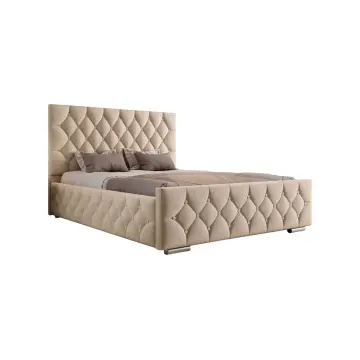
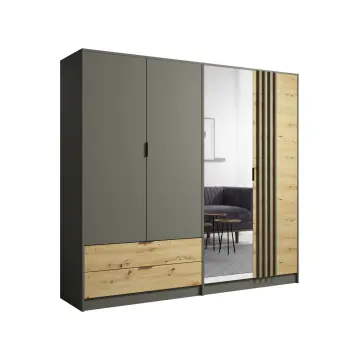
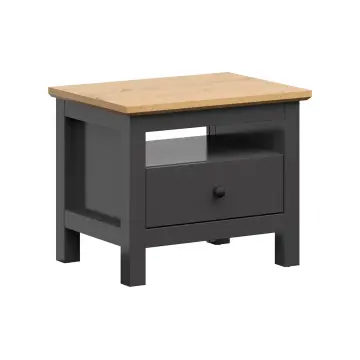
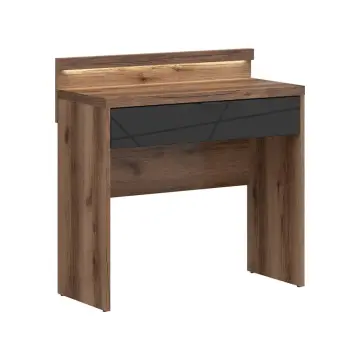

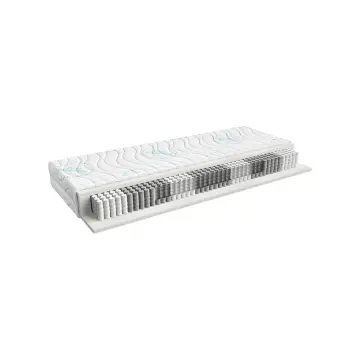
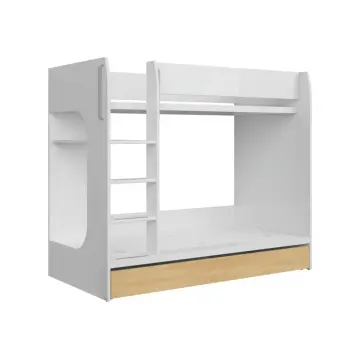
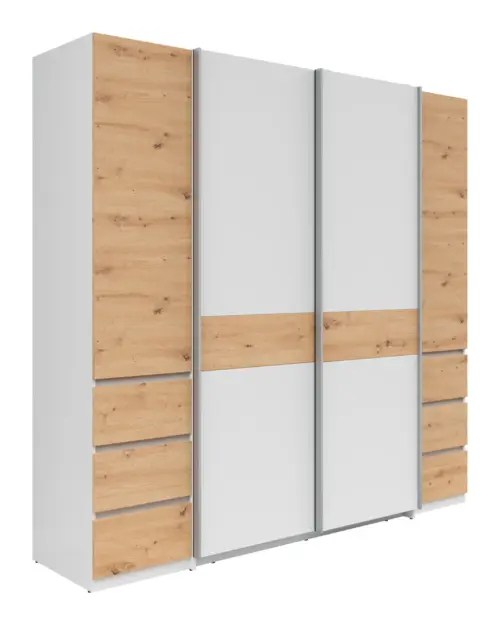
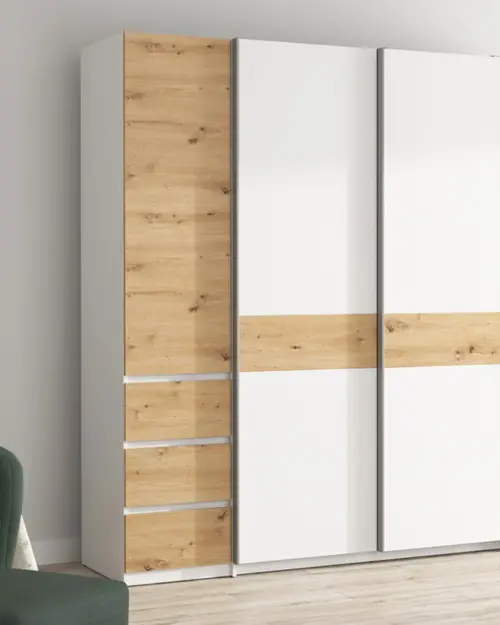
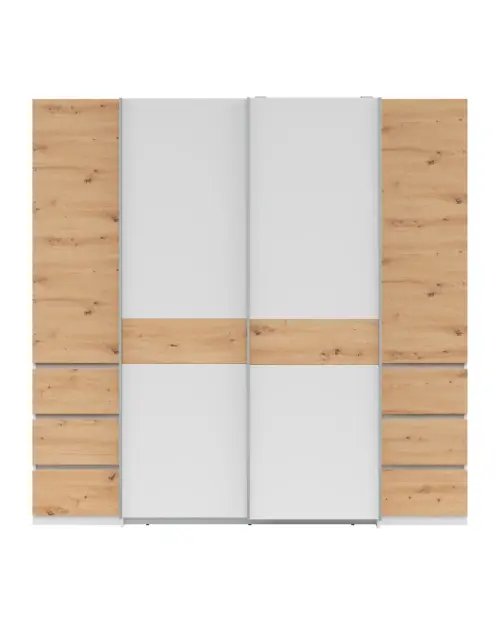
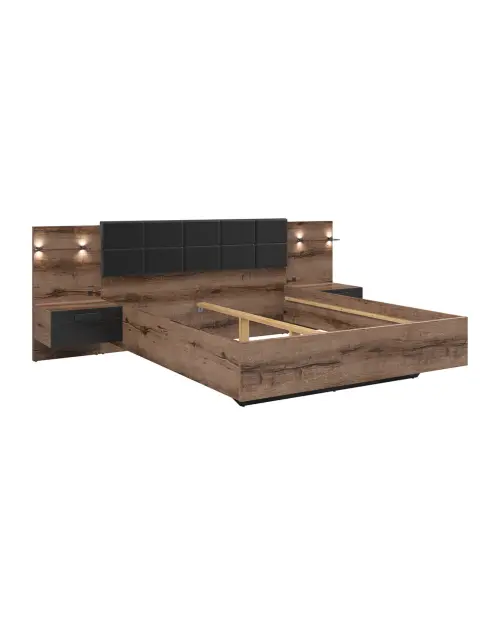
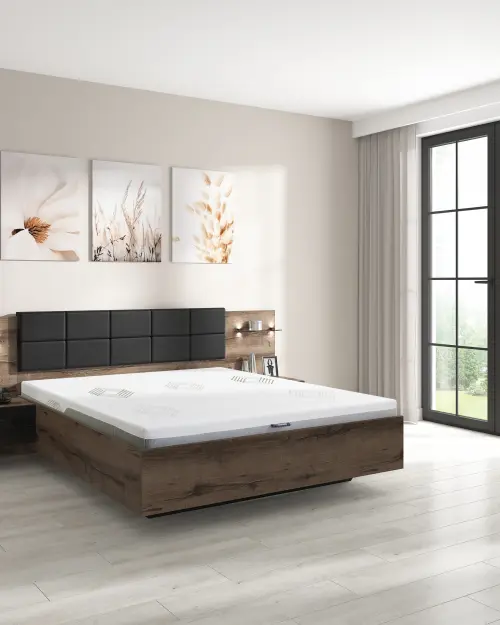
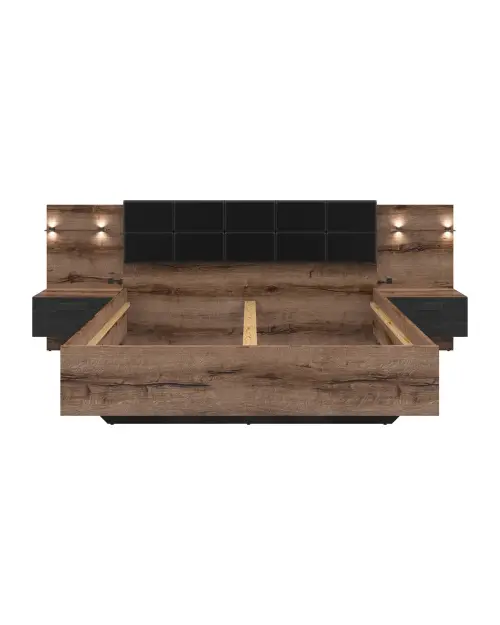
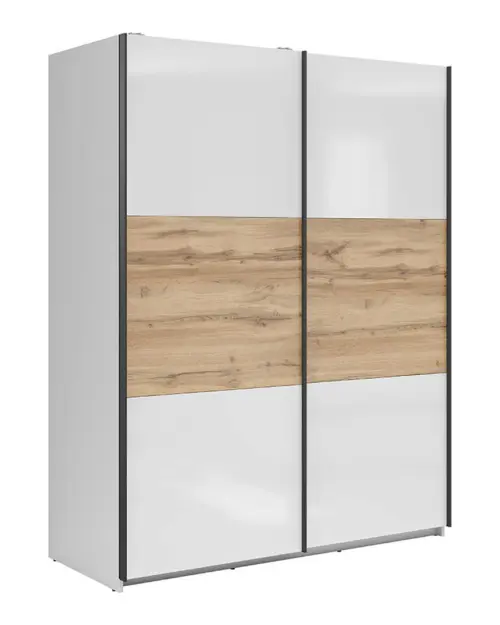
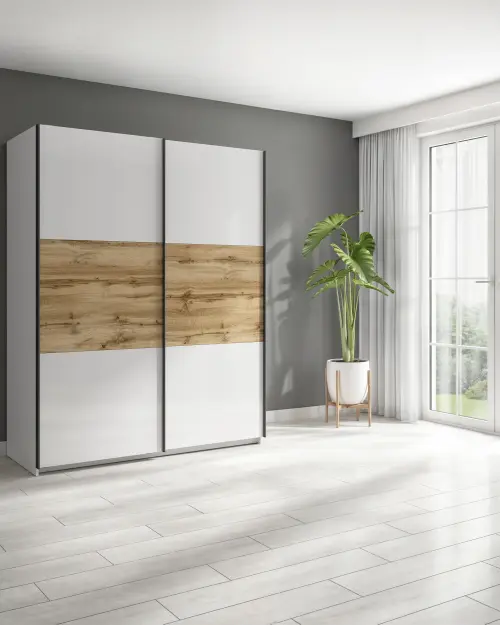
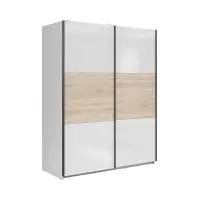
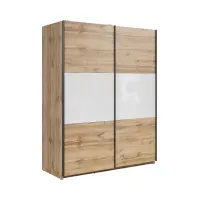
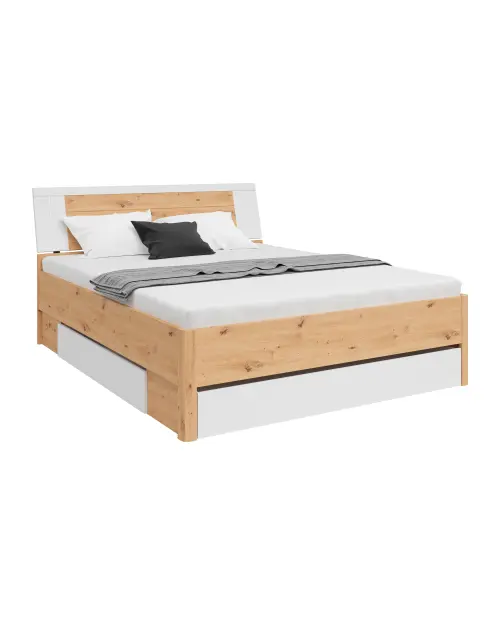
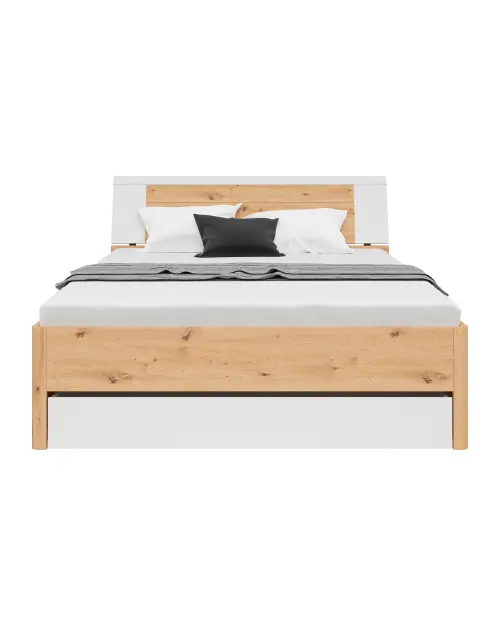
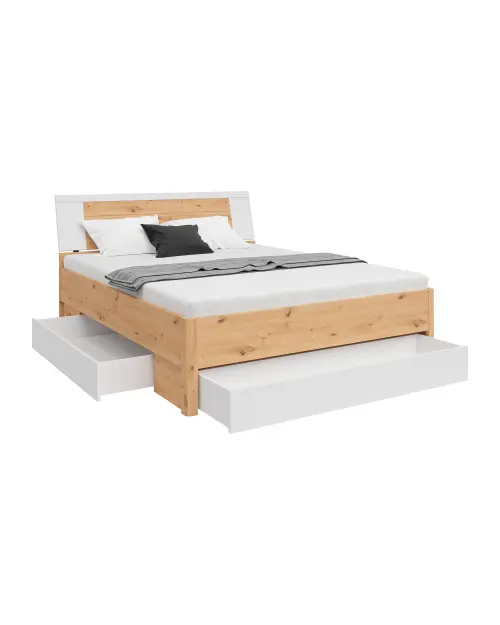
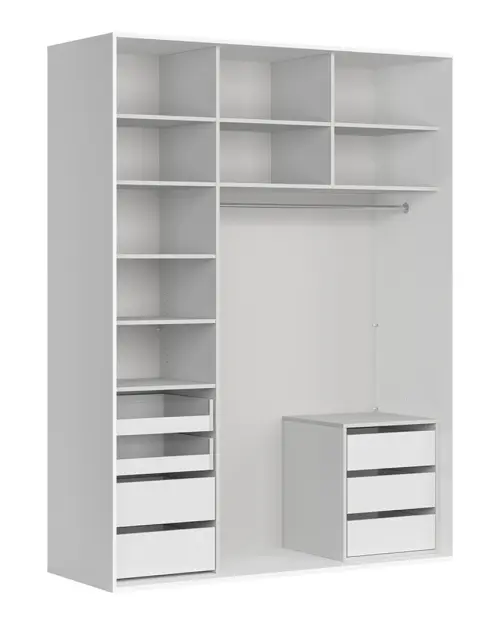
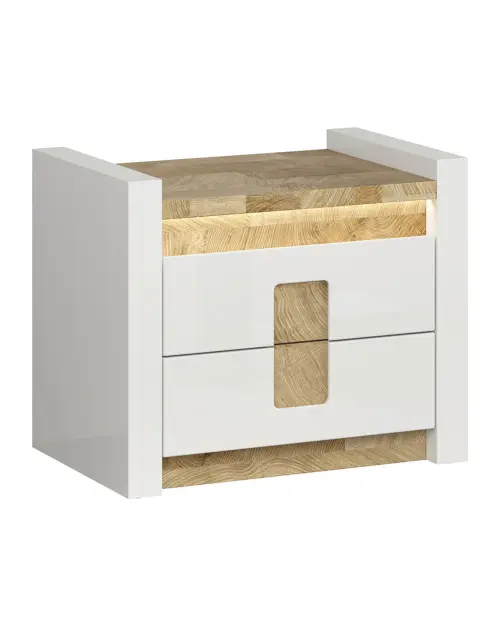
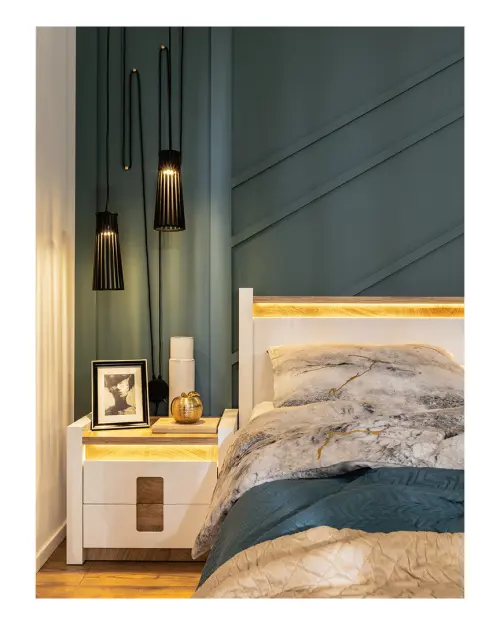
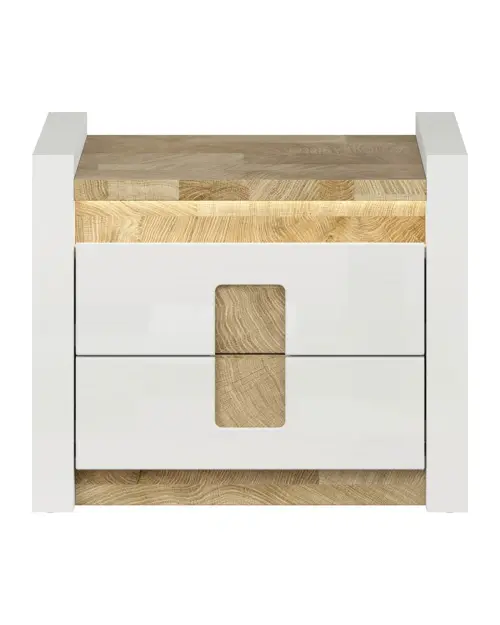
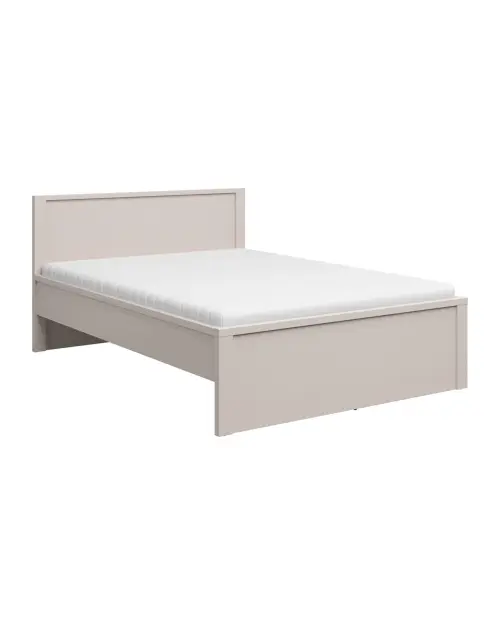
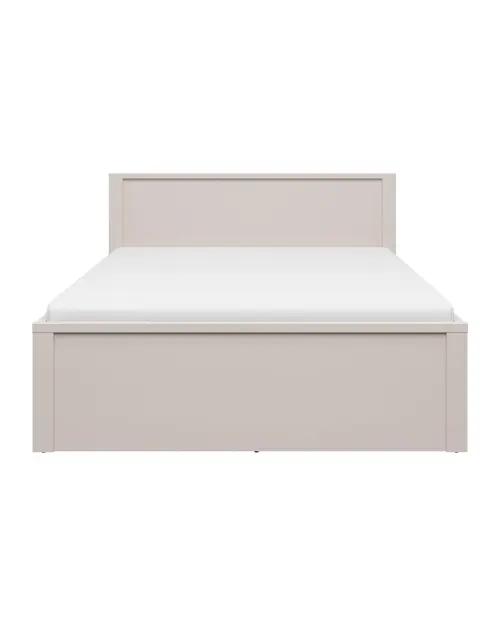

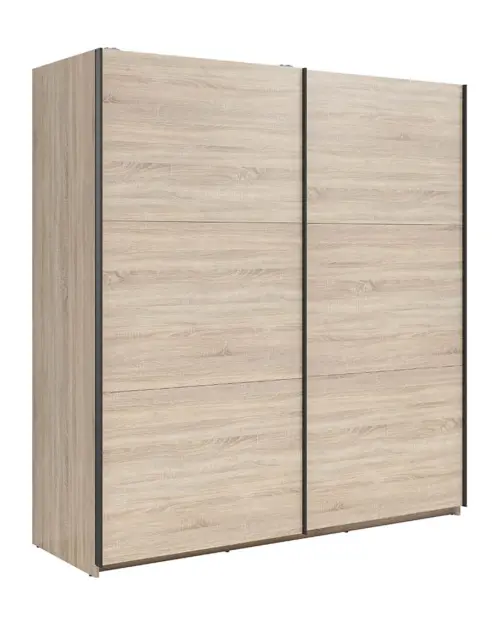
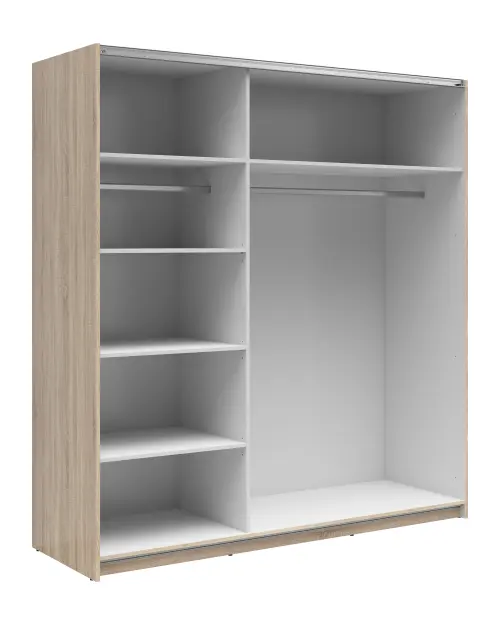
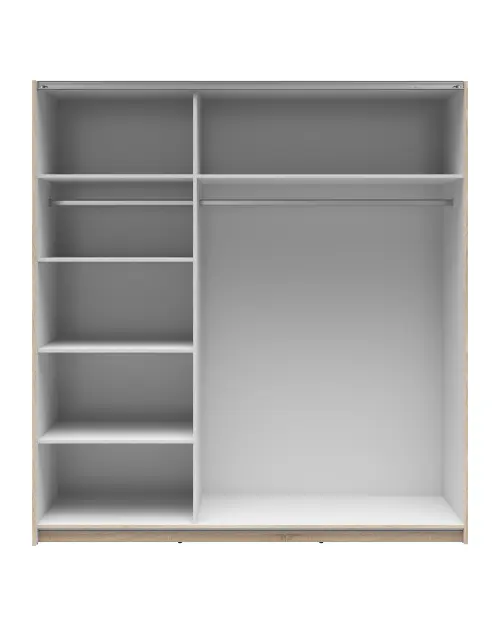
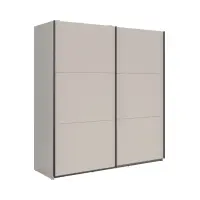
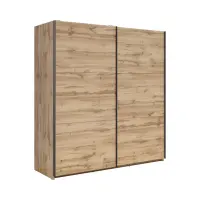
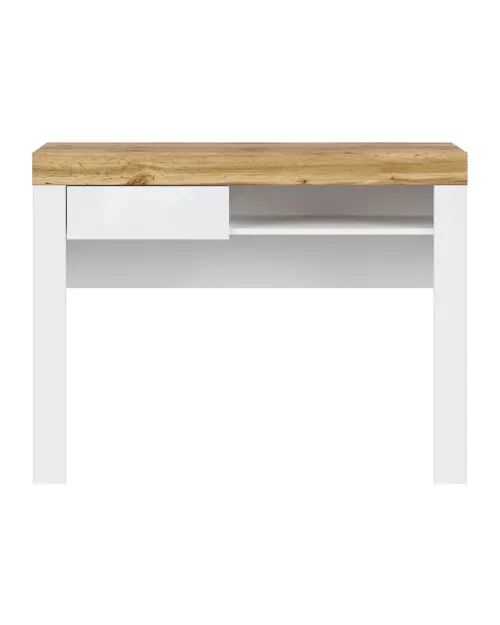
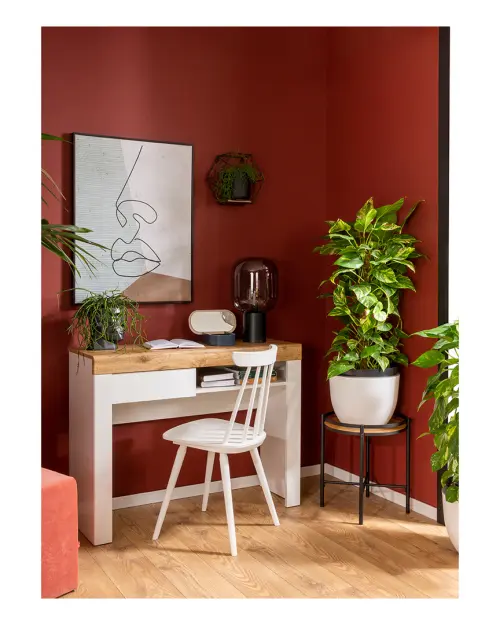
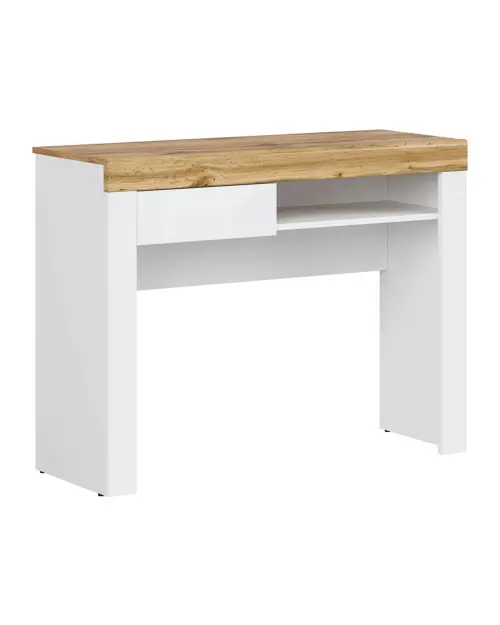
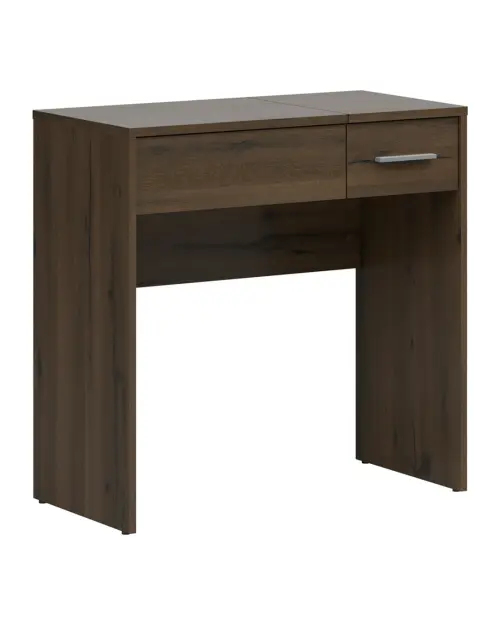
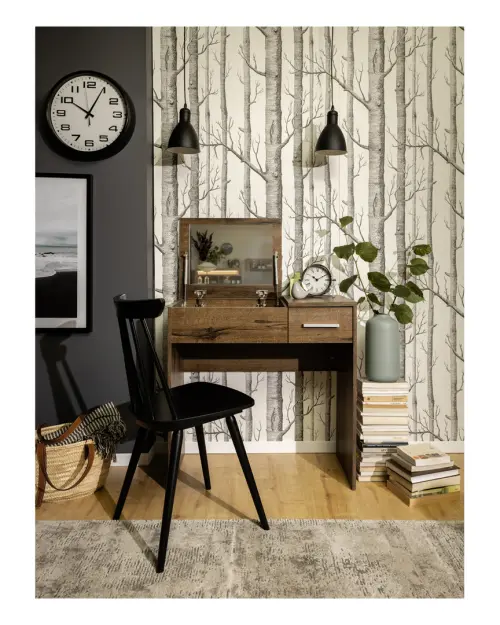
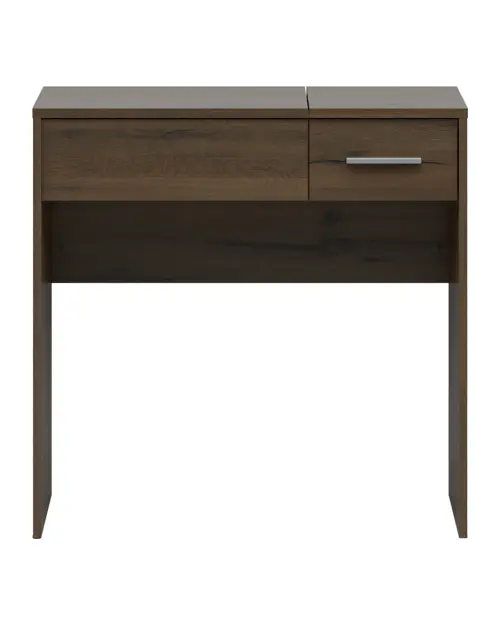
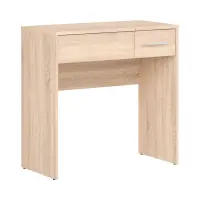
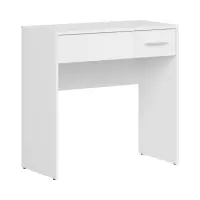
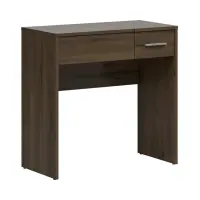
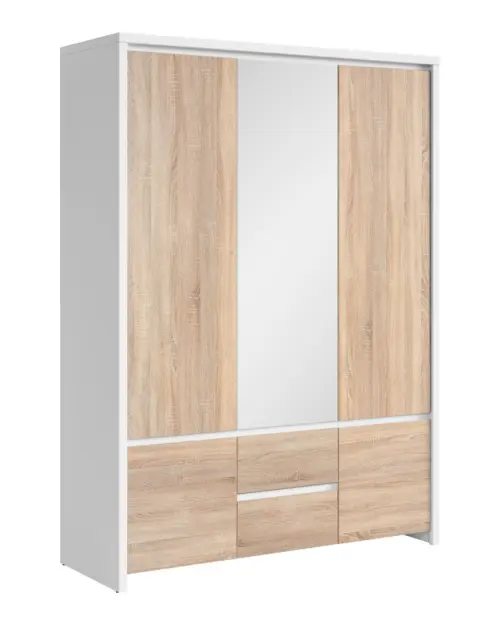
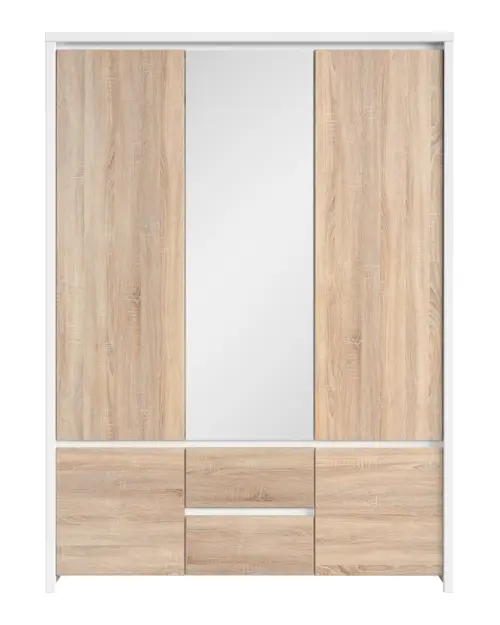
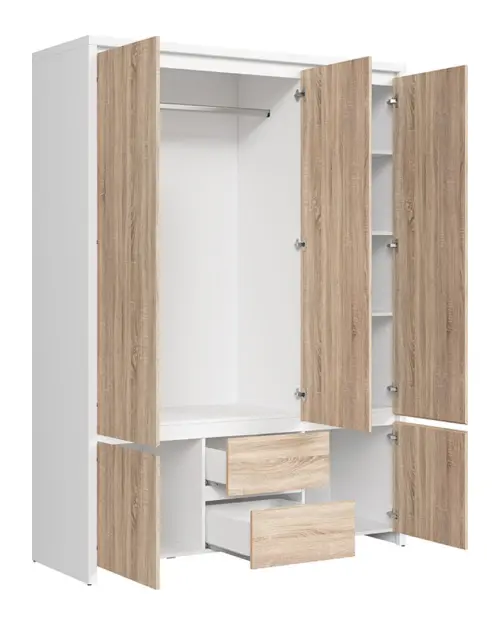
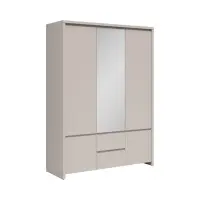
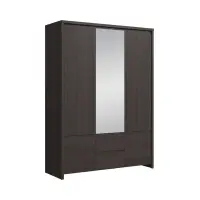
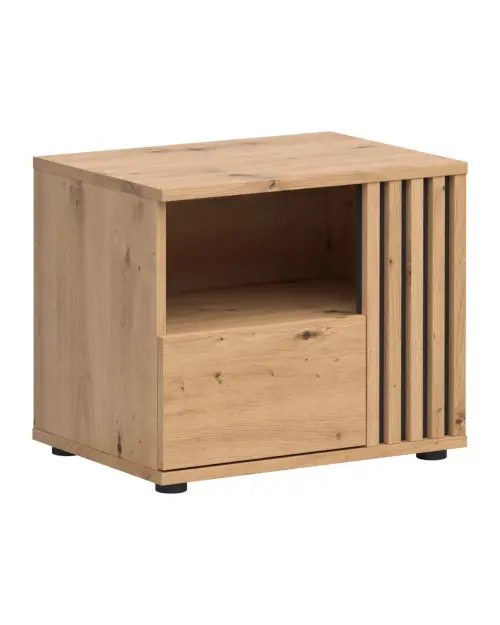
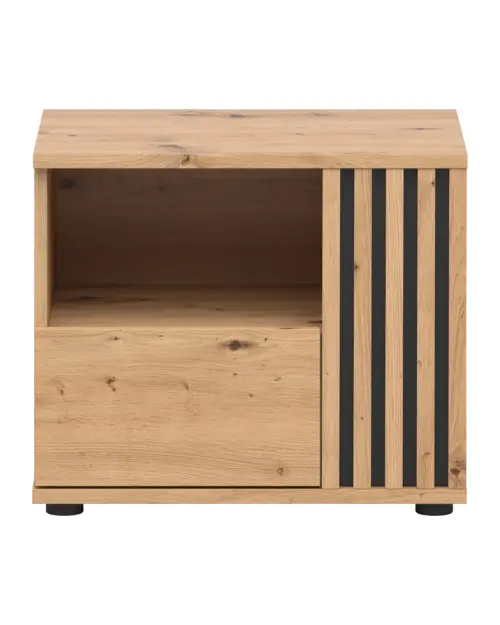
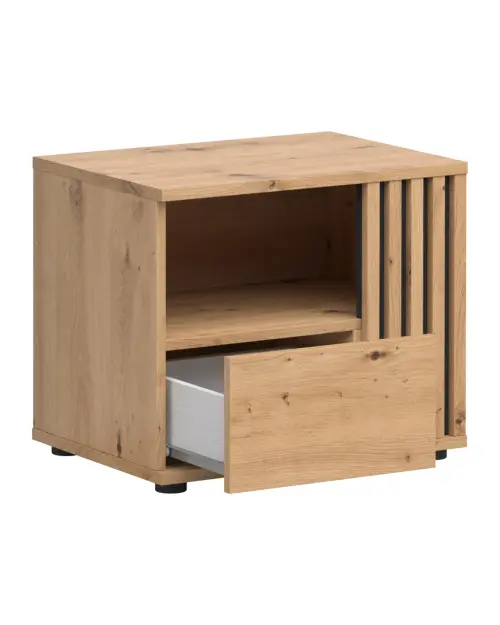
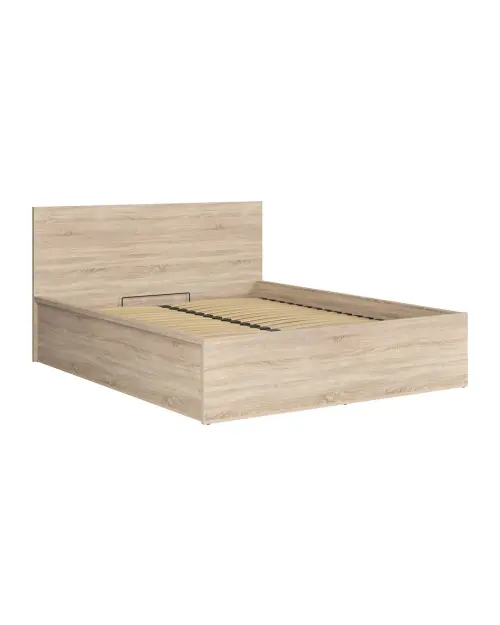
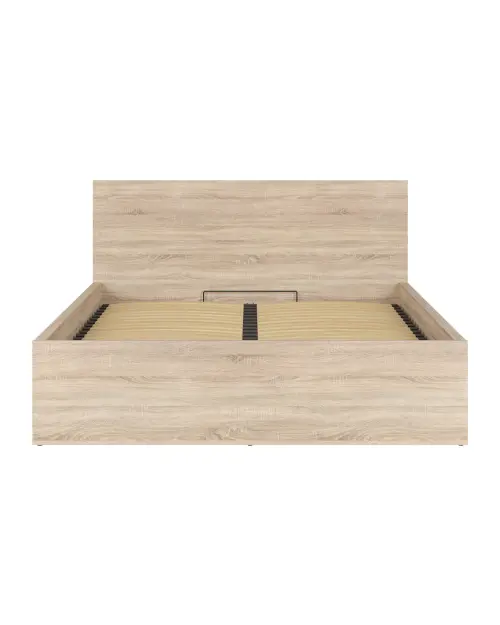
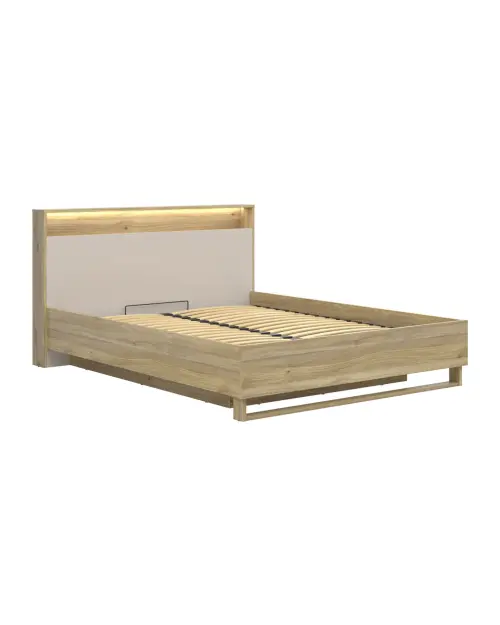
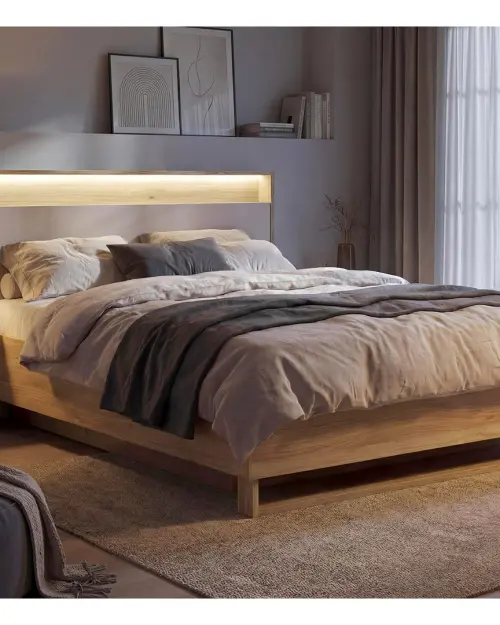
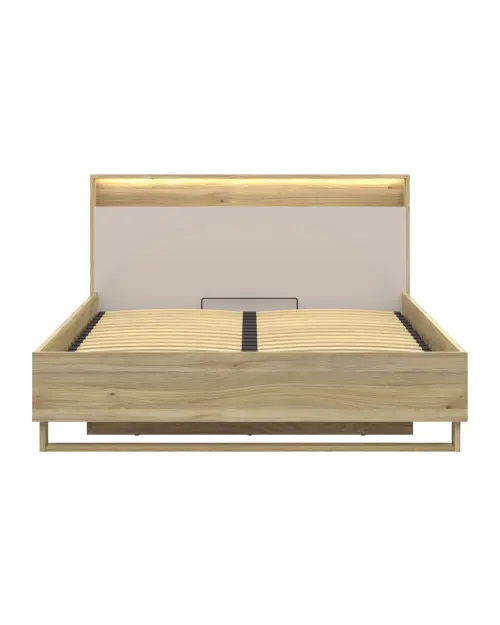
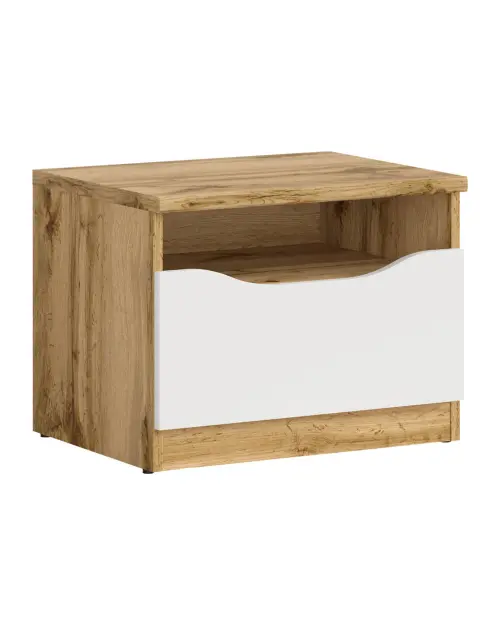
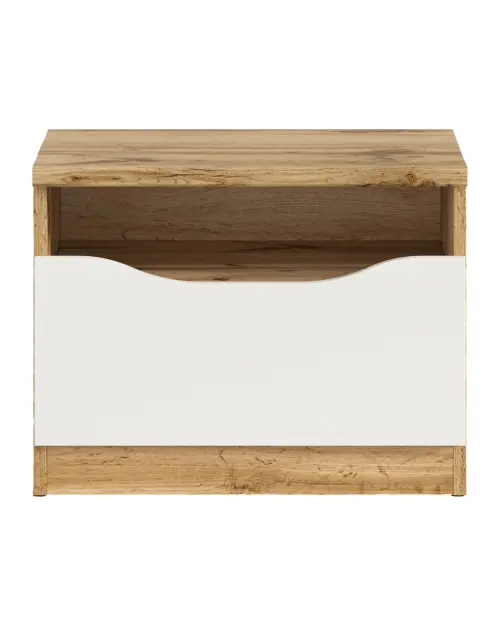
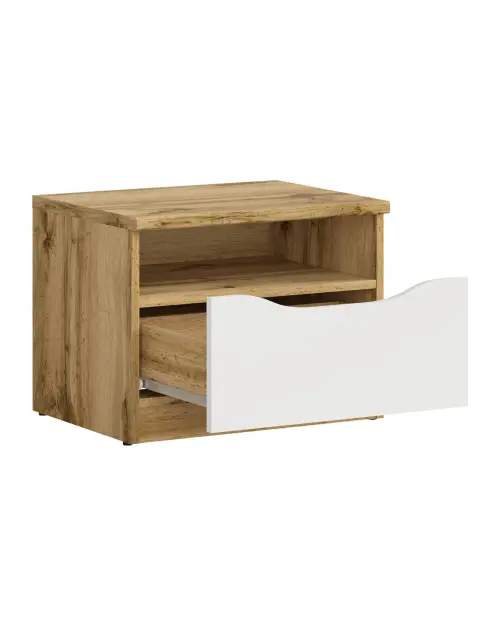
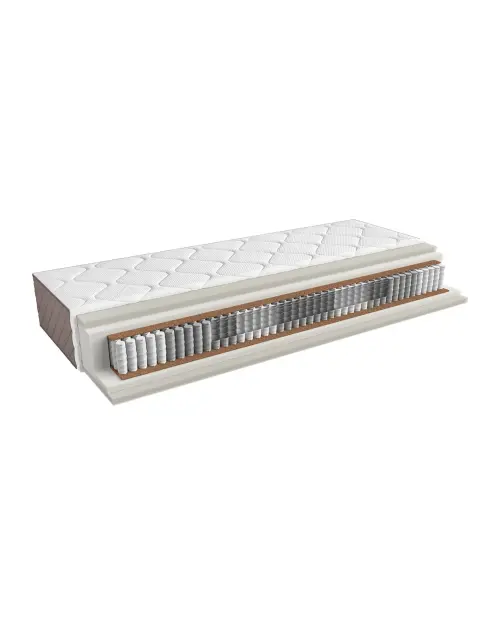
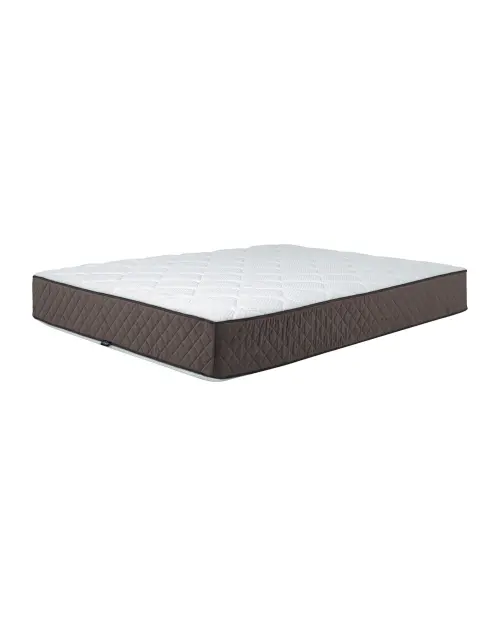
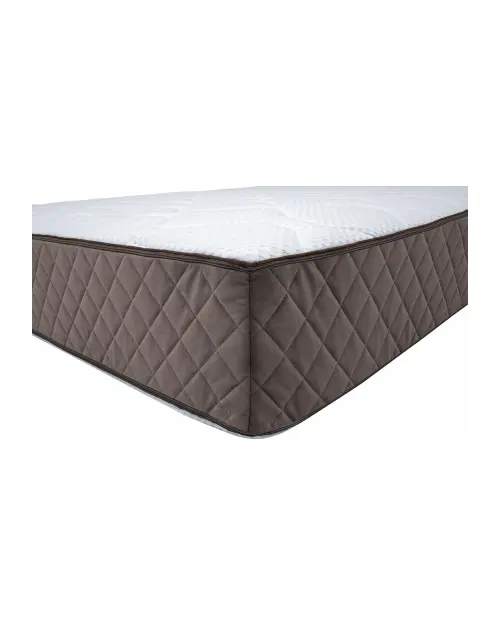
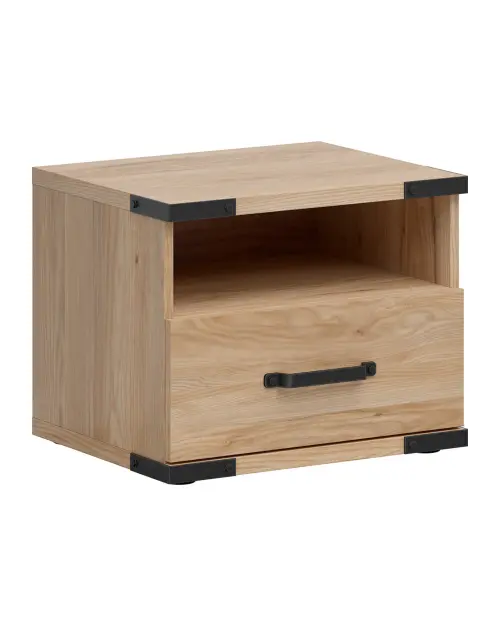
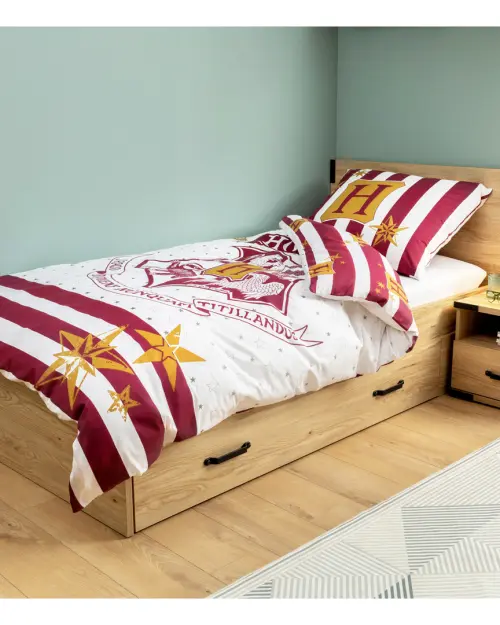
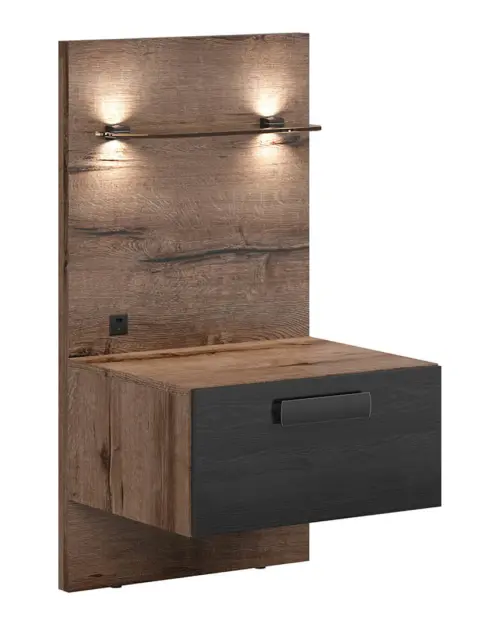
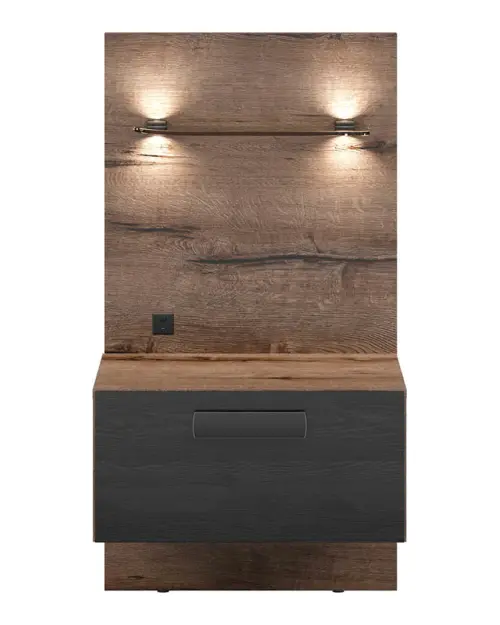
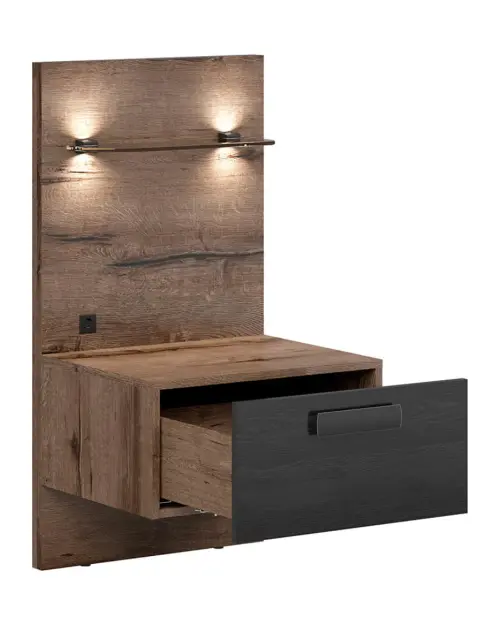
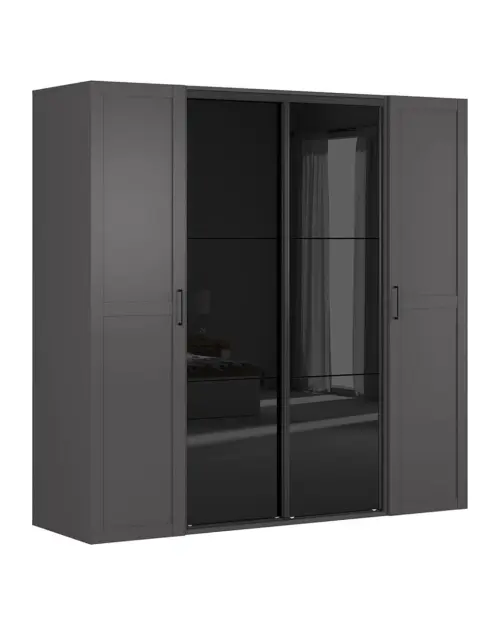
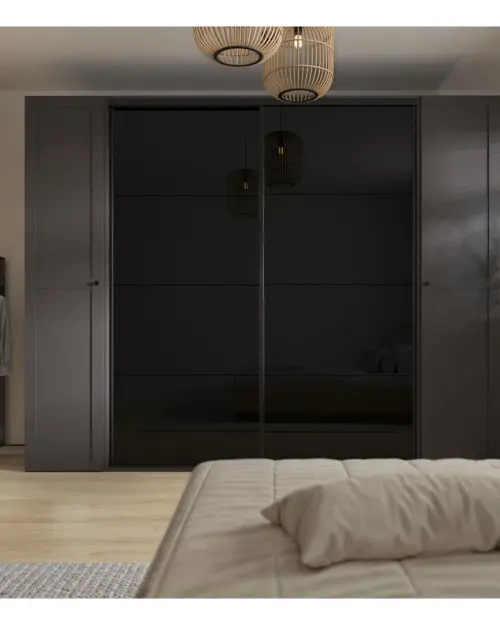
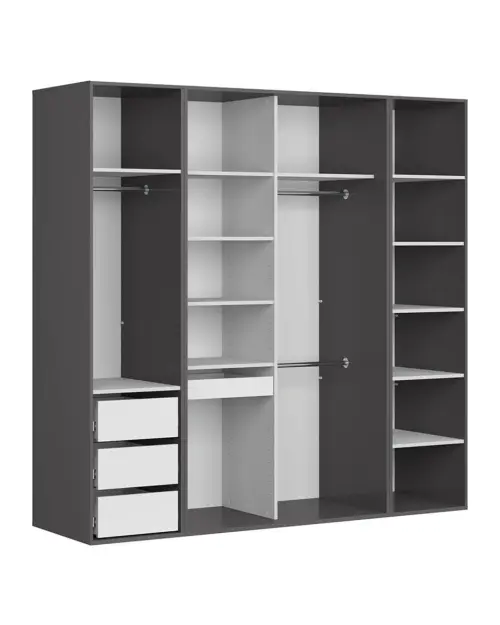
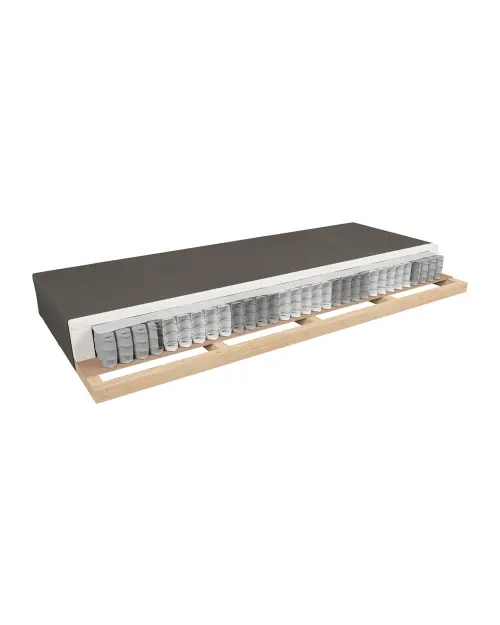
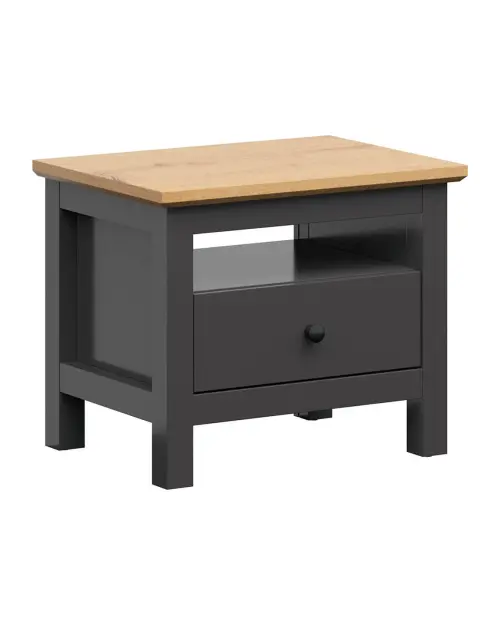
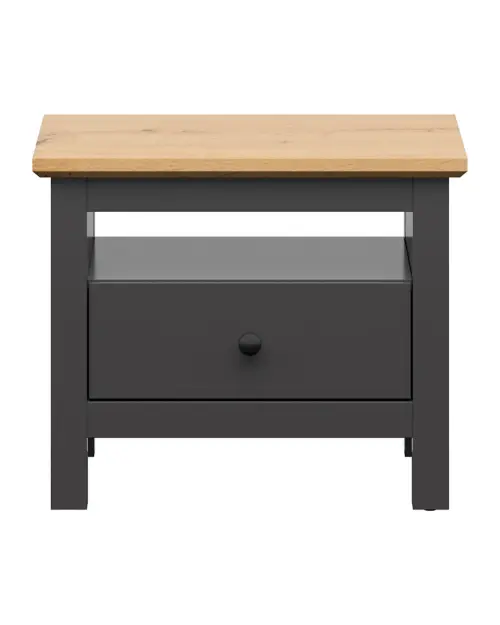
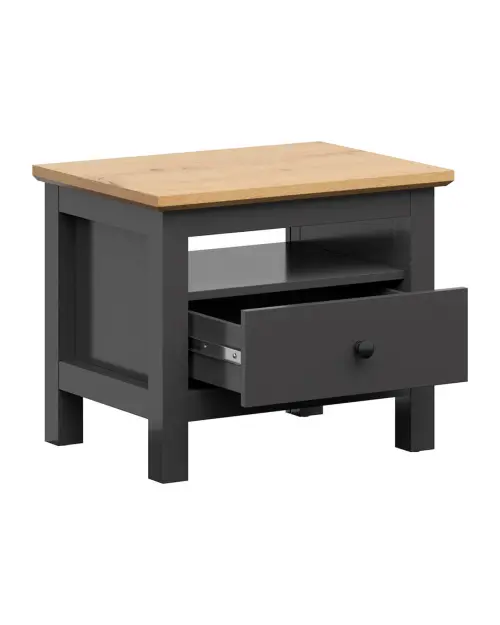
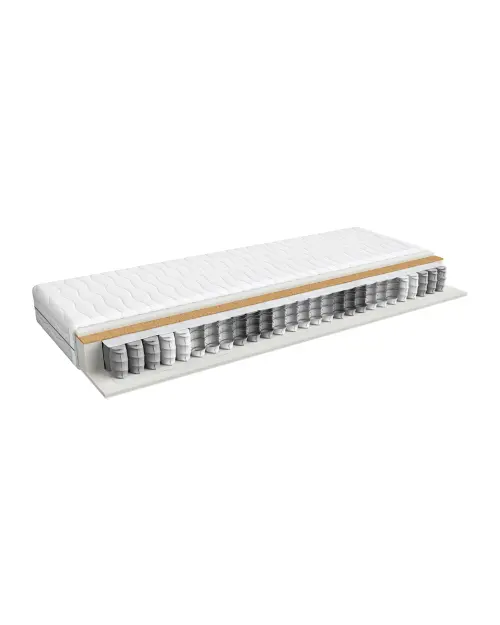
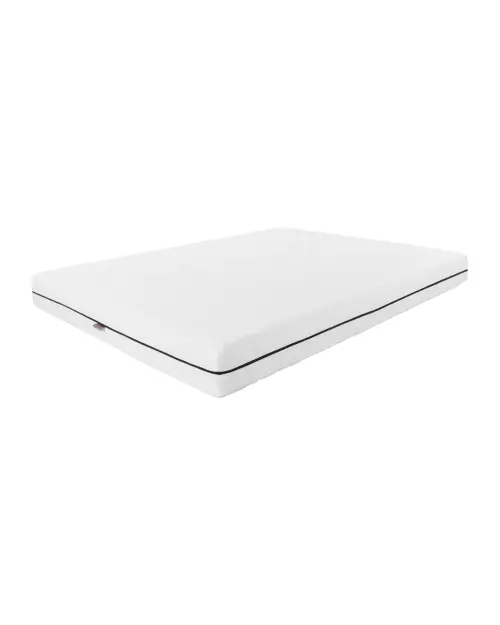
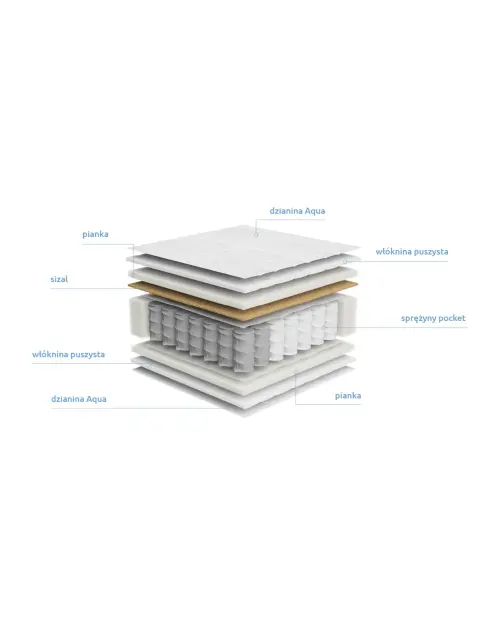
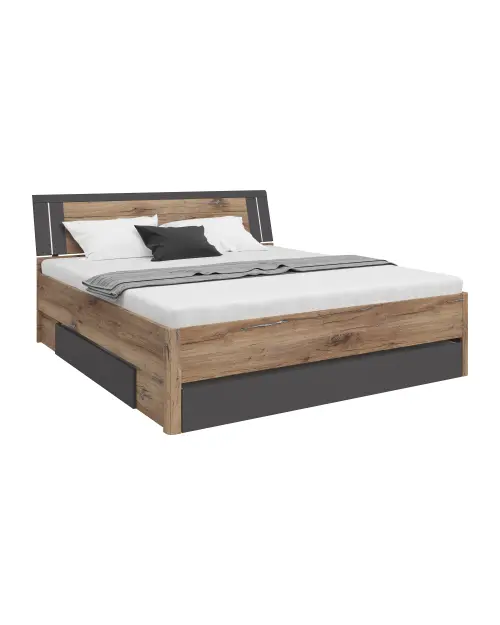
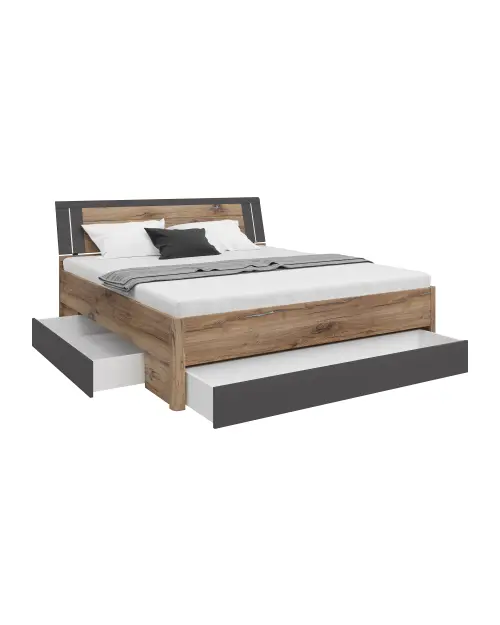
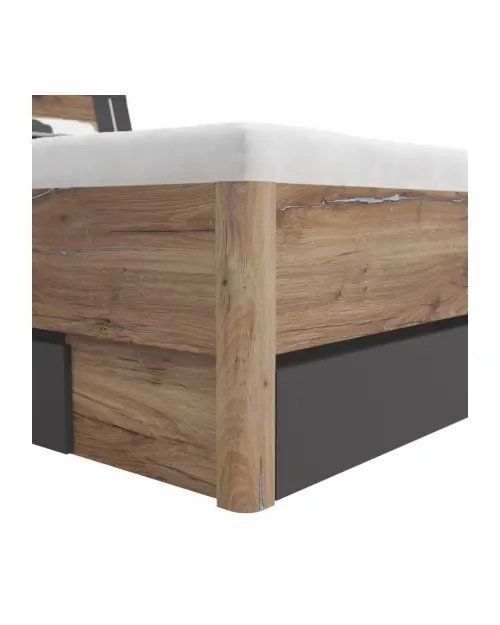
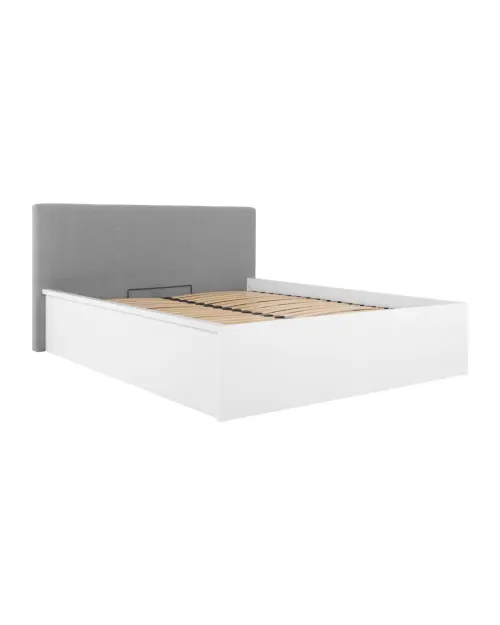
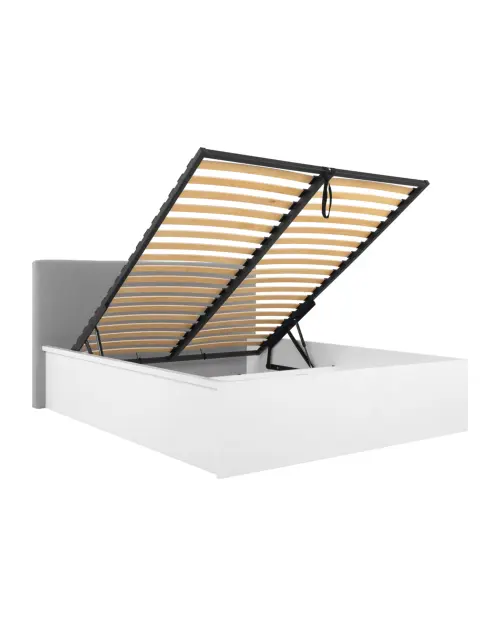
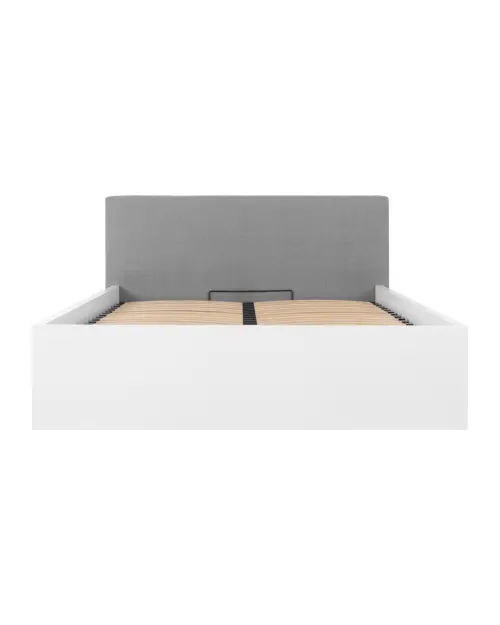
Bedroom furniture for kitting out the room from scratch or replacing single pieces, with beds, wardrobes, nightstands, dressers, dressing tables, headboards, mattresses and bunk beds within the same catalogue. The range mixes finishes that repeat across collections — Sonoma, Wotan, Artisan, Mauvella and Monastery oak, white gloss, cashmere and graphite — so you can build a coherent bedroom without having to order everything from one single series. Prices start at around €60 for compact nightstands and dressing tables and reach up to roughly €1,500 for large modular wardrobes, covering both a single replacement piece and a full bedroom set.
What pieces a complete bedroom is built around
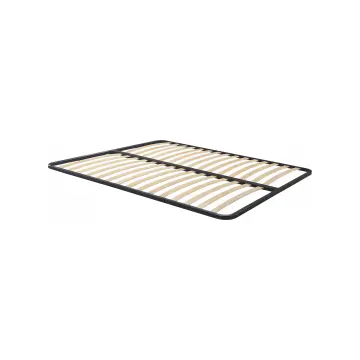
A working bedroom is built on four basics: the bed with its slat base, one or two matching nightstands, a wardrobe for clothes and a mattress that fits the chosen frame. From there you add pieces that improve order and visual balance: a low dresser with drawers to support the wardrobe, a dressing table with mirror in master bedrooms, a separate upholstered headboard when the bed does not include one, and a bunk bed or trundle set-up in shared children's rooms. In the catalogue these items can be combined either as planned sets or as standalone references, which lets you start with bed and nightstands and add wardrobe and dresser later.
Sets for master, teen and children's bedrooms
For master bedrooms the typical combination is a 140, 160 or 180 cm bed with two matching nightstands either side, a three- or four-door wardrobe and, optionally, a low dresser or dressing table on the opposite wall; models such as Kassel 160×200 with its pair of nightstands or the storage-bed versions with tall headboards (Lones, Reve) are designed precisely for that read. Teen and single bedrooms are solved with 90 or 100 cm beds — sometimes with low drawers for off-season clothes — a compact nightstand, a narrow 80–100 cm wardrobe like Matos or Kaspian 90 and, if more storage is needed, a side dresser. In shared children's rooms or holiday lets, bunk beds and two-tier frames take advantage of vertical space and leave the floor clear for play and study.
Finishes that work together: keeping the bedroom coherent
The question of whether all bedroom furniture has to be the same colour has a practical answer: it doesn't, but the room reads cleaner if at least two pieces share a finish or dominant tone. The safest approach is to pick bed and wardrobe in the same decor — both in Sonoma oak or both in white gloss, for example — and let nightstands and dresser introduce a complementary second tone, usually a warm oak when the base is white or a white when the base is oak. Small bedrooms benefit from white gloss or cashmere as the dominant tone since they bounce light back and visually enlarge the wall; larger bedrooms work better with darker oaks like Mauvella, Monastery or Artisan, which add warmth without darkening the space. The 60/30/10 design rule — 60% dominant colour, 30% secondary and 10% accent — applies easily to these finishes without having to step outside the catalogue.
Planning the layout: dimensions and clearance
Before buying, measure the room with a tape and draw the floor plan to scale, including doors, windows, radiators and sockets. The golden rule is to keep 60–70 cm of clear walkway around the bed so you can make it and open drawers without bumping, and one metre in front of the wardrobe if its doors are hinged. For a 160 cm double with two nightstands, the usable wall width to reserve is roughly 280–300 cm; if the bedroom is under 3 m wide, a 140 cm bed with small nightstands is more sensible than forcing a 160. In teen bedrooms under 9 m², beds with low drawers or lift-up storage replace the dresser and free up a wall for the desk. The wardrobe is planned last, fitted to the remaining gap: if there is less than 80 cm of clearance in front, switch from hinged doors to sliding ones.
Storage without overload: wardrobe, dresser and storage bed
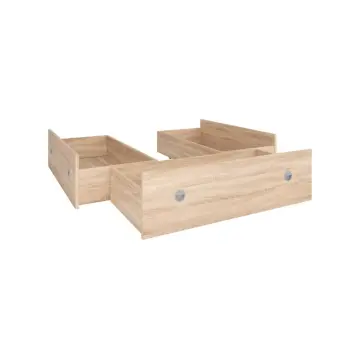
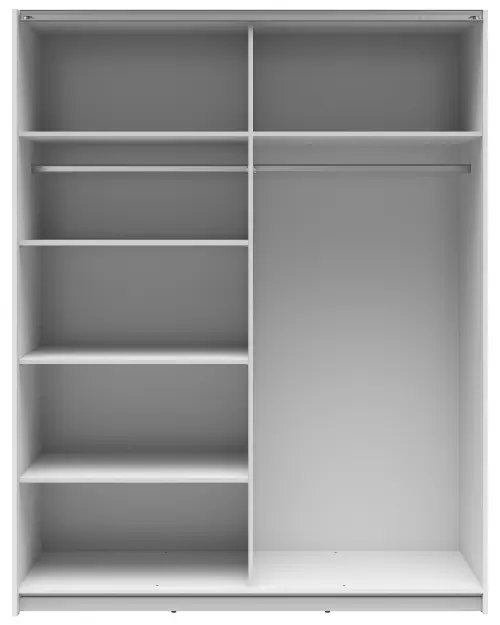
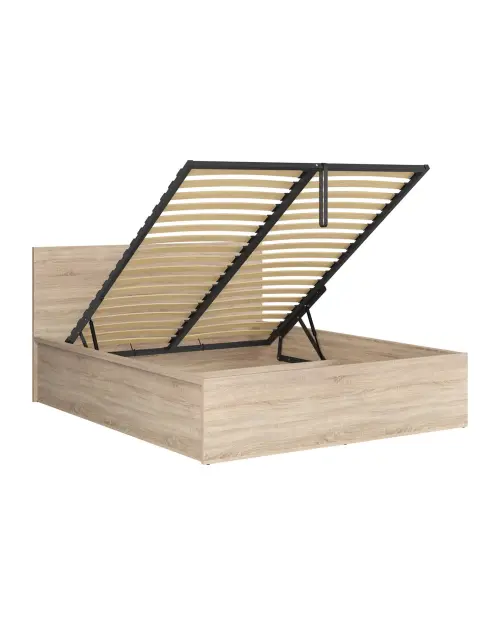
The classic mistake when furnishing a bedroom is to push all storage into the wardrobe and leave out underwear, off-season clothes or bed linen. The workable split shares volume between three items: the wardrobe takes hangers, coats and clothes that hang; the dresser or chest of drawers holds folded clothes, underwear and socks with quick drawer access; and the storage bed or low drawers under the bed hold duvets, spare pillows and suitcases used only at seasonal changeovers. This split prevents the wardrobe from getting clogged with items that do not hang and frees up shelves for a second rail or an overhead compartment. In small bedrooms where a dresser does not fit, beds with three side drawers (Saturn-style) or lift-up storage (Frija, Reve) already cover that role without adding a separate piece.
Materials, hardware and durability
The catalogue pieces are built on laminated chipboard and MDF with heat-fused edges that stand up to light knocks and daily cleaning with a damp cloth. Drawers run on metal slides with safety stops and, on most models, a soft-close system; wardrobe and nightstand hinges are also soft-close to prevent slamming and extend hardware life. On storage beds with lift-up mechanisms the gas struts are sized for a standard European mattress weight (15–25 kg), so it is worth checking the spec sheet before fitting a dense memory-foam mattress. Headboard and upholstered-bed fabrics come in chenille or light corduroy; removable covers are more practical in bedrooms with pets or young children.
Shipping across Spain and home assembly
Bedroom furniture is delivered flat-packed in boxes with screws, fittings, instructions and, where applicable, mirrors and gas struts packed separately. Assembly of a full set — bed, two nightstands, wardrobe and dresser — can be finished in a day with a screwdriver, an Allen key and a second person to hold side panels and fronts during fitting; four-door wardrobes and lift-up storage beds are the most time-consuming pieces and are best built before the mattress and bed linen go in. We ship across mainland Spain and the Balearic Islands with free shipping from €300, and answer pre-sale questions about dimensions, finish compatibility across collections and piece combinations.