
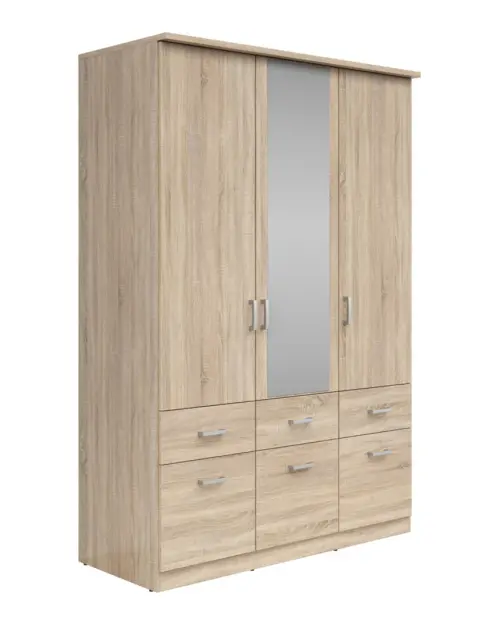
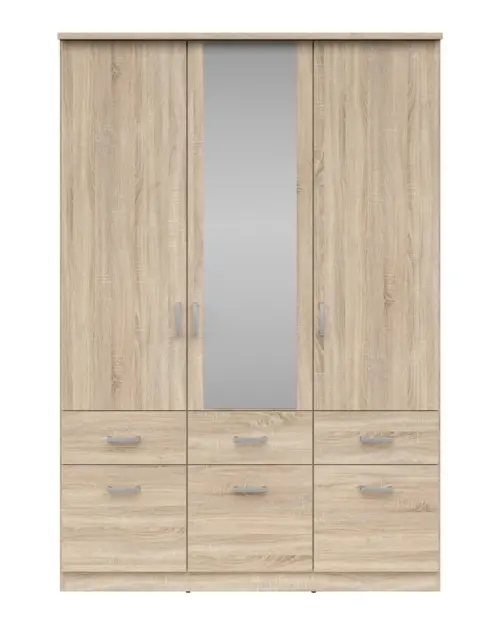

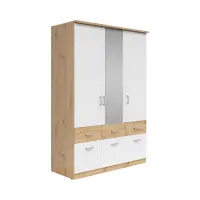
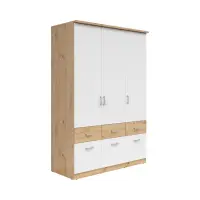
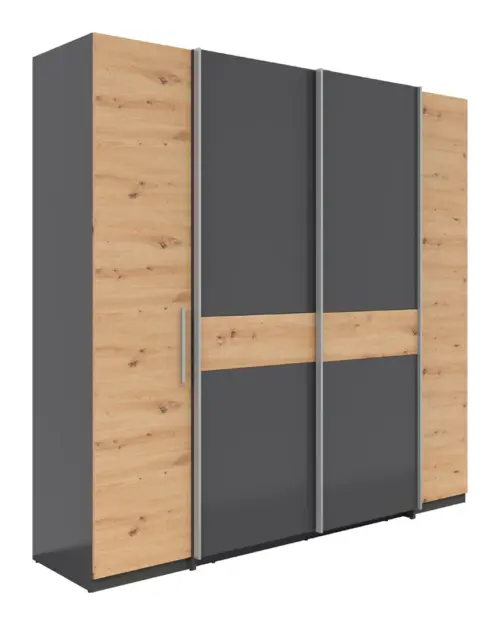
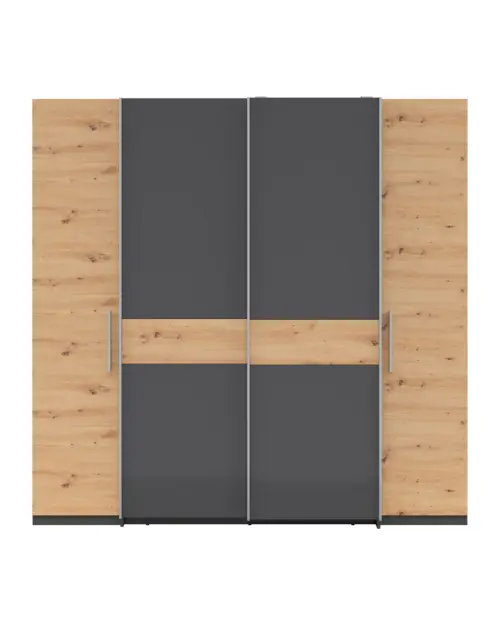
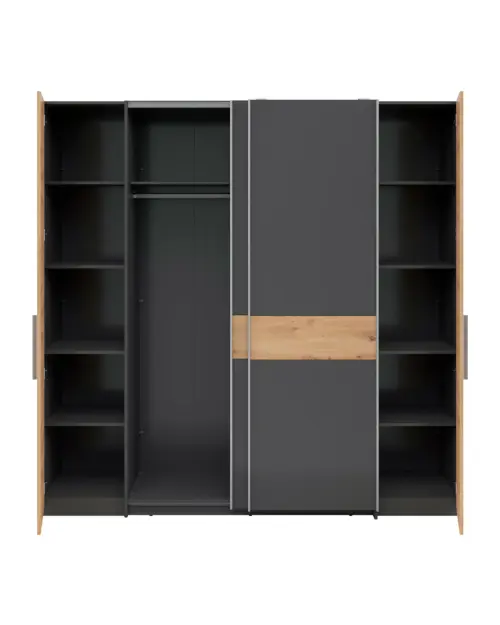
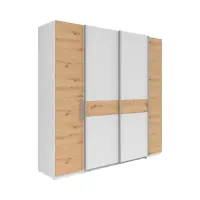
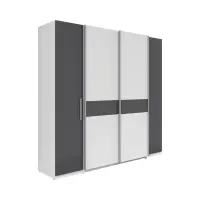
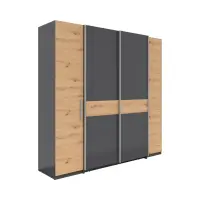
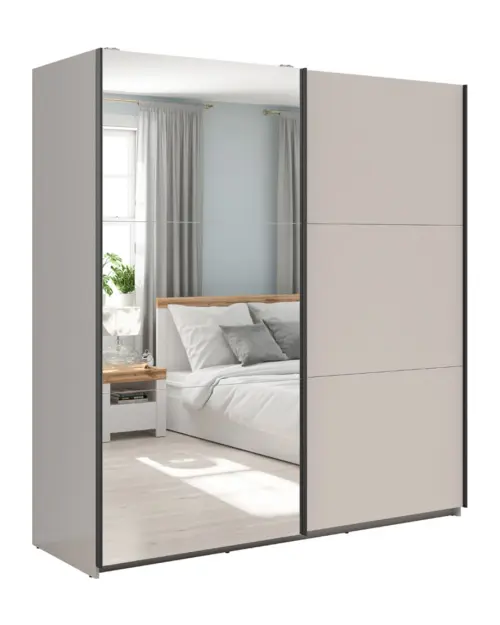
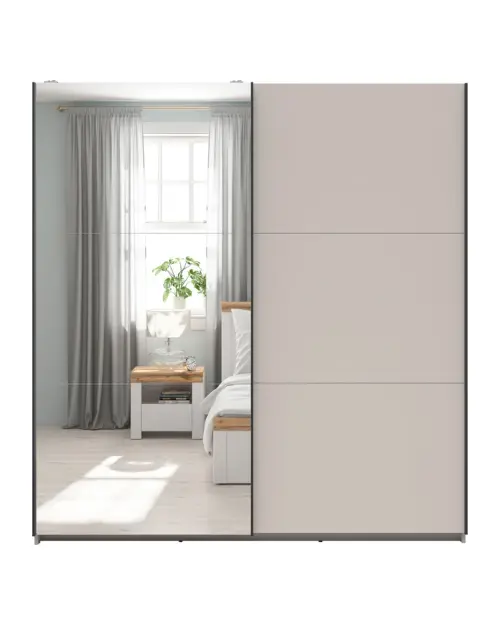
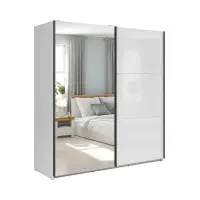
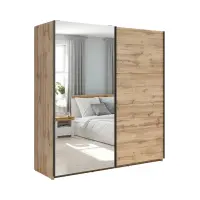
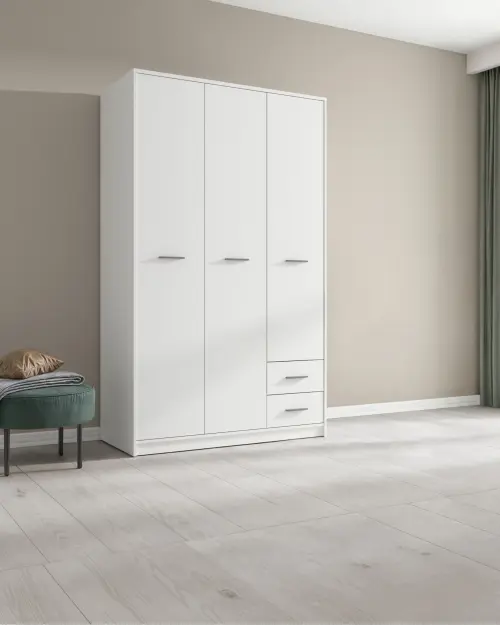
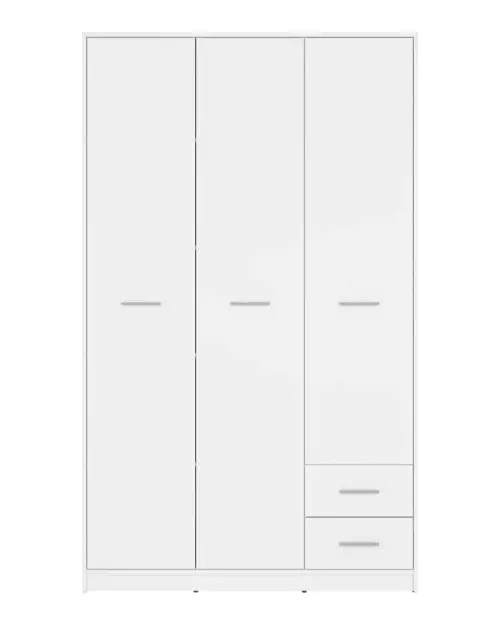
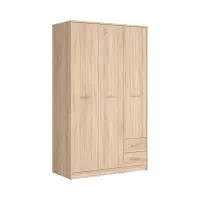
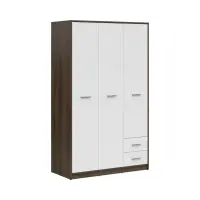
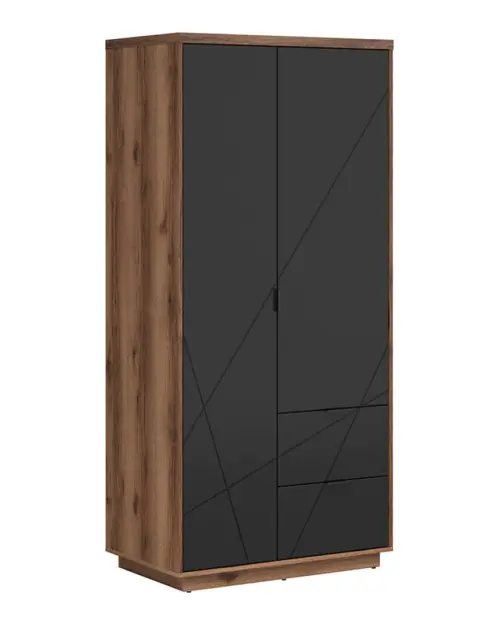
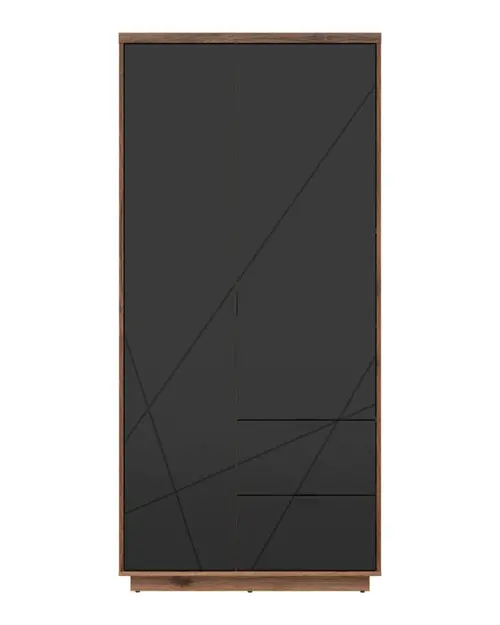
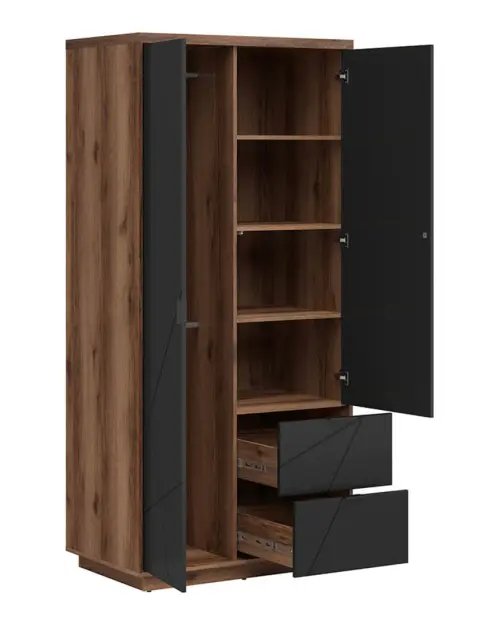
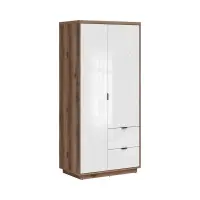
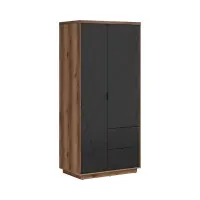
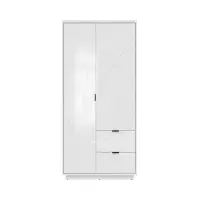
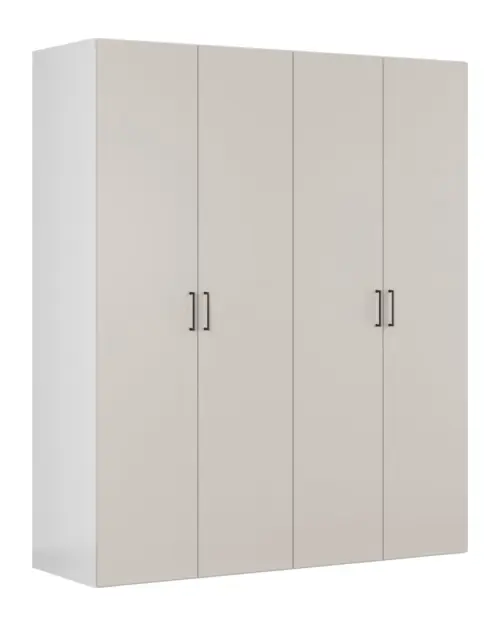
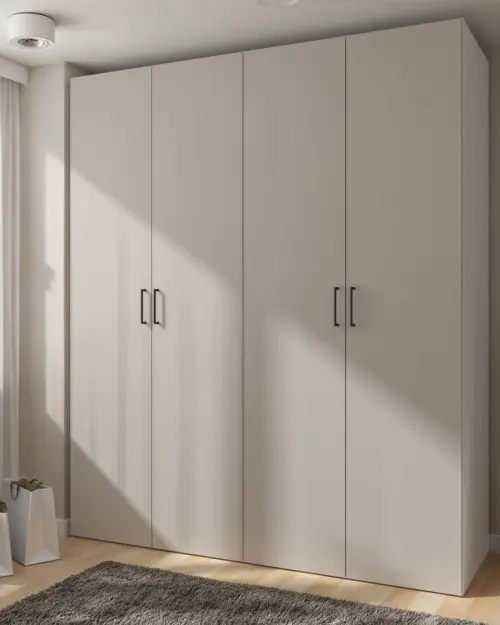
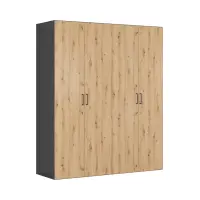
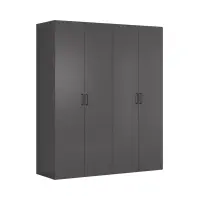
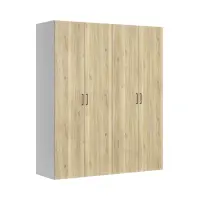
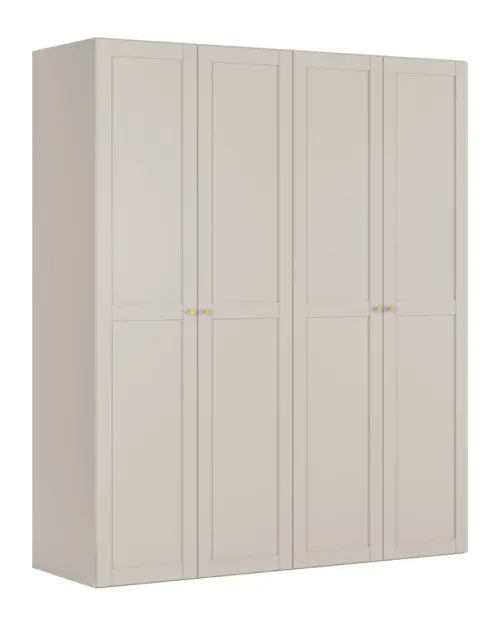
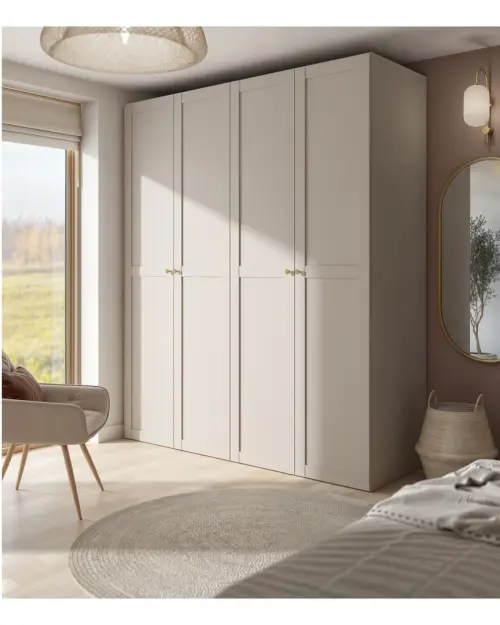
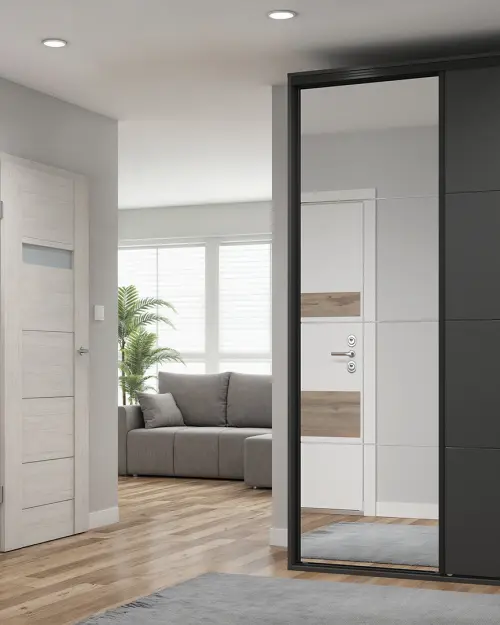
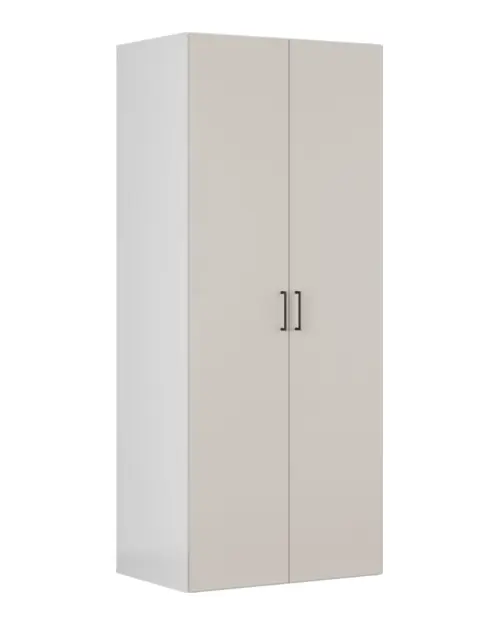
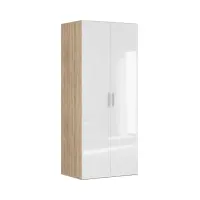
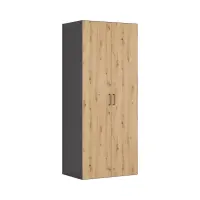
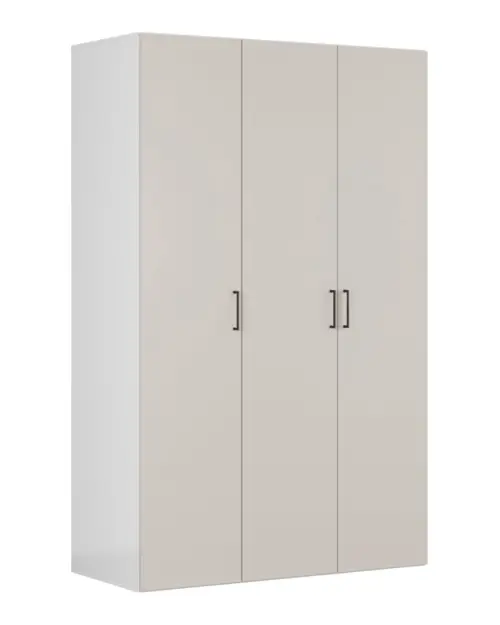
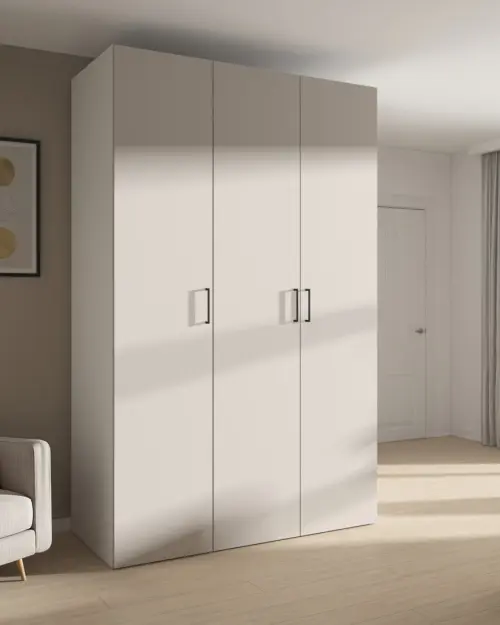
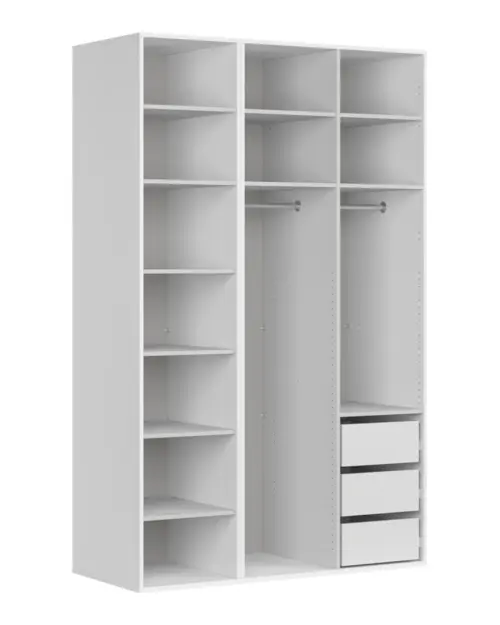
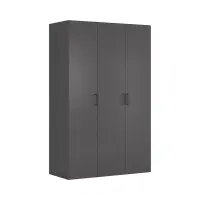
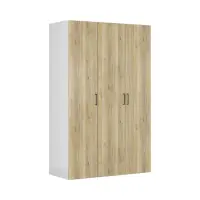
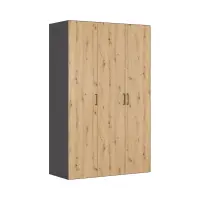
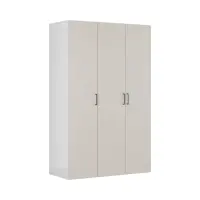
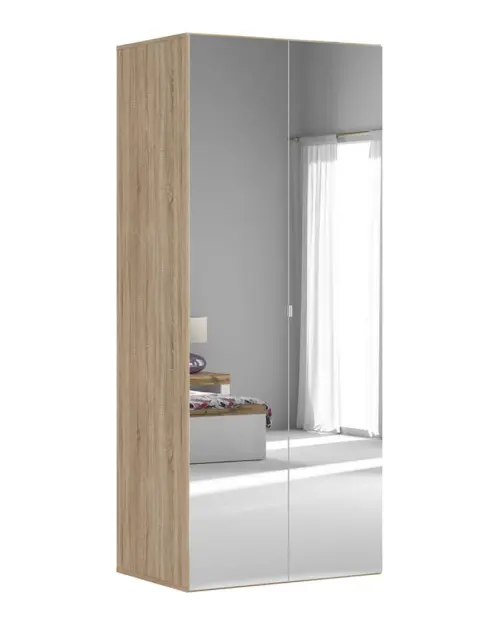
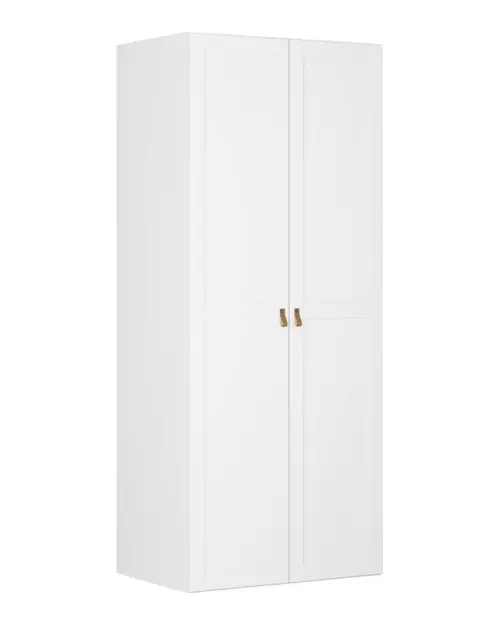
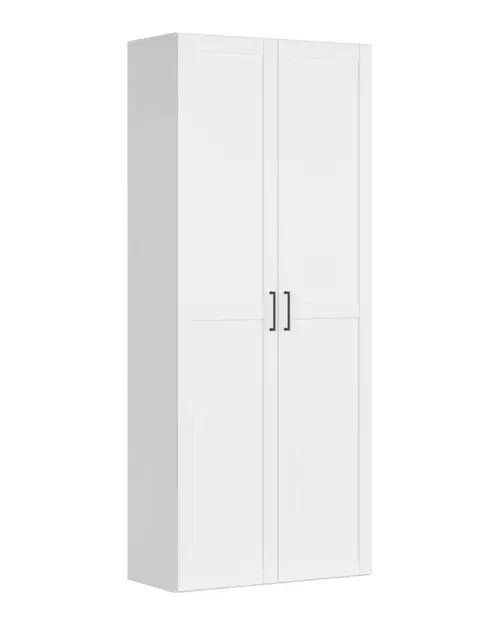
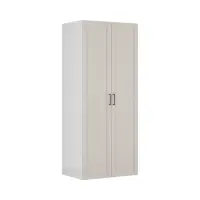
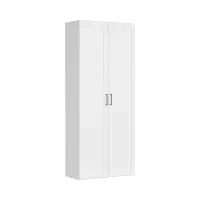
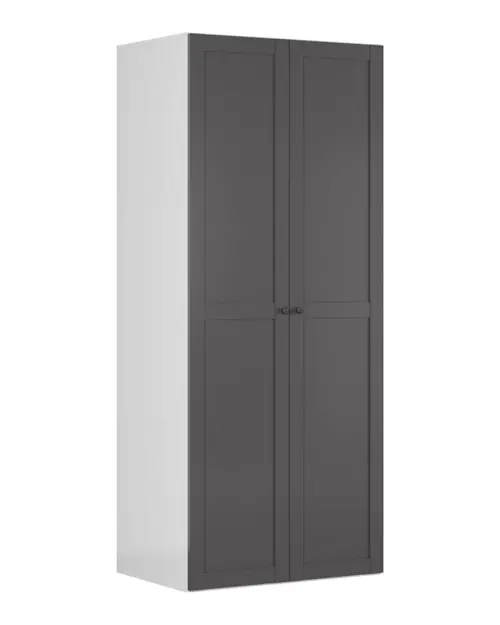
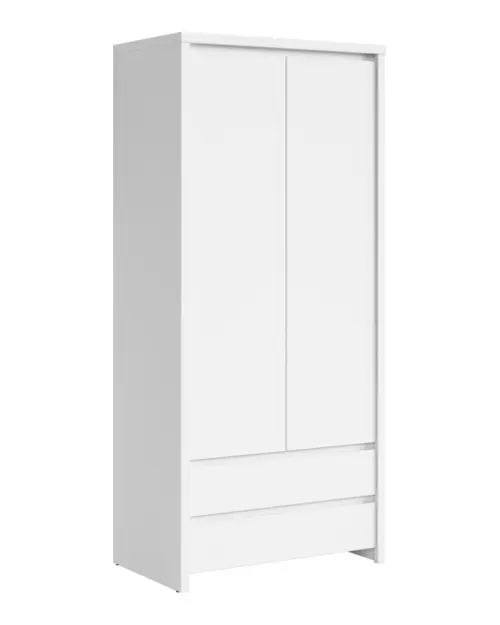
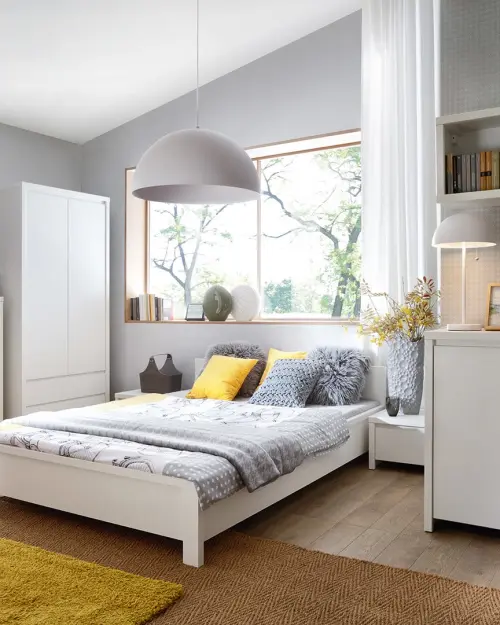
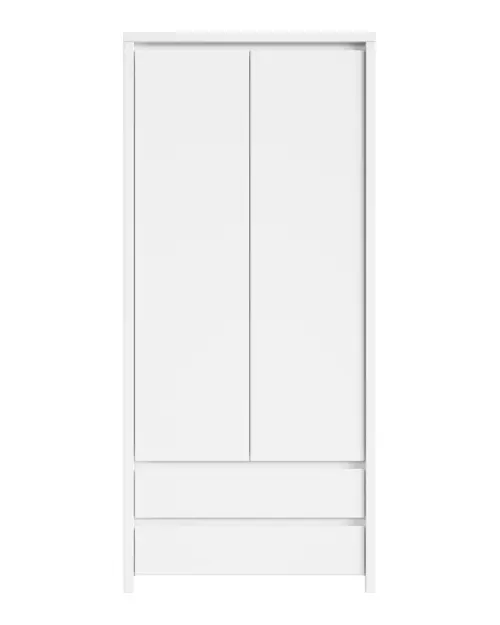
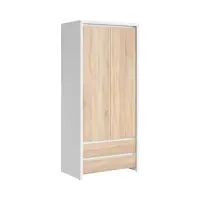
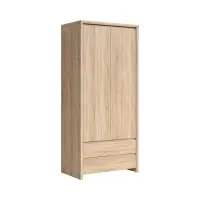
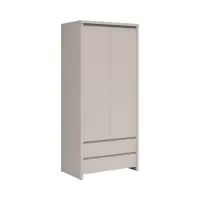
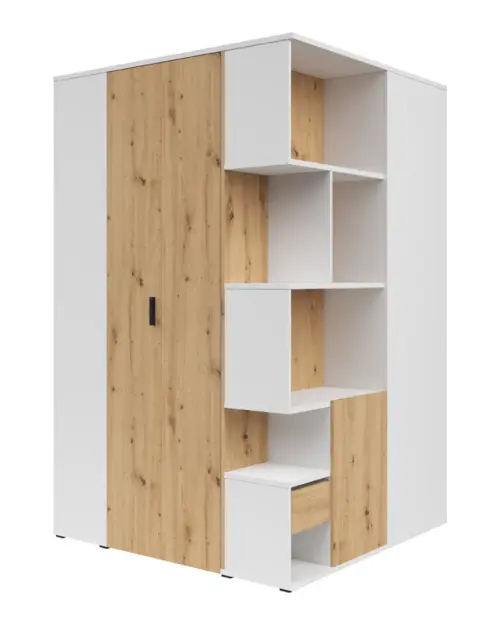
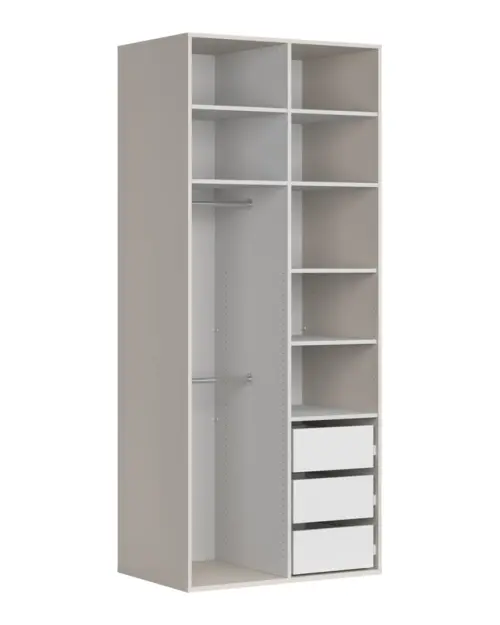
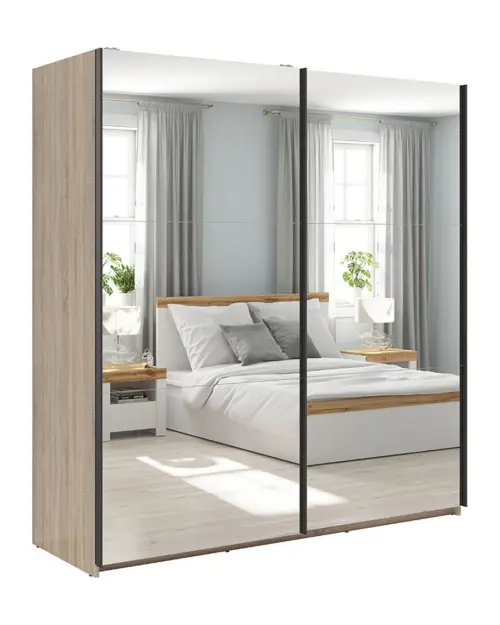
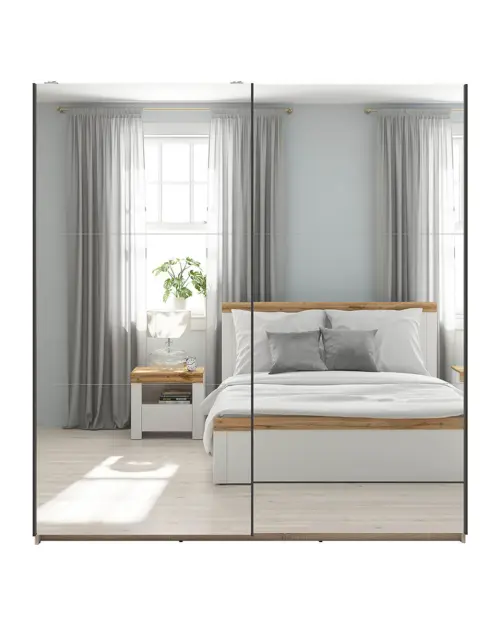
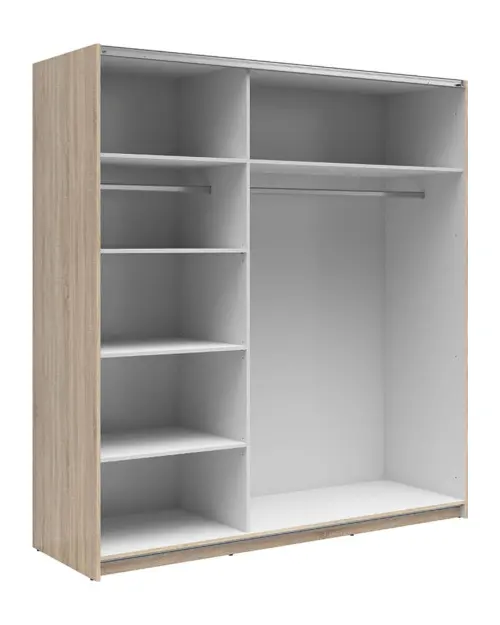
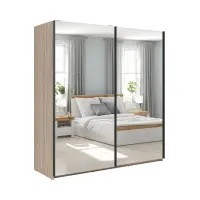
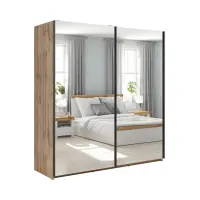
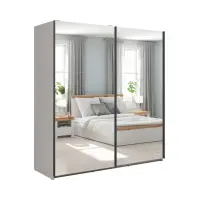
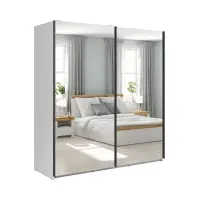
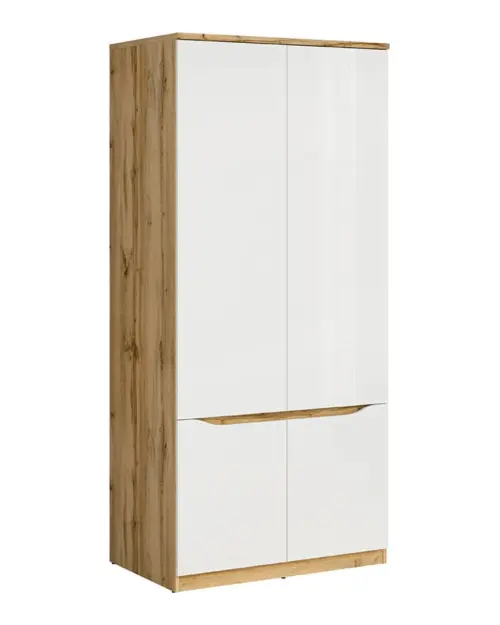
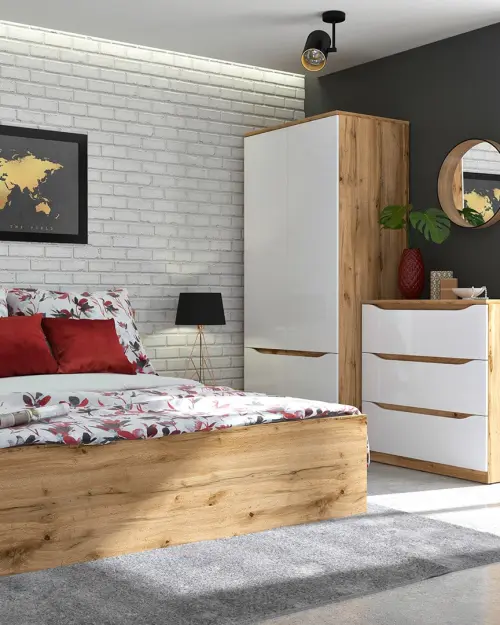
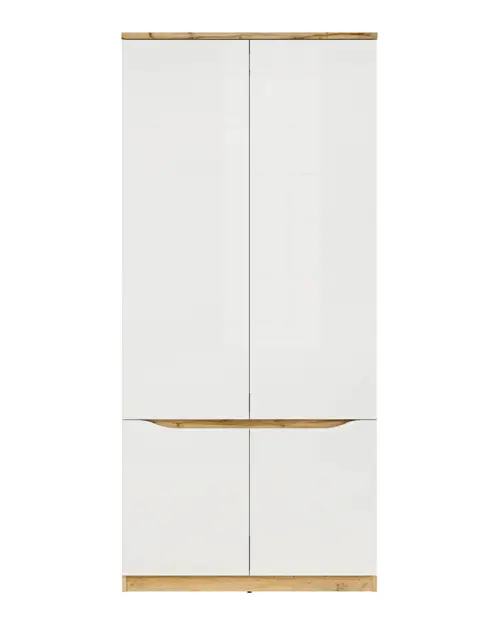
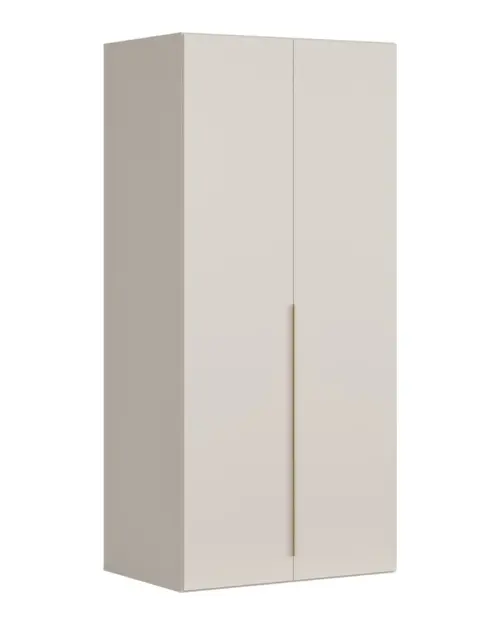
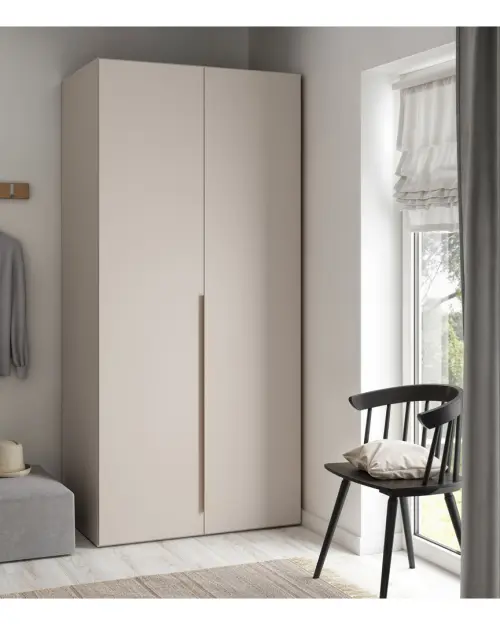
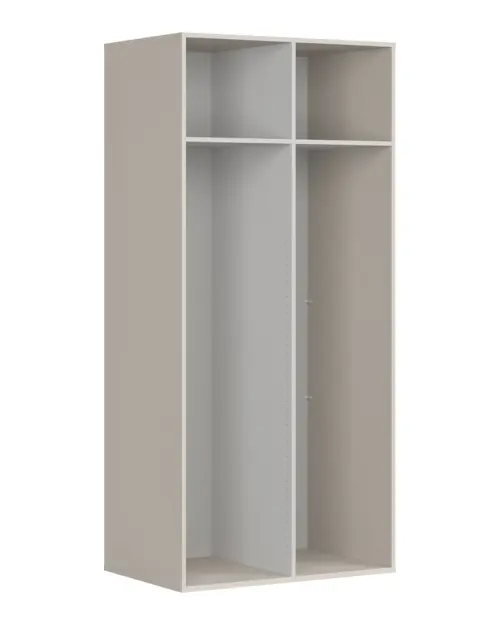
Bedroom wardrobes designed to solve the main storage in the room, from compact 80 cm units to modular compositions up to 250 cm wide. The catalogue features more than twenty models with hinged doors, sliding doors and corner solutions, in oak finishes (Sonoma, Wotan, Artisan, Mauvella, Delano, Noble), gloss white, cashmere, graphite and two-tone combinations. The modular Flex range covers entire walls by combining several units in the same finish, while compact references such as Matos 80 fit small gaps in children's rooms or improvised dressing areas.
Wardrobe types: hinged, sliding and corner
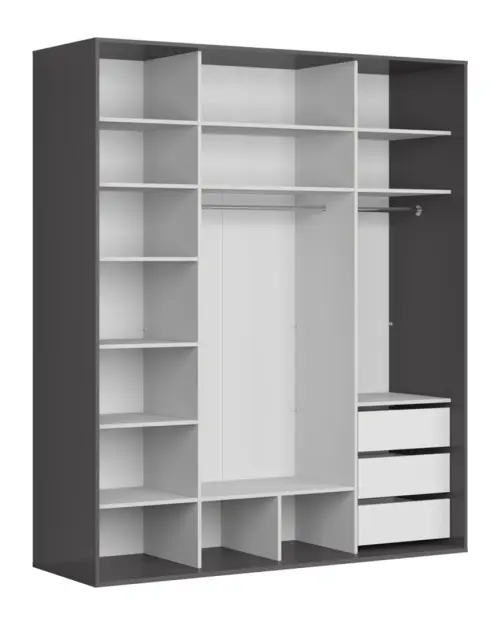
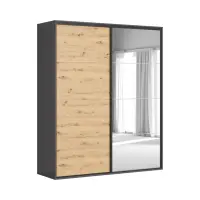
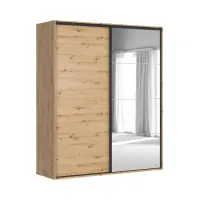
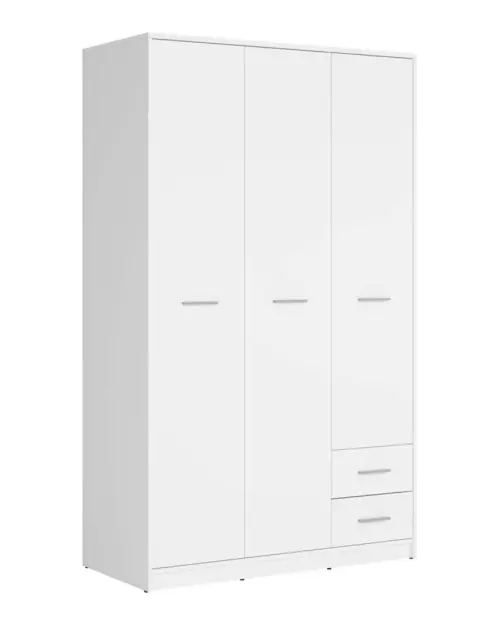
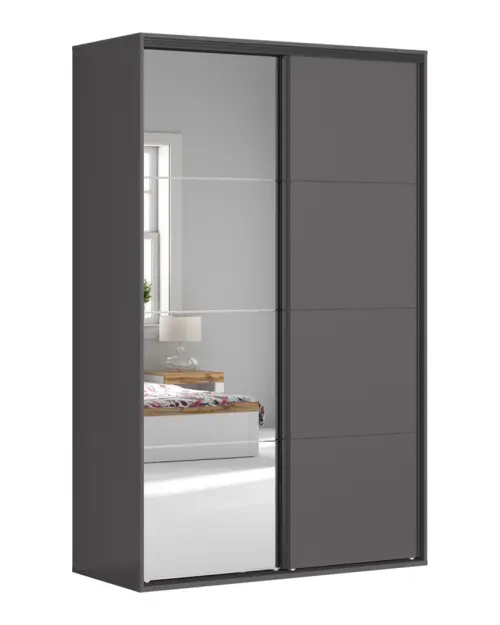
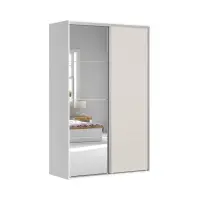
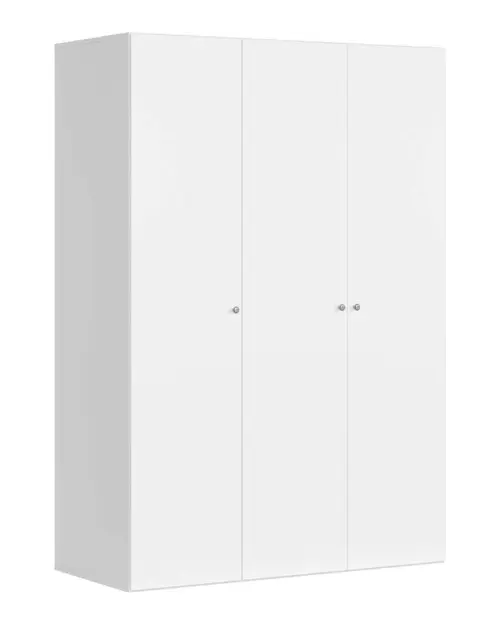
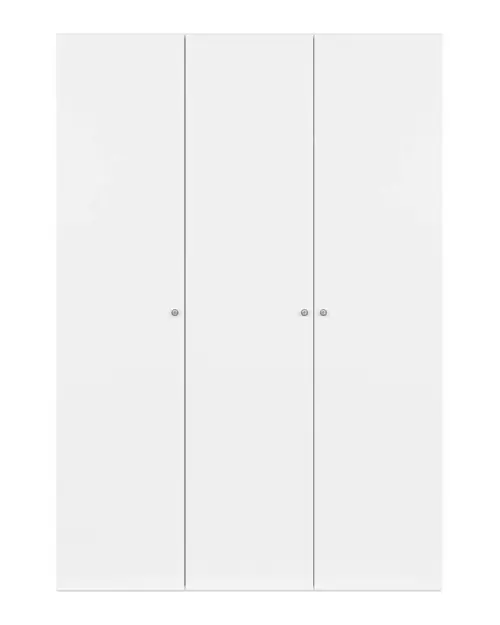
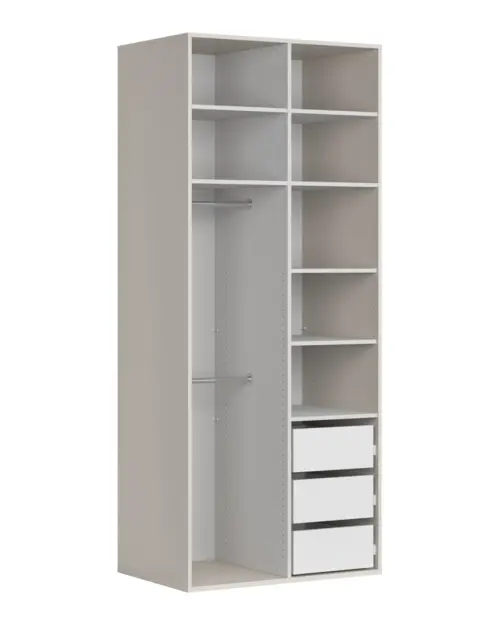
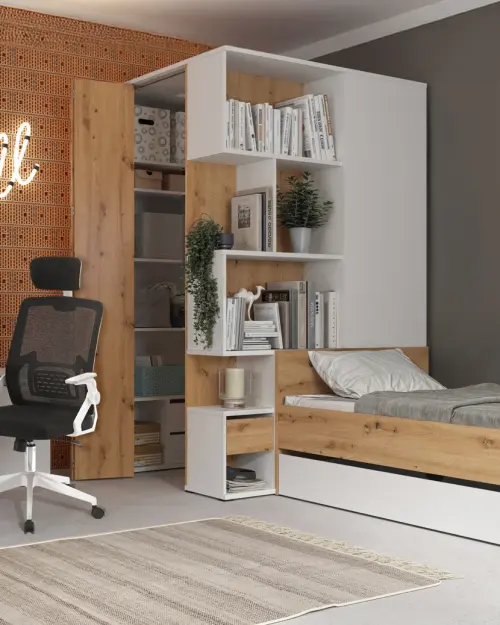
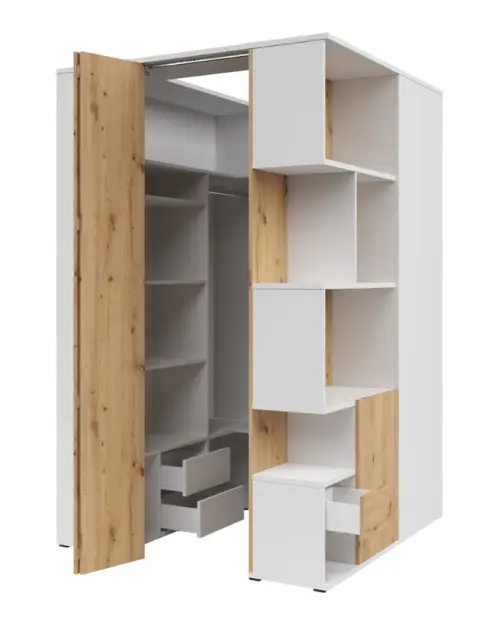
Hinged wardrobes (Brando-3, Nepo Plus 118, Forn, Kaspian 90, Nuis 90, Flex 100, Flex 150) open on hinges and are the standard choice when there is enough clear floor in front for the doors to swing without hitting the bed or neighbouring furniture. Sliding models (Fabio, Tetrix 183, Flex 150 Sliding, Flex 250 Sliding) work with two panels that travel in parallel along rails, never taking up floor space, which makes them ideal for small bedrooms or when the wardrobe sits opposite the bed. To use the dead corners that often go to waste, Homeland 136 works as a corner wardrobe 216 cm tall and 136 × 135 cm in plan, with two doors, three drawers and an interior wide enough to hang long coats without folding.
Modular Flex range: choose width, height and mechanism
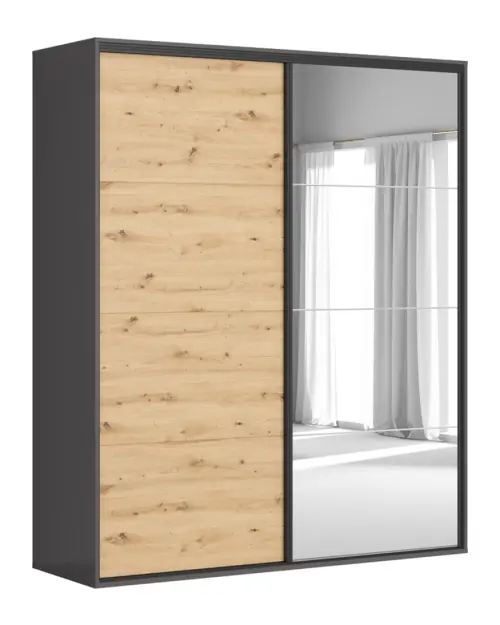
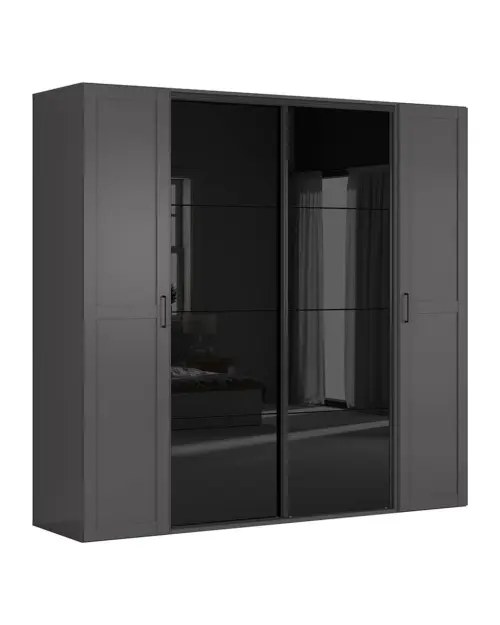
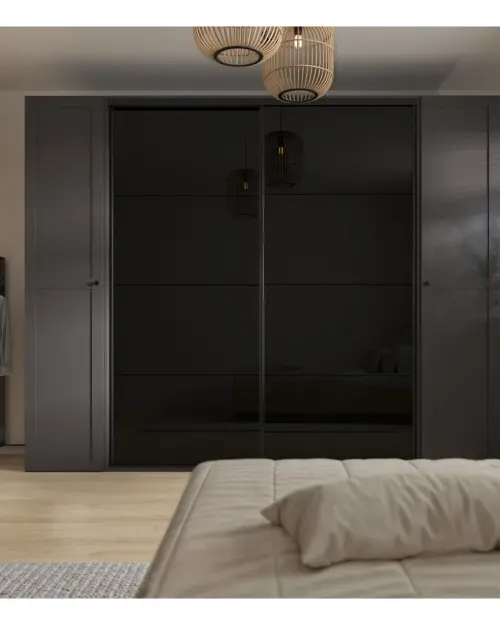
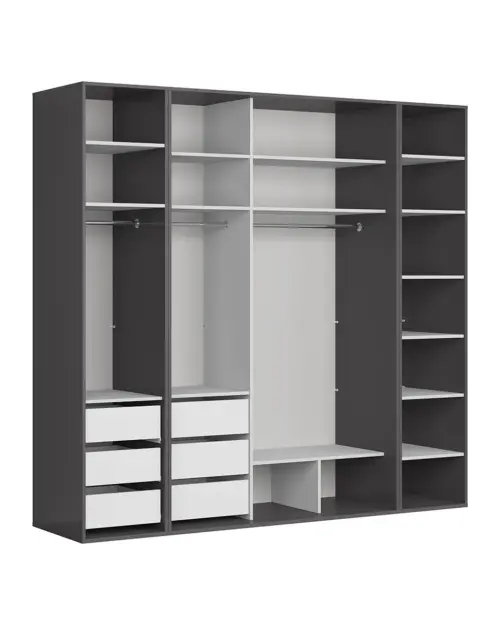
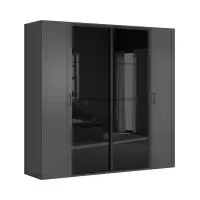
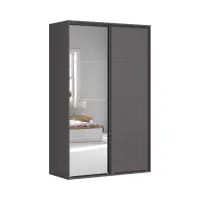
Flex is the broadest modular line in the catalogue, defined by its 66 cm depth — the minimum needed for hangers to face forward — and by the option to combine several units in the same finish. It works with four main widths — 100, 150, 200 and 250 cm — and two heights — 218 cm for flats with standard ceilings or 240 cm to make the most of the wall. The simpler Flex 100 and Flex 150 with two or three hinged doors start from around €450 and cover single bedrooms or compact double rooms; Flex 150 Sliding and Flex 200 with four doors sit around €850–€1,200 and are the most popular formats for couples; Flex 250 Sliding, in graphite with a gloss black front, is the largest piece in the catalogue (240 × 250 × 66 cm) and reaches around €1,850. All variants share finishes (white, white/oak Mauvella, graphite, graphite/oak Artisan, cashmere), which means you can extend the wardrobe later without the new units clashing with the originals.
Finishes: oak, gloss white, graphite and two-tone
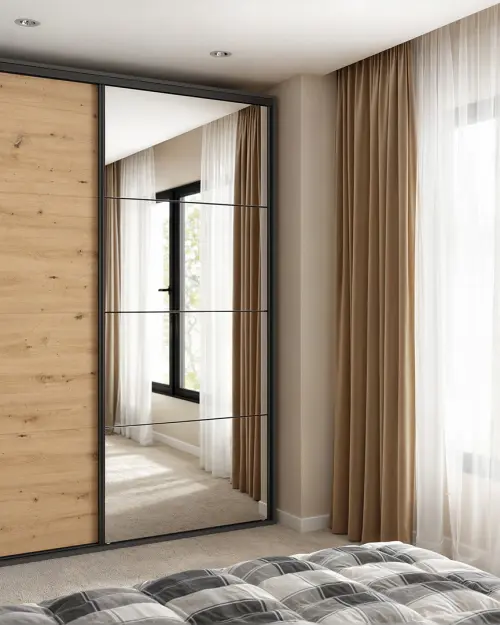
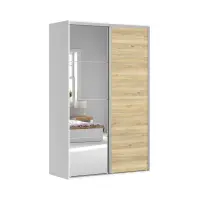
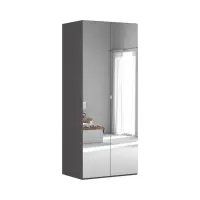
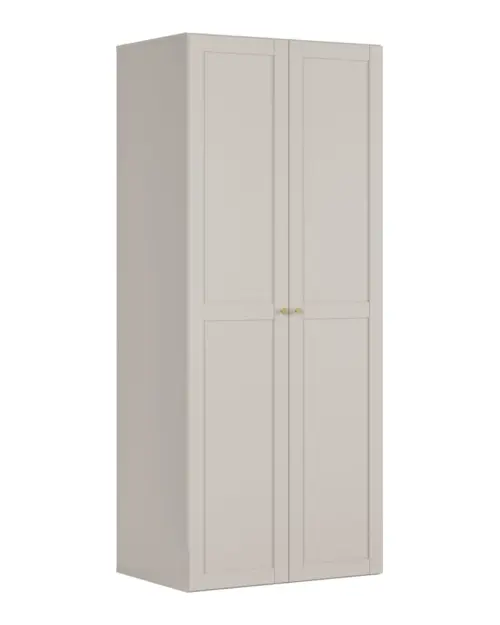
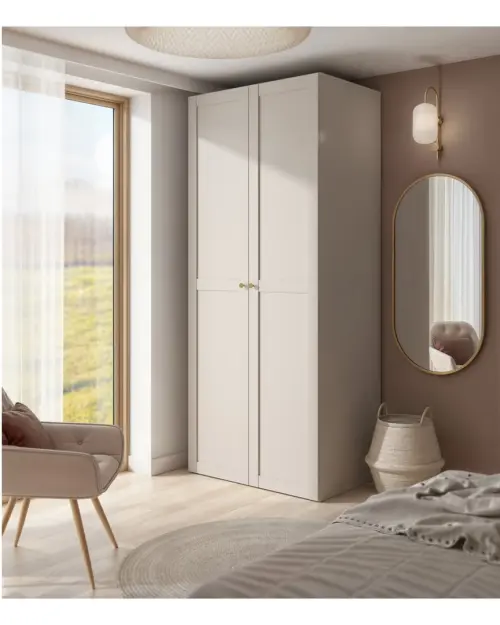
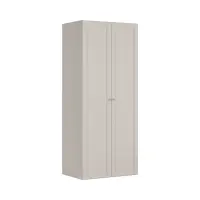
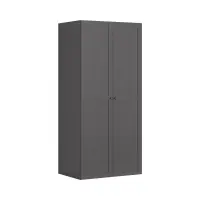
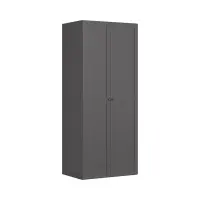
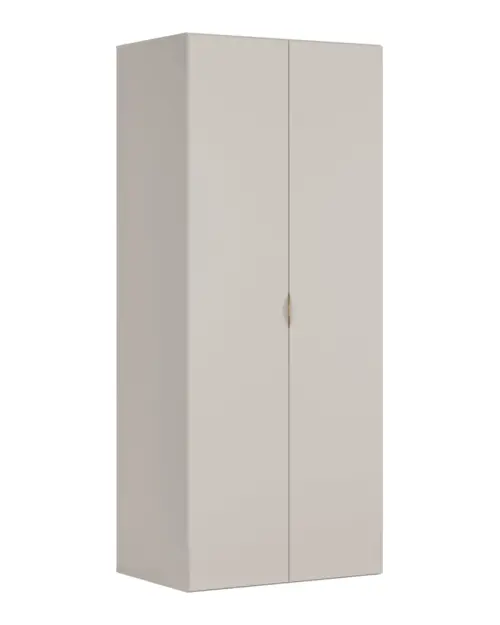
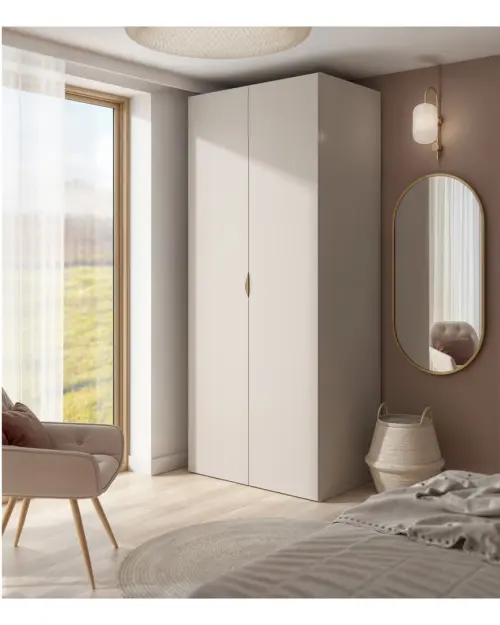
The oak finishes cover the whole tonal range of the catalogue: Sonoma and Wotan in warm honey tones for traditional bedrooms, Artisan with a marked rustic grain, Mauvella and Delano oscuro in deeper tones, and Noble or Flagstaff oscuro as contemporary neutral alternatives. Gloss white (Forn, Kaspian 90, Tetrix 183, several Flex models) remains the most requested option in small rooms because it visually widens the wall and reflects more light. Cashmere and graphite offer less saturated neutrals for contemporary bedrooms, and the graphite-with-gloss-black-front combination (Flex 250 Sliding) brings a more dramatic note for minimalist interiors. Two-tone versions are useful when the bedroom already has another piece in the same range and you want to break the monotony without resorting to strong colours: white with oak Mauvella or Sonoma to soften, graphite with oak Artisan to reinforce the contrast.
Sizes: widths, heights and depths
Width is decided based on the available gap and the amount of clothes to store. Narrow wardrobes between 80 and 100 cm (Matos 80, Kaspian 90, Nuis 90, Forn, Flex 100) fit beside the bed or flanking the window in single bedrooms; 118–150 cm units (Nepo Plus 118, Homeland 136, Flex 150) are the most versatile mid-range for a couple or a shared children's room; 200 to 250 cm compositions (Brando-3, Tetrix 183, Fabio, Flex 200, Flex 250 Sliding) take a full wall and deliver the real storage volume a couple with a wide wardrobe needs. Standard heights sit at 195–216 cm, enough to hang long coats without the rail touching the floor; the tall Flex versions reach 240 cm to use the space under the ceiling with top shelves for duvets or suitcases. Depth is the most critical figure for hangers to fit without bending: 54–60 cm in most models (Kaspian, Nepo Plus, Tetrix, Brando) and 66 cm across the entire Flex range.
Mirrors, drawers and interior organisation
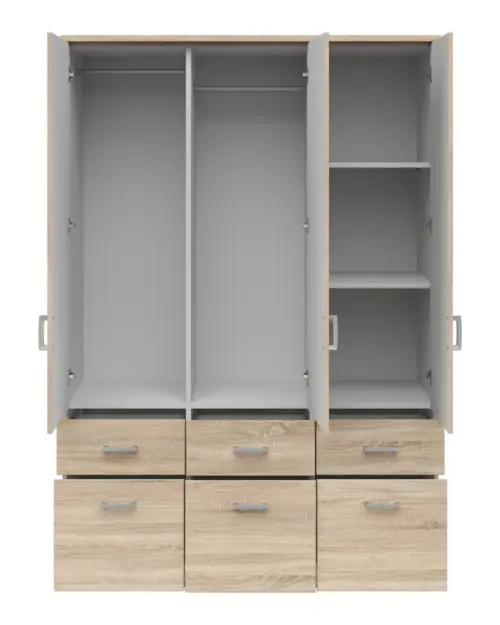
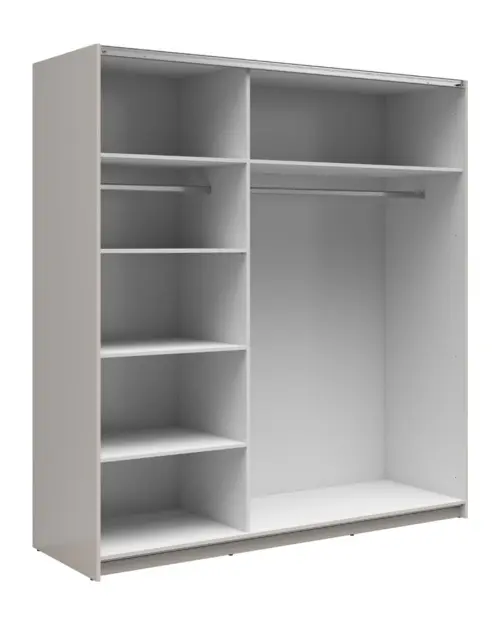
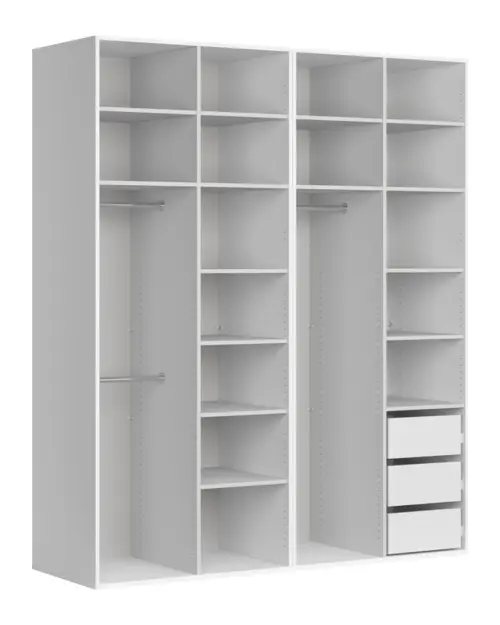
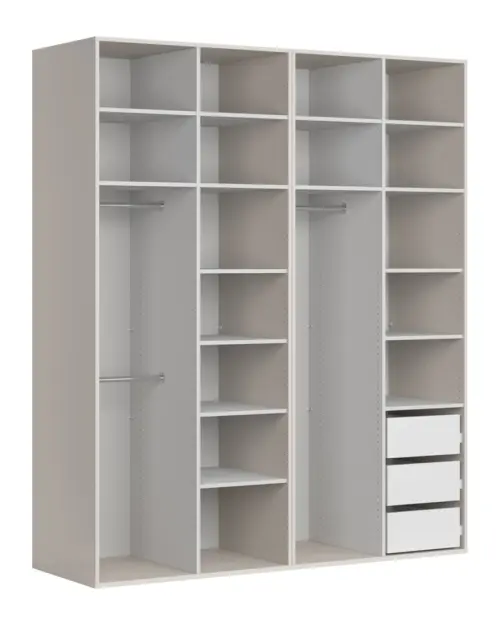
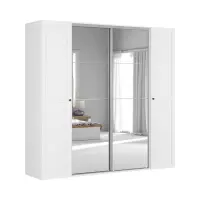
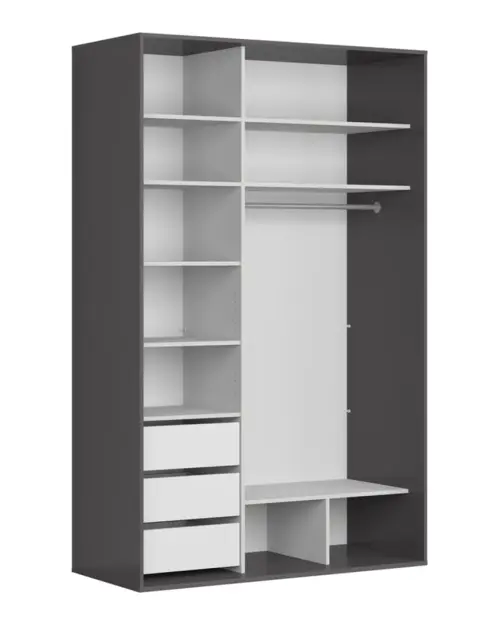
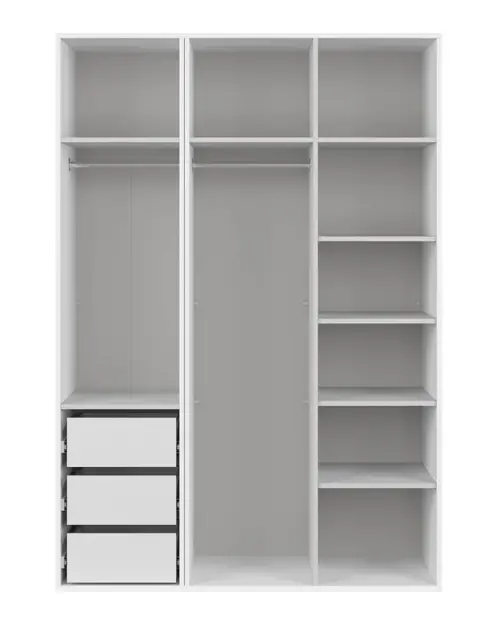
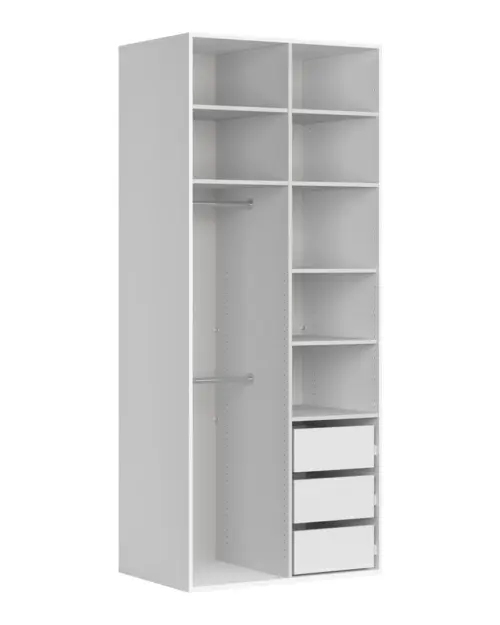
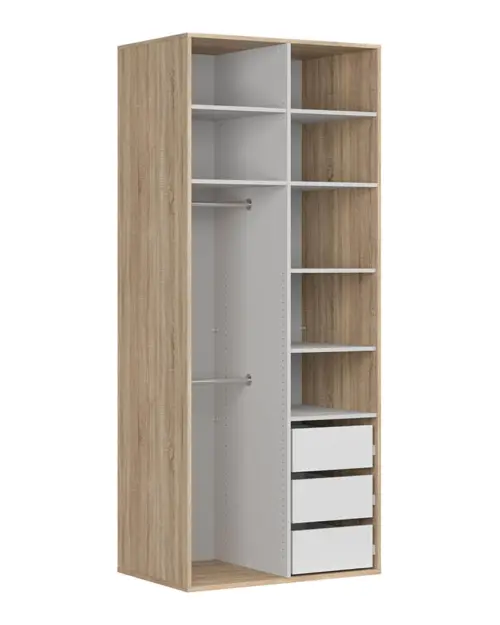
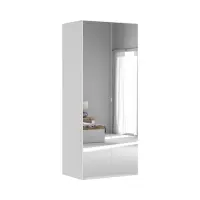
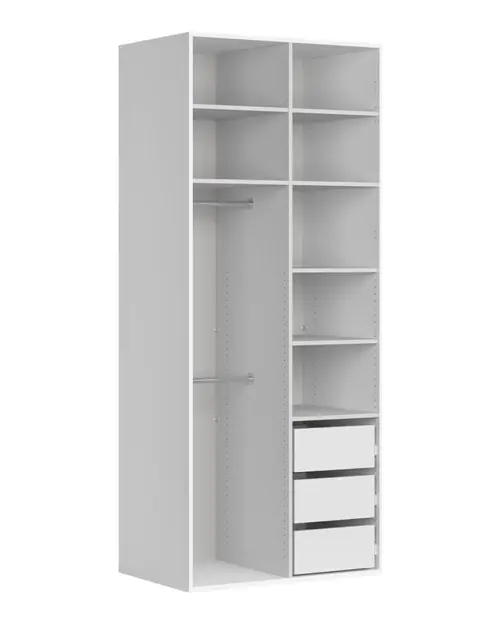
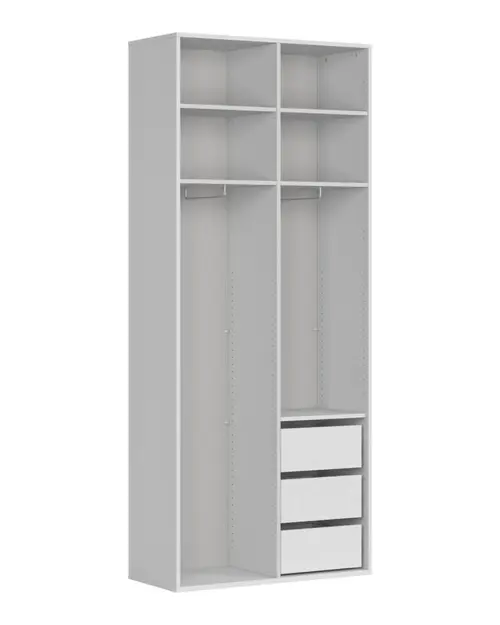
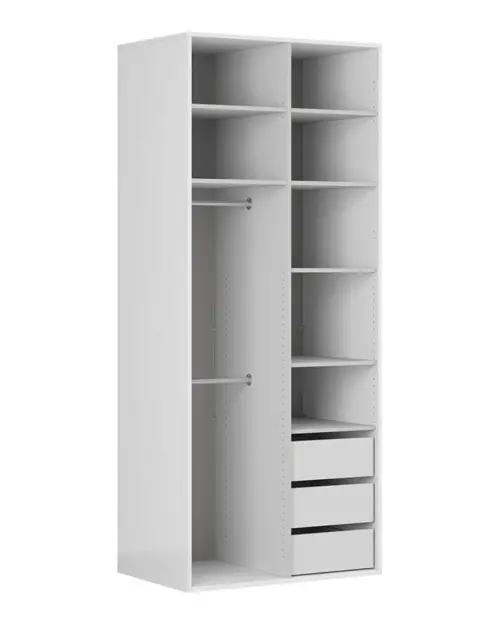
The front mirror appears on sliding units such as Tetrix 183 and Flex 150/250 Sliding, and also on some hinged models like Brando-3 or Flex 100 with mirrored front: beyond working as a dressing mirror, it sends light back into the room and visually doubles the wall. Models with drawers (Brando-3 with two drawers, Nepo Plus 118 with two, Kaspian 90 with two, Homeland 136 with three) free underwear, socks or accessories from needing a separate chest; the drawers run on metal slides with a safety stop so they don't pull right out. Inside you'll find hanging rails, adjustable shelves and, in the tall Flex formats, a top compartment for seasonal clothes, duvets or luggage. Soft-close hinges are standard on most references, which prevents door slams and extends the life of the hardware.
How to choose the right wardrobe for your bedroom
The first decision is the mechanism: if there is less than 80 cm of clear floor in front of the wardrobe up to the bed or another piece of furniture, sliding doors (Fabio, Tetrix 183, Flex 150/250 Sliding) avoid the sweep of swinging panels. If the front is clear and you want one-glance access to all your clothes, hinged doors (Flex 100/150, Kaspian, Brando-3) are more comfortable because they reveal the full interior when opened. Always measure the wall with a tape and leave 2–3 cm of side clearance so the wardrobe fits without forcing the skirting board or the ceiling cornice. The practical rule for circulation is to leave one metre between the wardrobe and the foot of the bed, enough to open drawers and hinged doors without colliding. For children's bedrooms, low and robust pieces like Matos 80 (78.5 cm tall) prioritise accessibility for the child over total volume, and pair well with a low chest in the same finish.
Shipping across Spain and home assembly
Wardrobes are delivered flat-packed with screws, hardware, mirrors protected by specific packaging and an assembly manual included. Assembly takes two to four hours depending on the number of doors, drawers and top compartments, and only requires a screwdriver, a rubber mallet and a second person to hold the sides steady during the build; mirrors and sliding fronts are fitted last to avoid knocks. We ship across mainland Spain and the Balearic Islands, and we answer questions on measurements, finish compatibility between ranges or how well a model fits the available gap before the order is placed.