
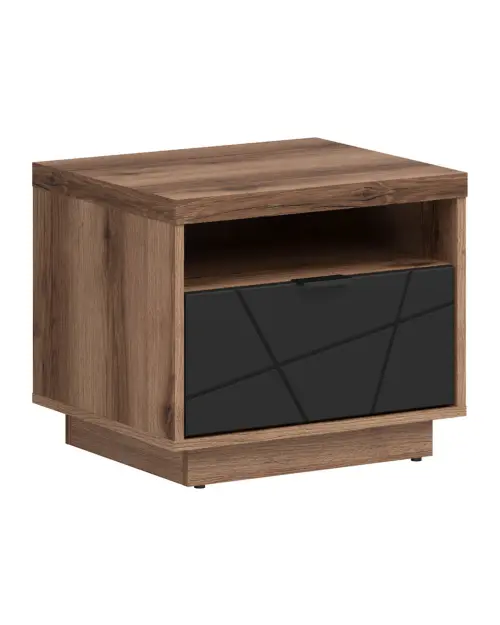
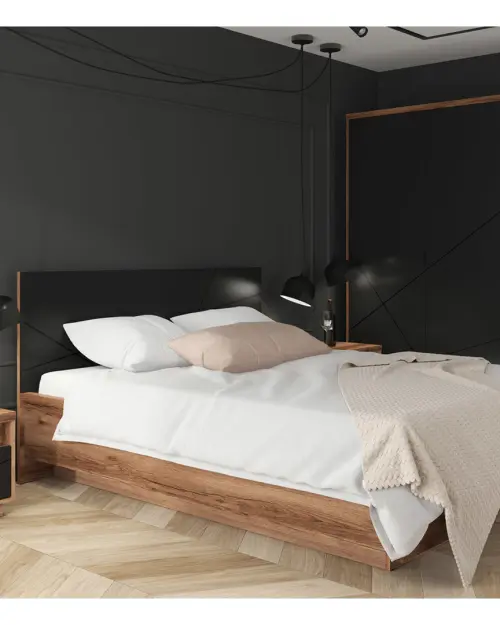
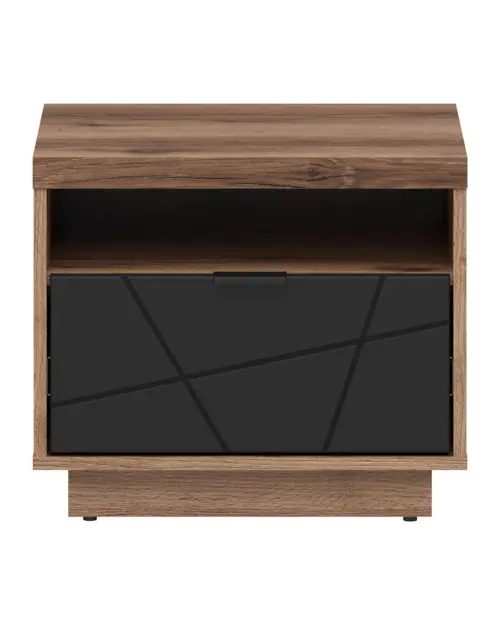
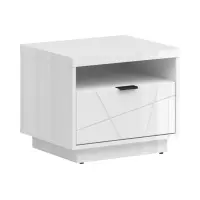
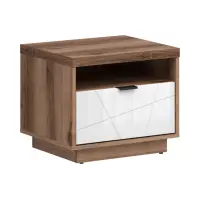
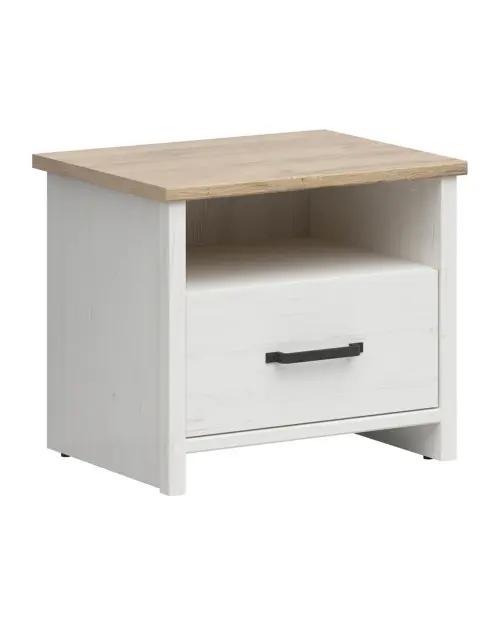
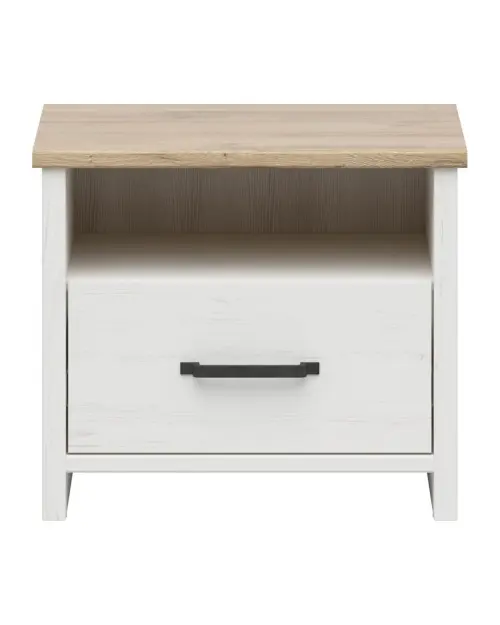
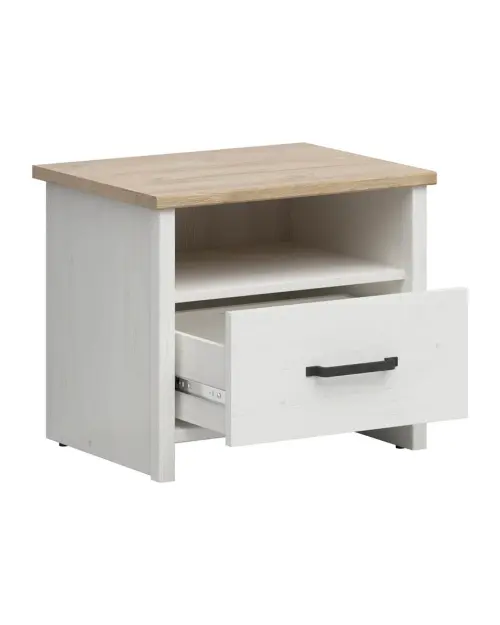
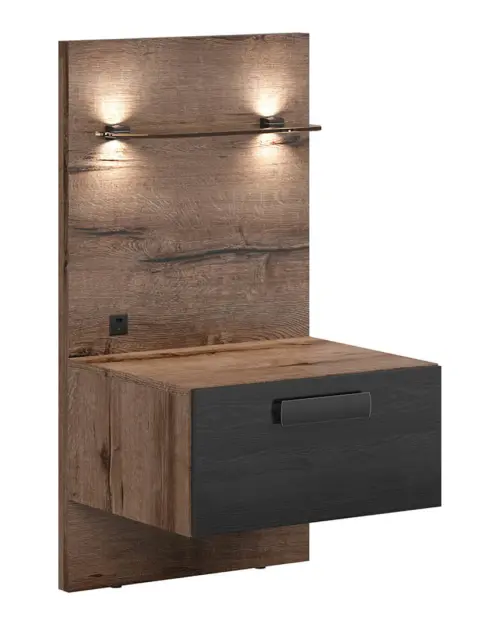
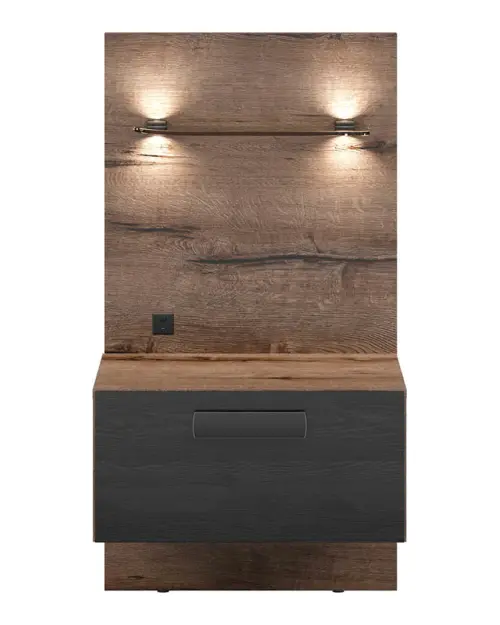
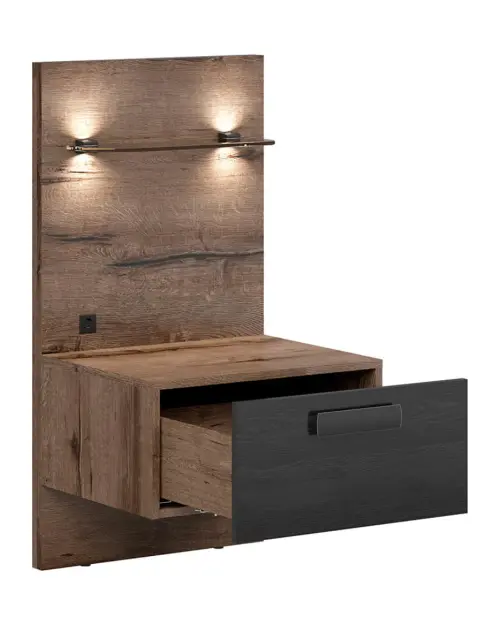
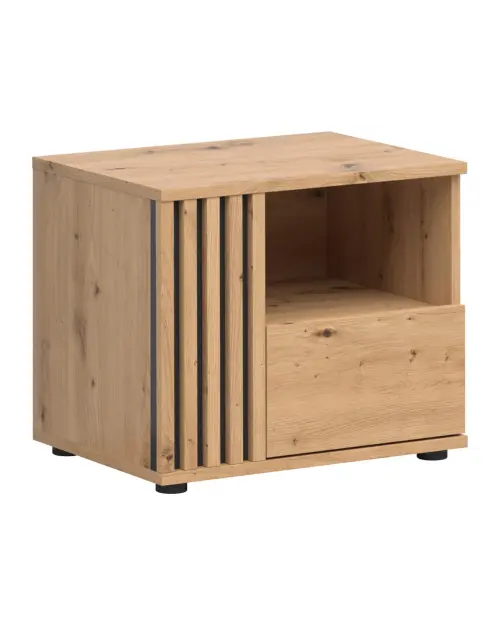
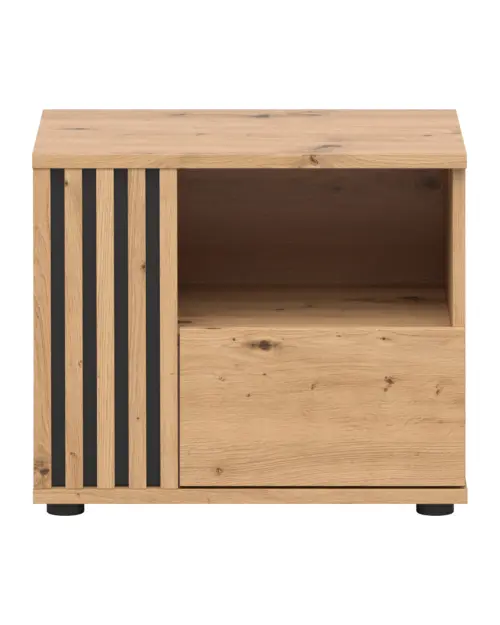
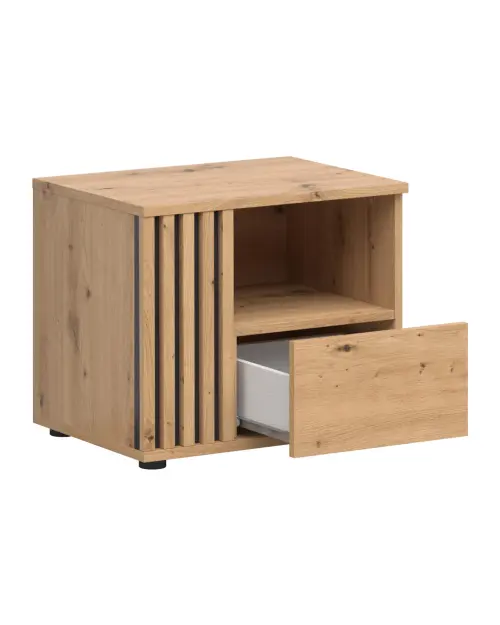
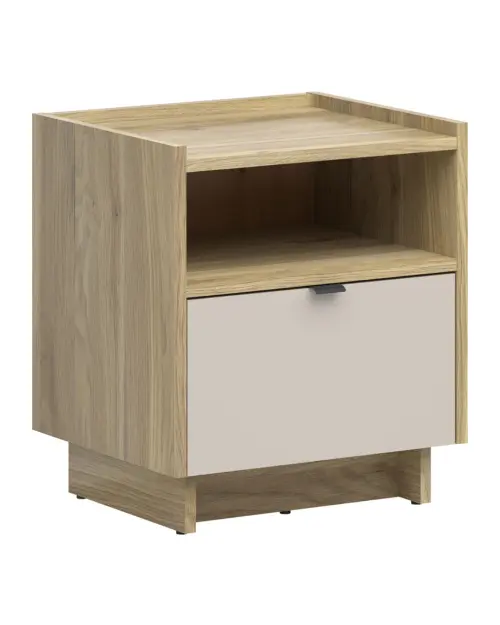
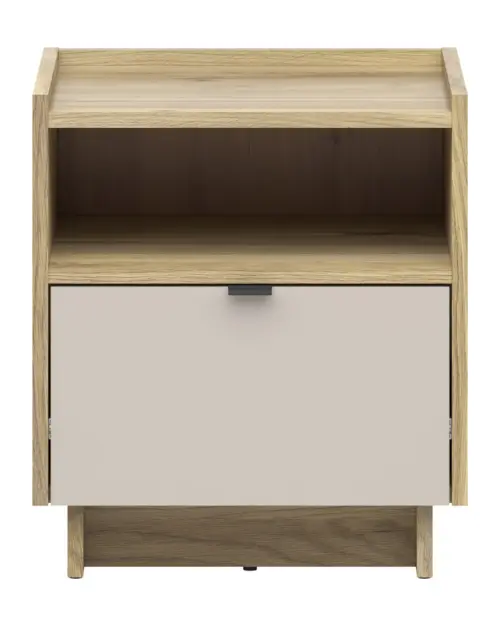
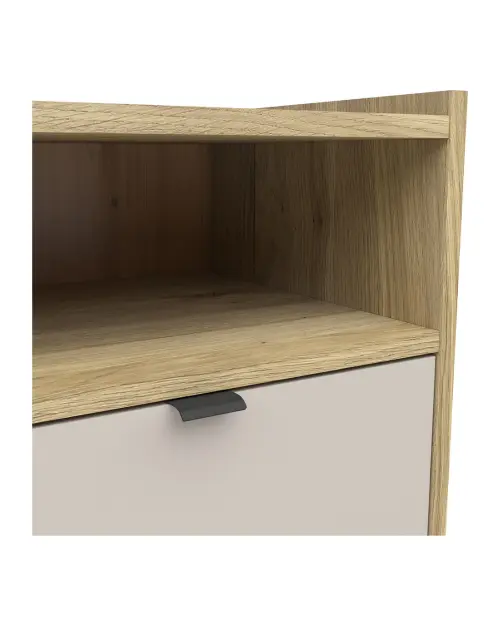
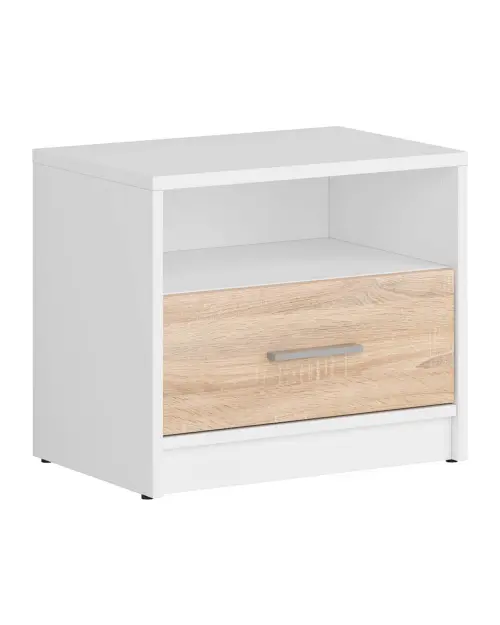
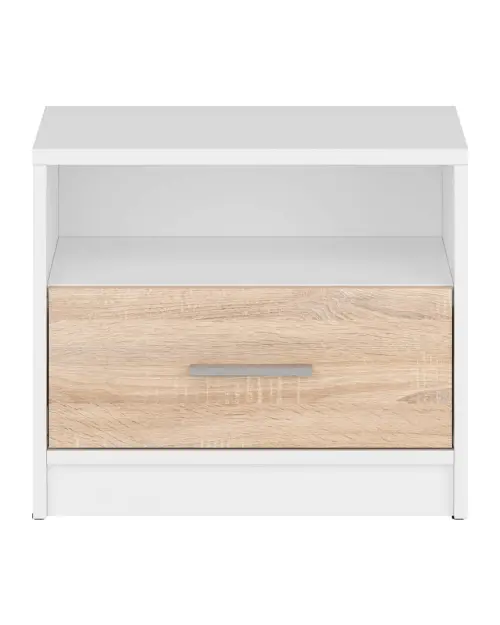
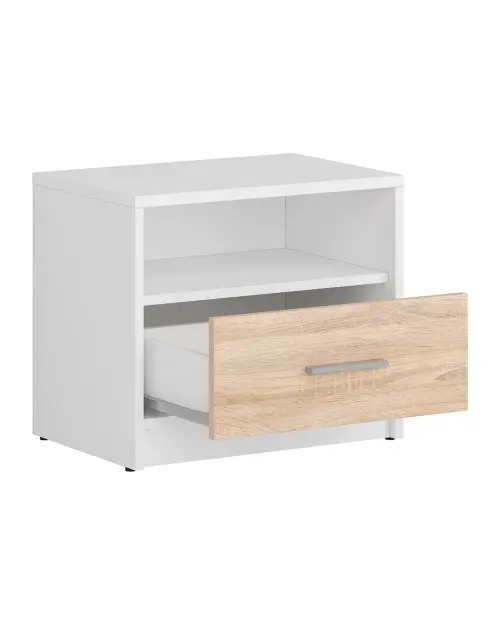
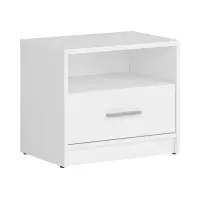
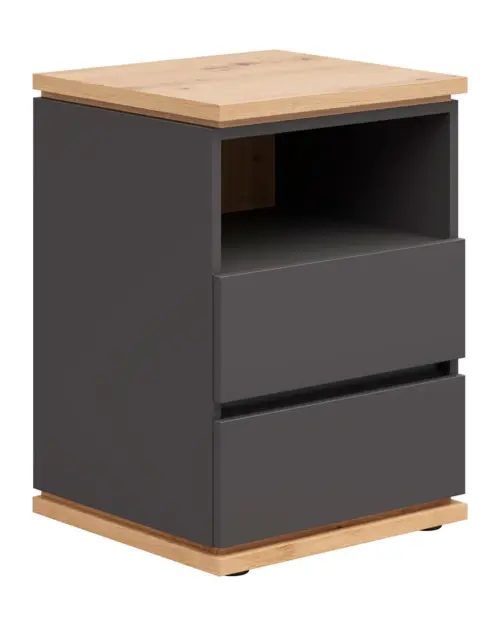
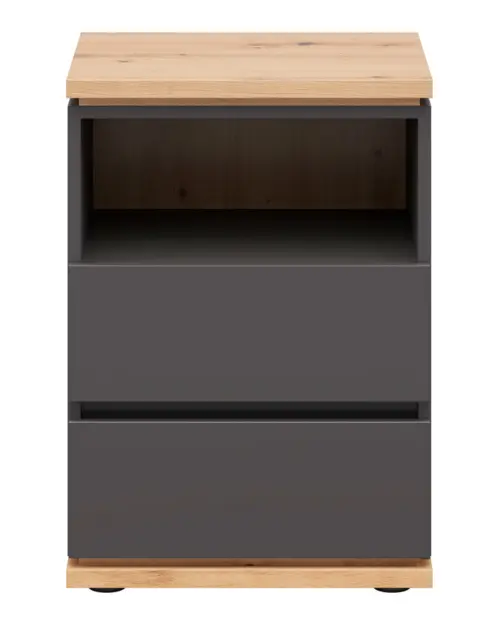
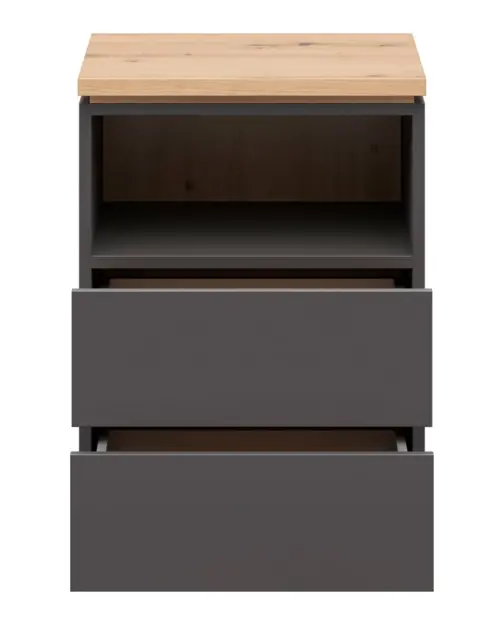
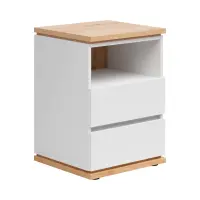
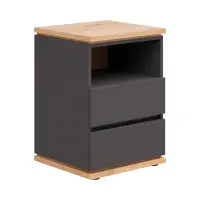
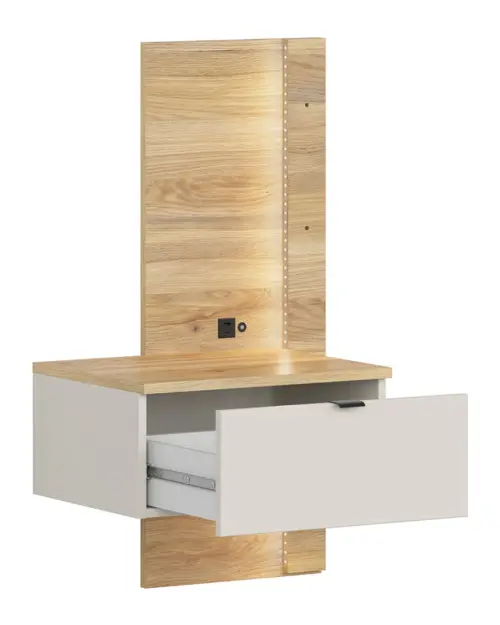
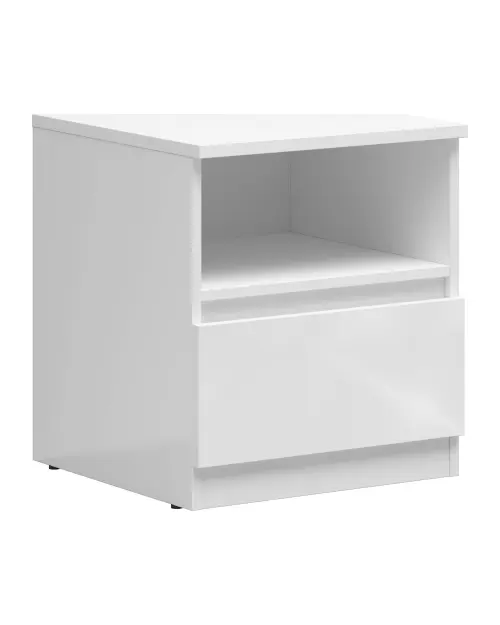
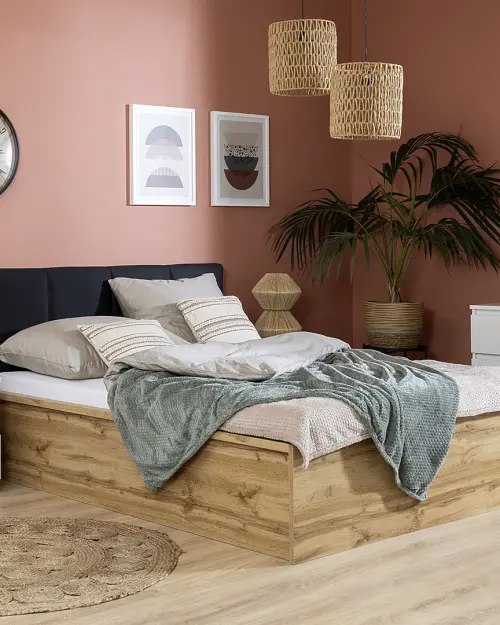
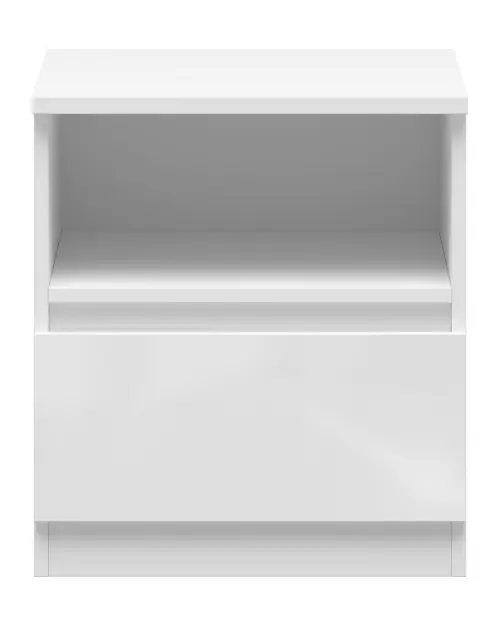
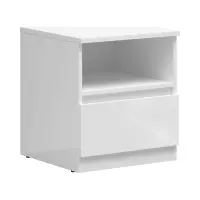
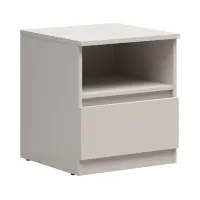
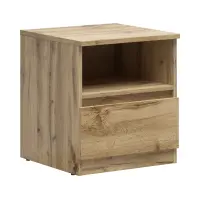
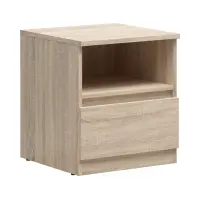
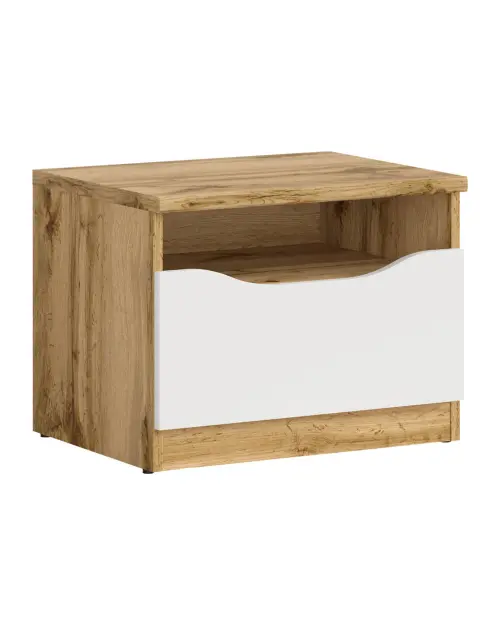
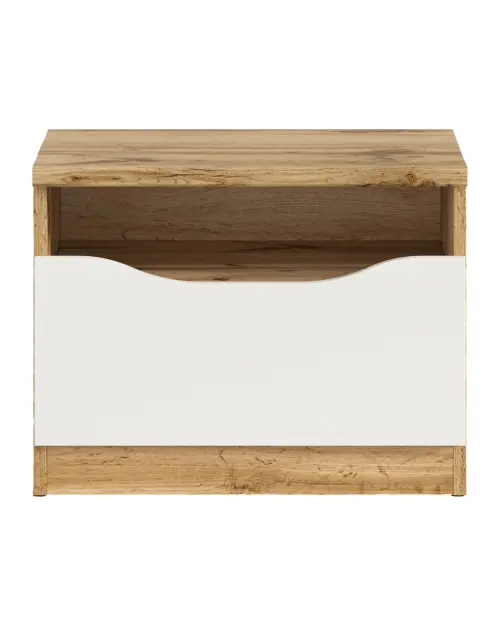
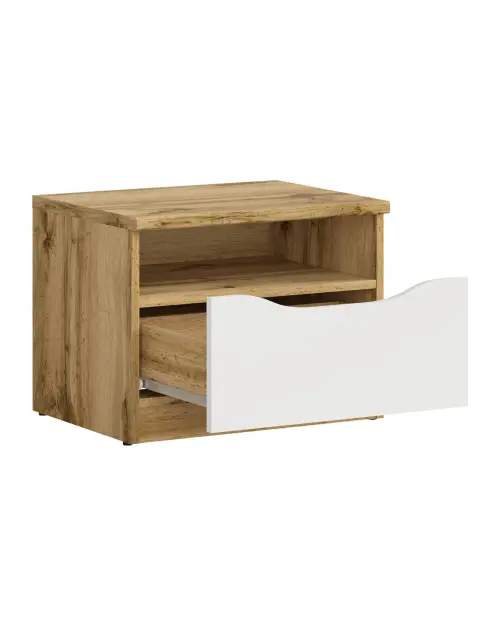
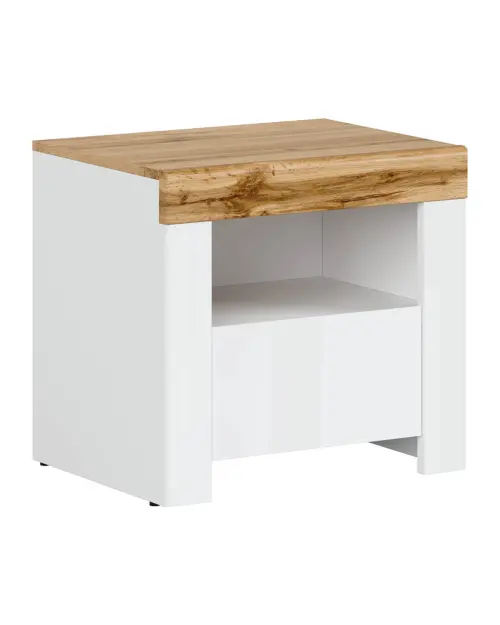
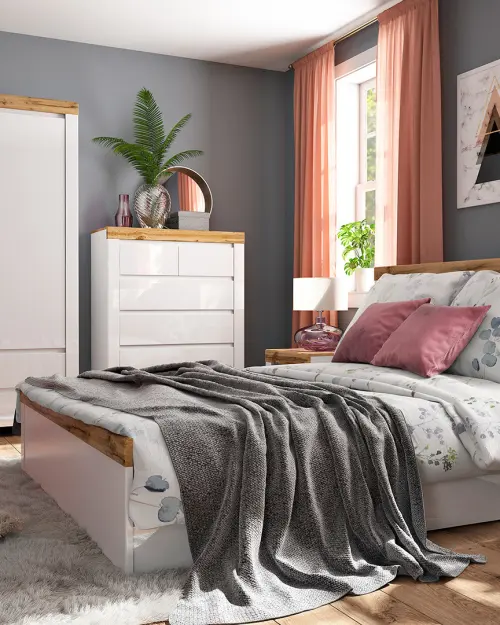
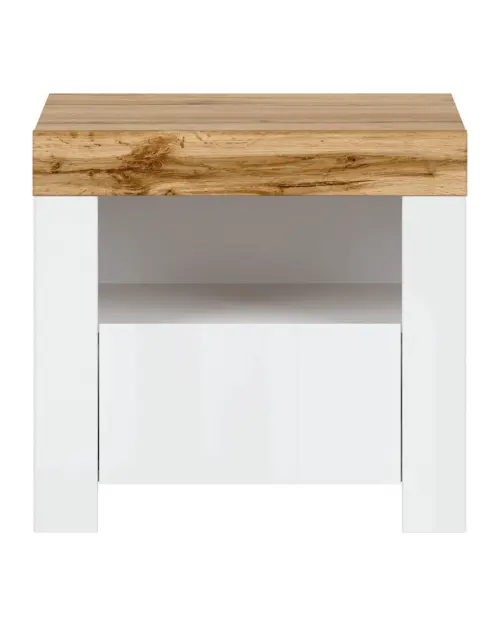
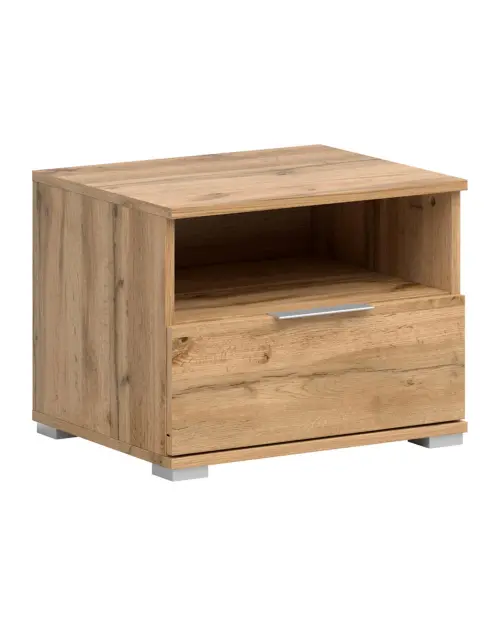
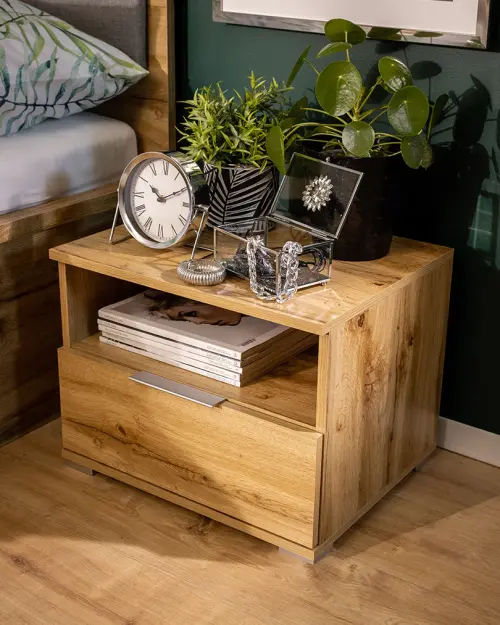
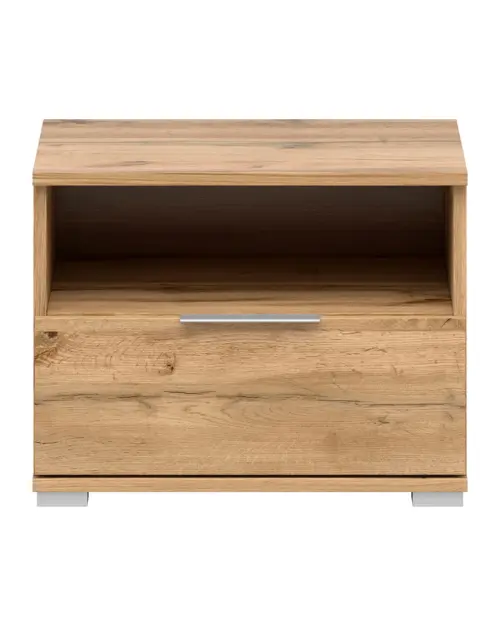
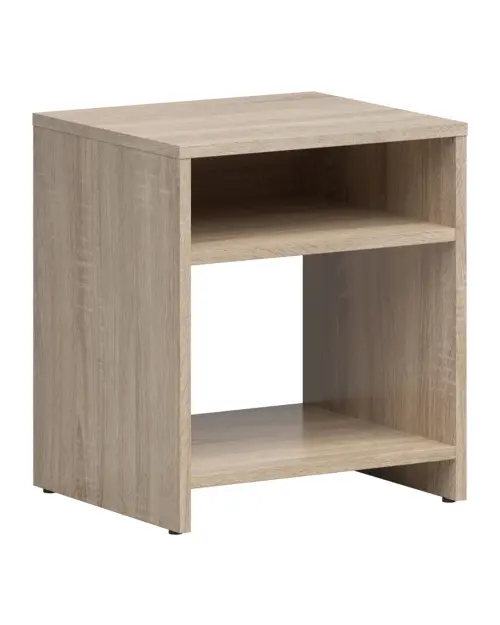
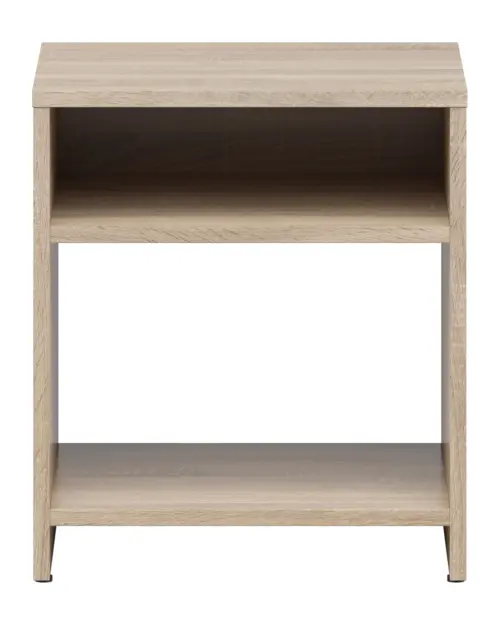
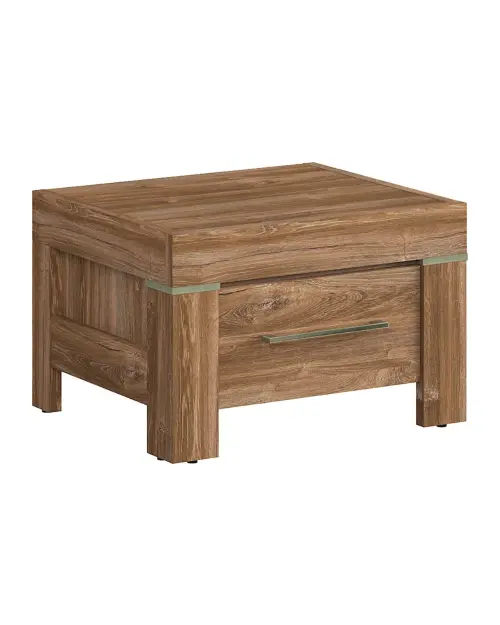
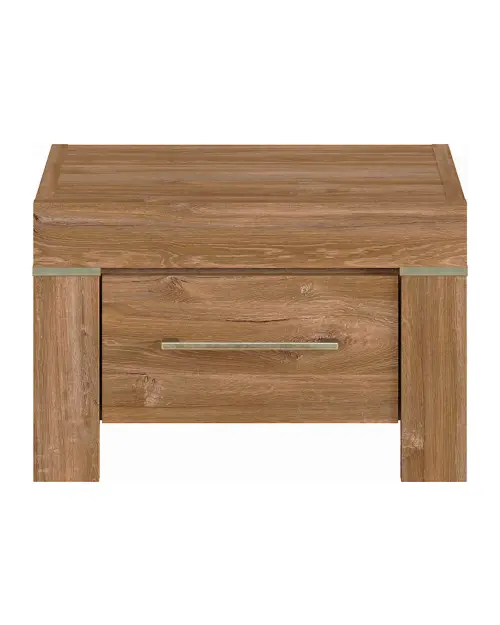
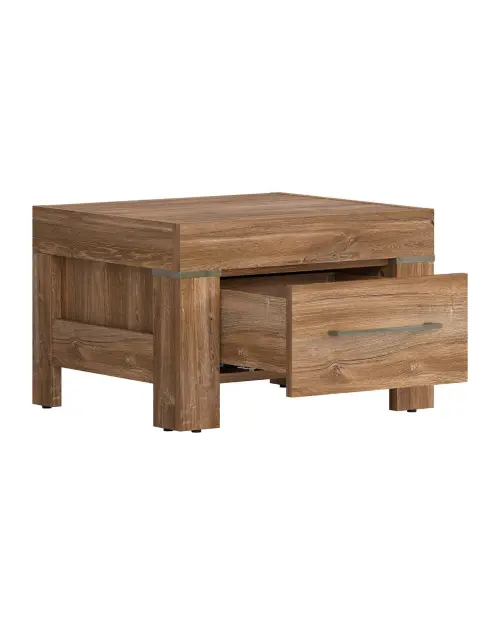
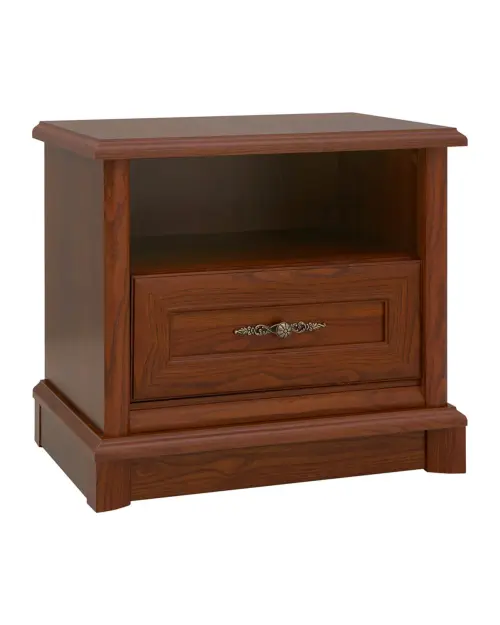
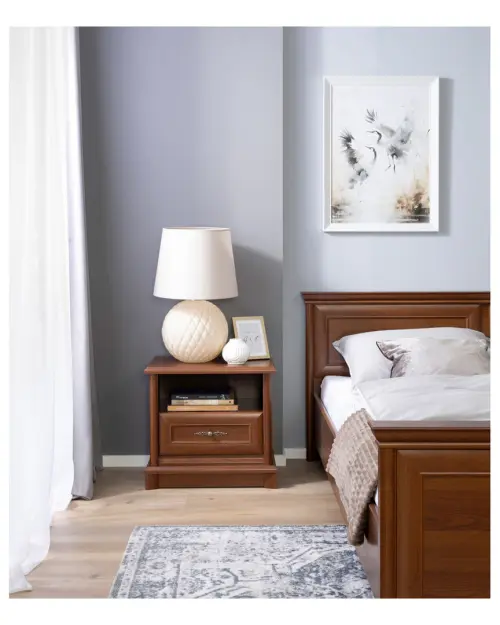
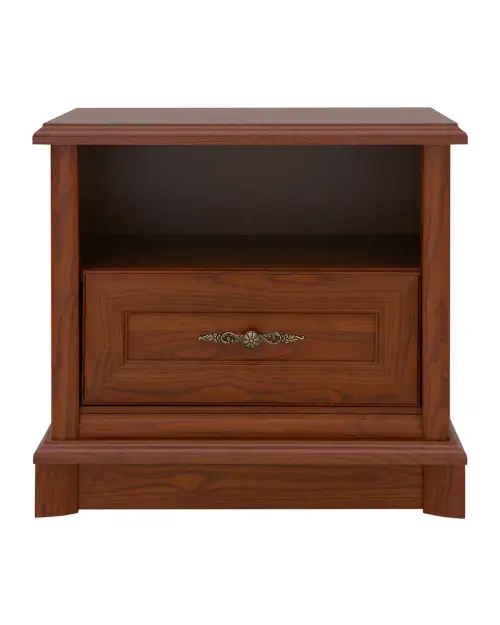
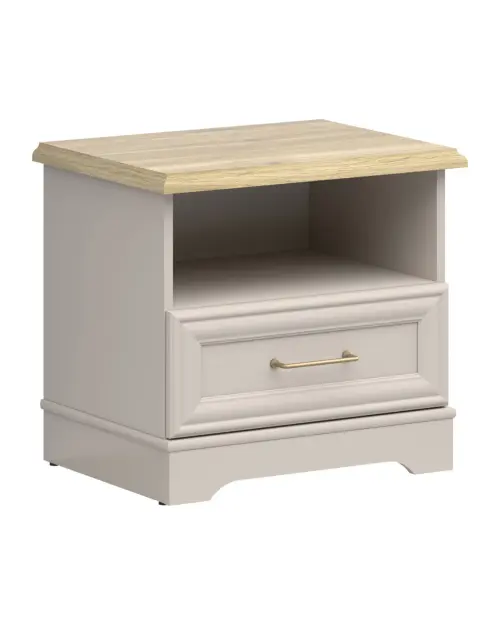
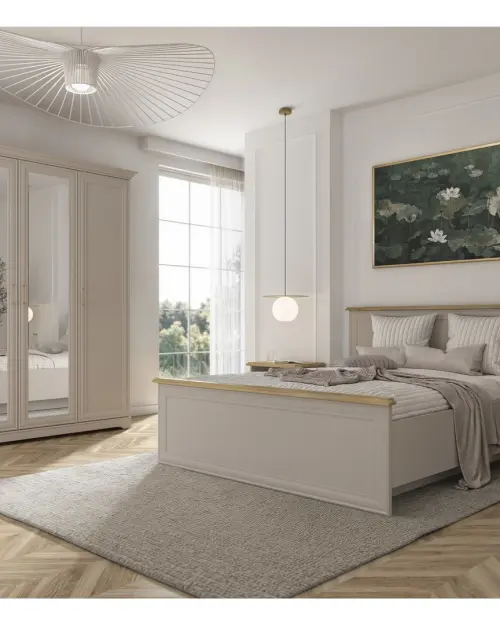
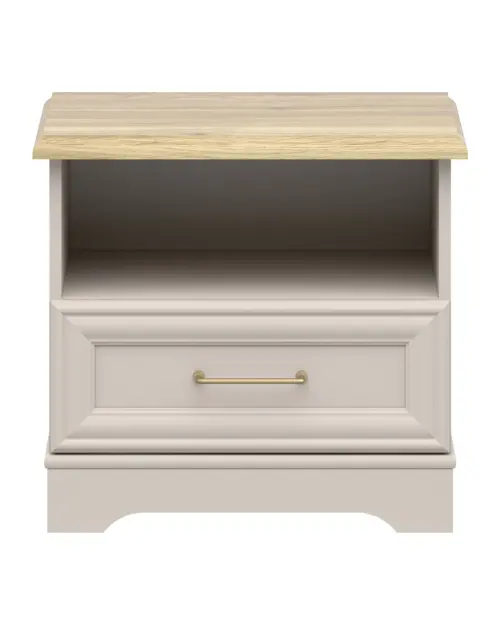
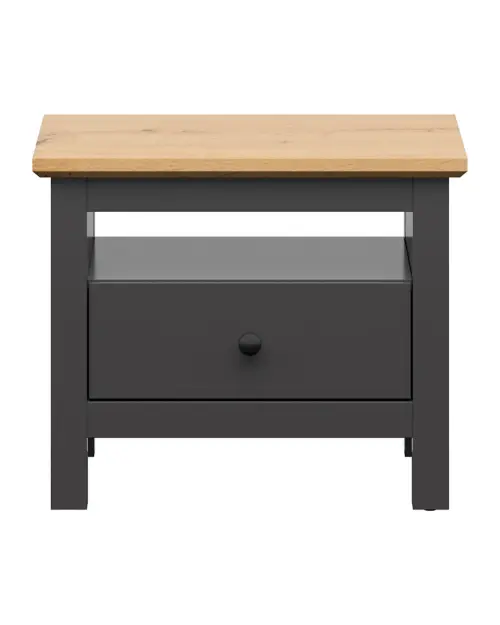
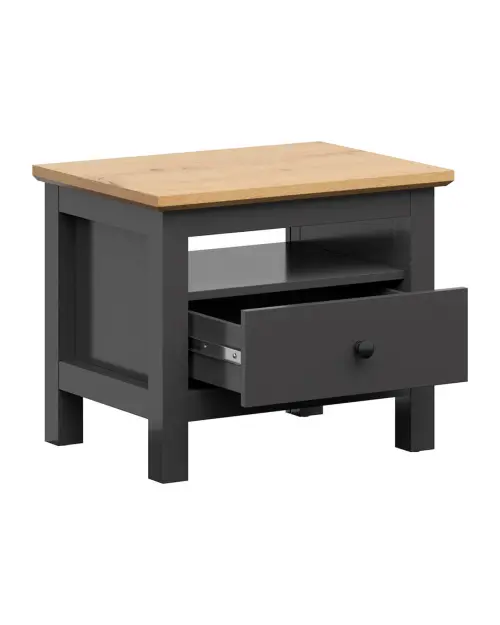
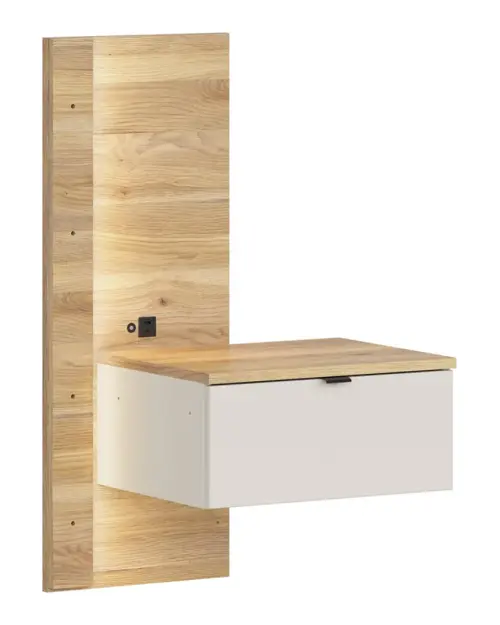
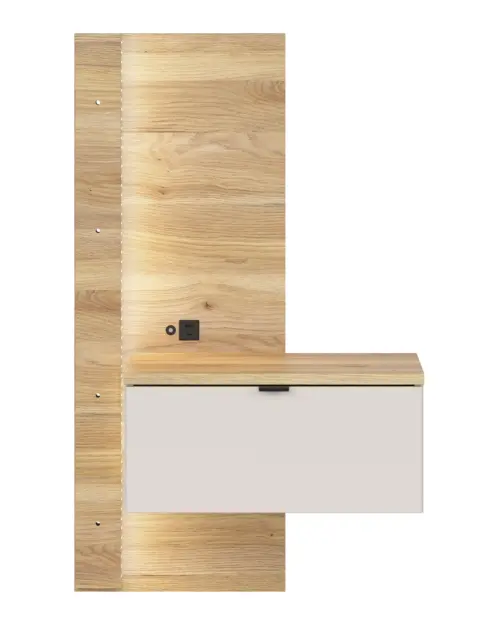
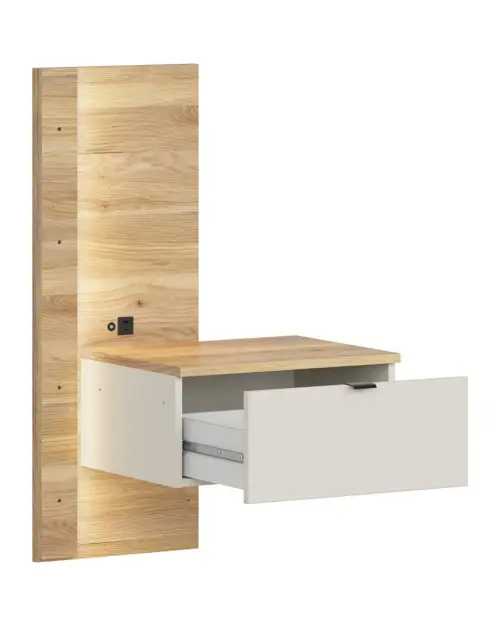
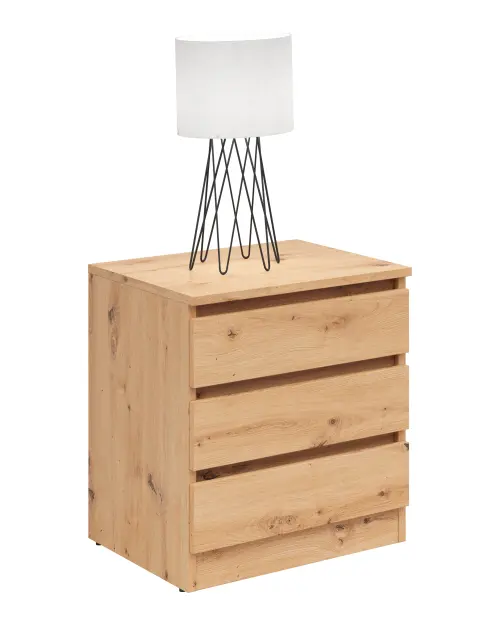
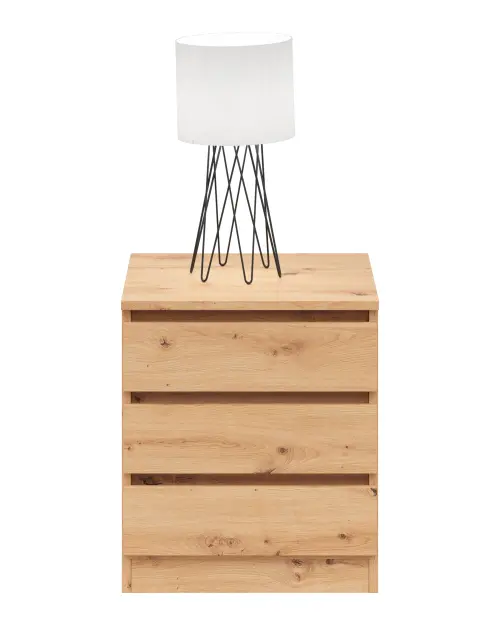
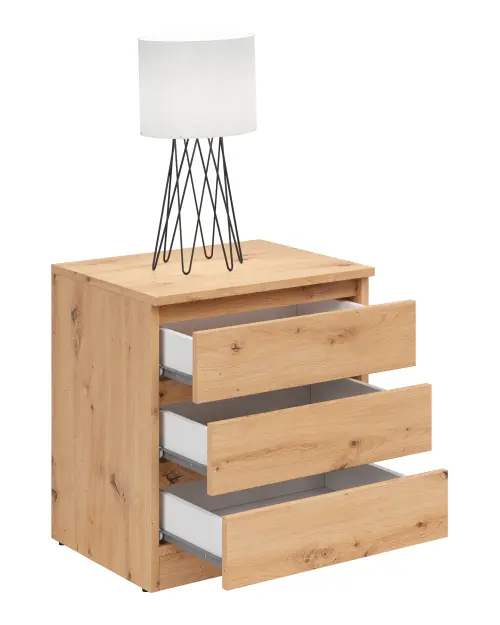
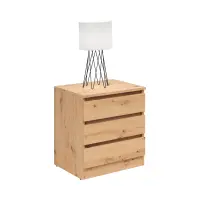
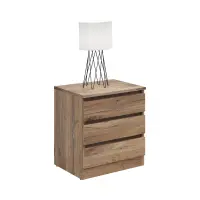
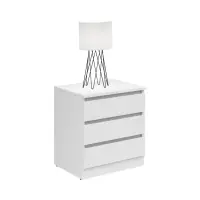
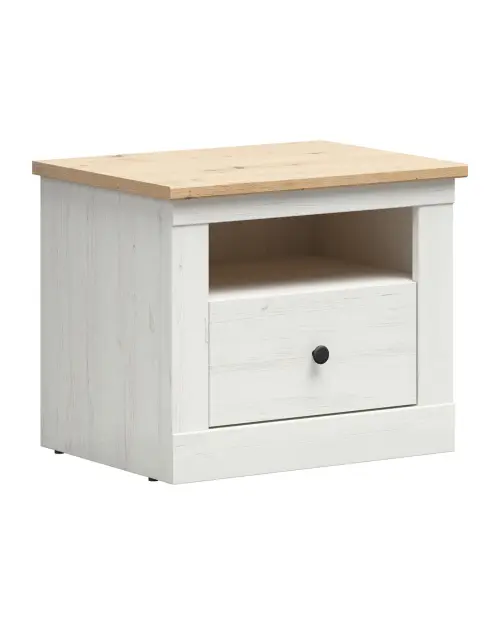
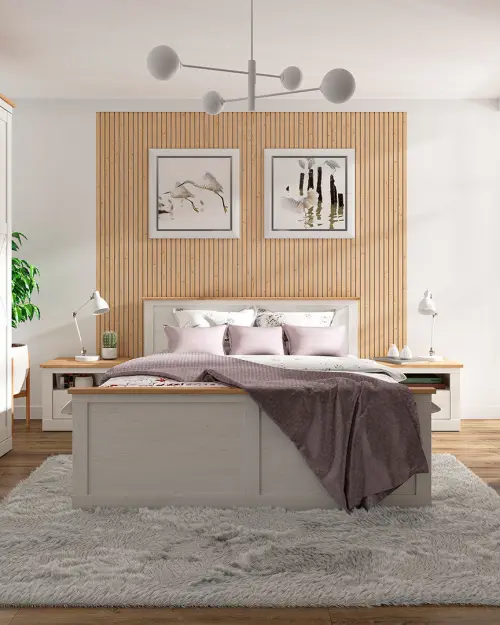
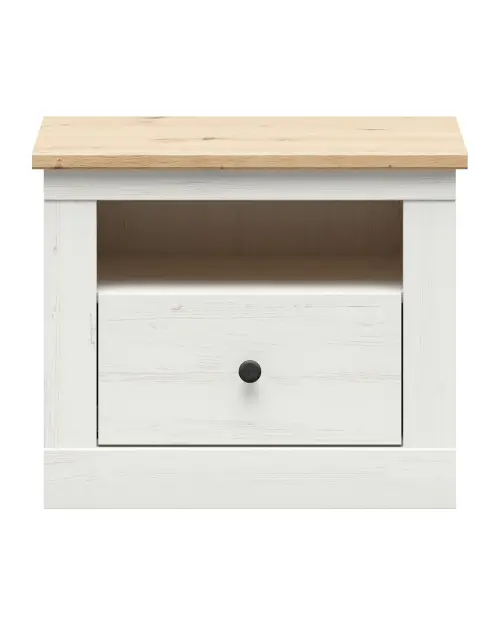
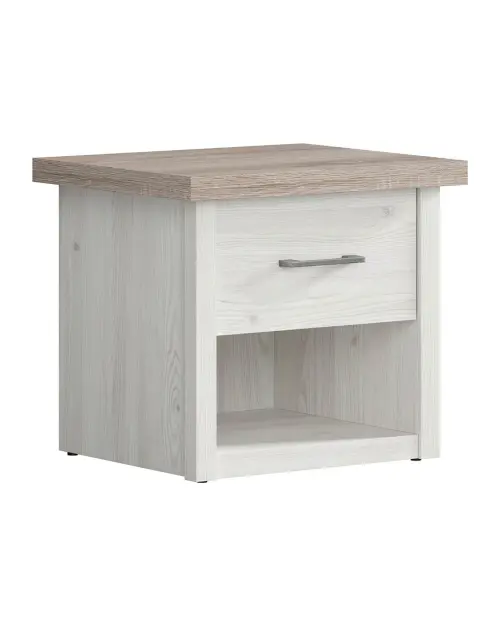
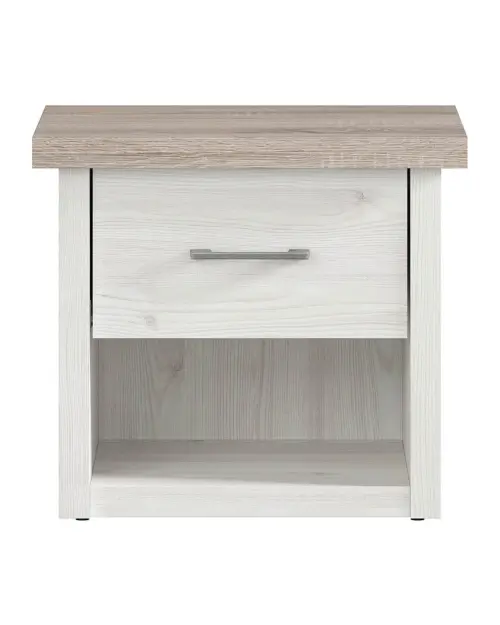
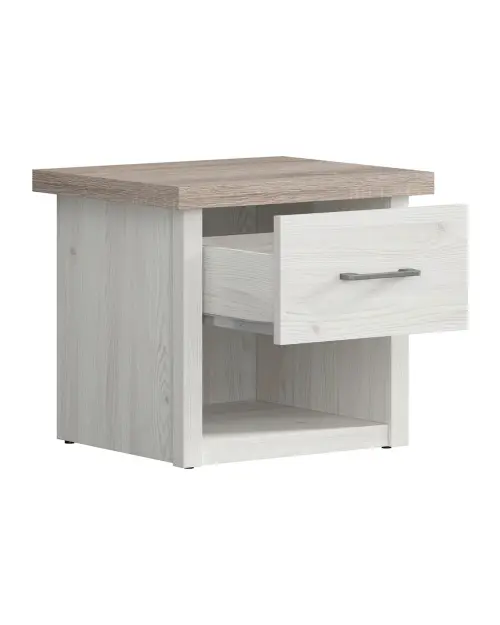
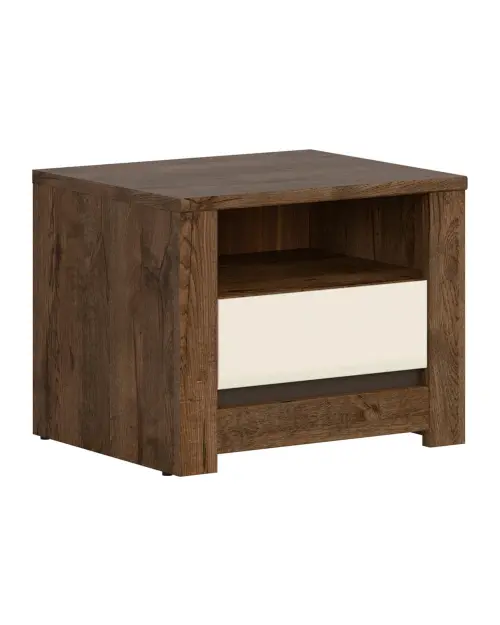
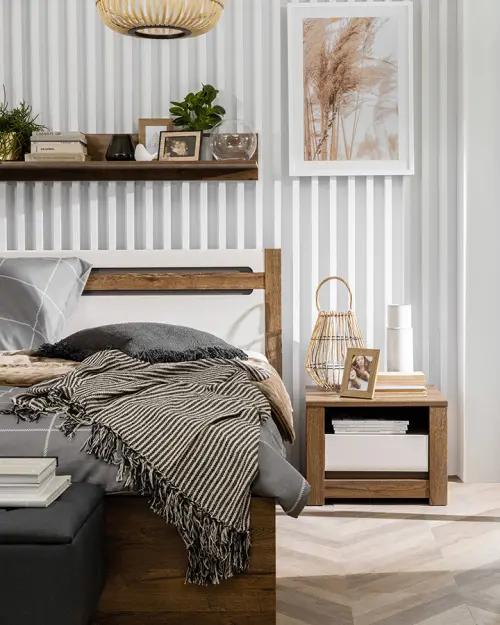
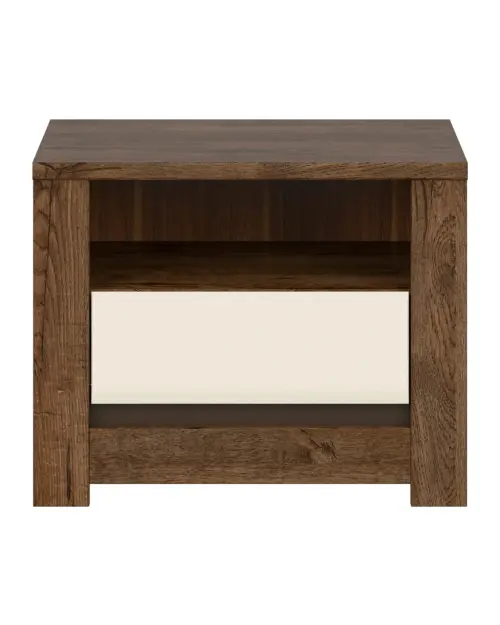
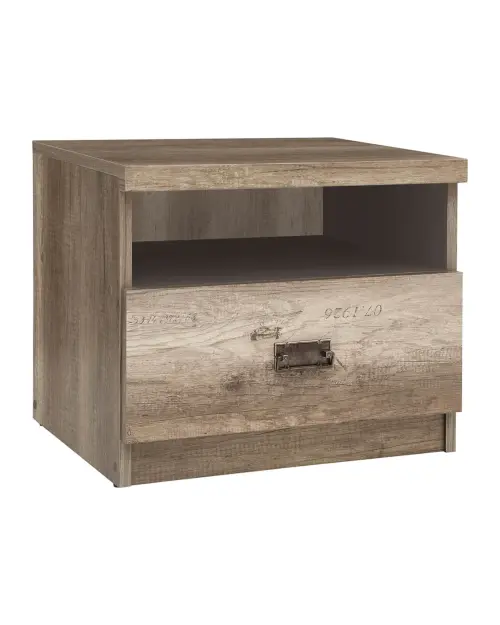
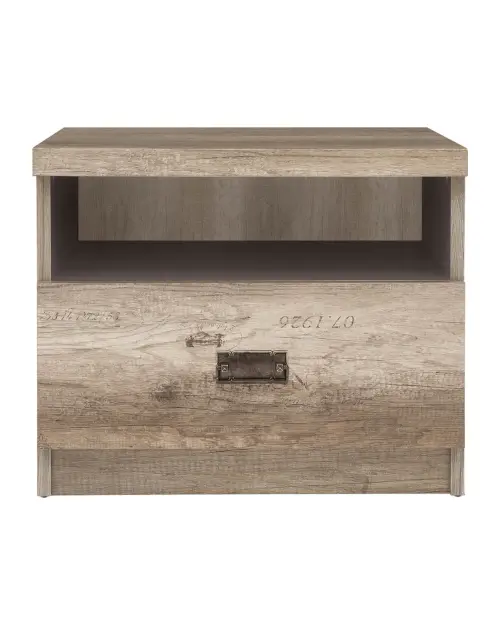
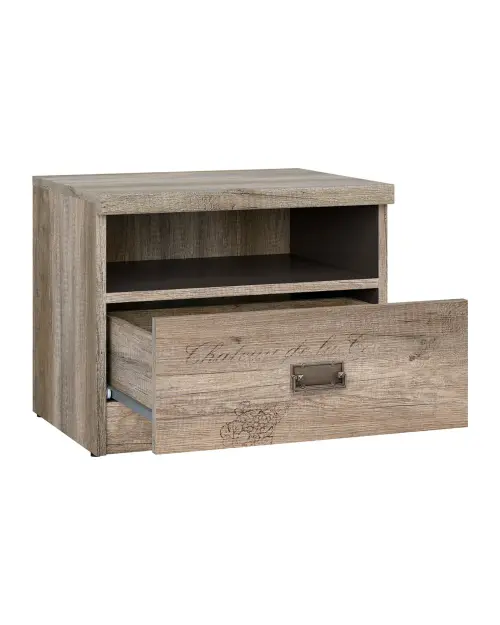
Bedside tables designed to sit next to the mattress at the right height and width, with drawers, an open shelf or mixed configurations. The catalogue covers over thirty models in oak finishes (Sonoma, Wotan, Artisan, Monastery, Mauvella, Westminster), solid pine, gloss white, cashmere, graphite and two-tone combinations, with widths from 33 cm for tight gaps between bed and wall up to wider versions of nearly a metre with two drawers.
Types: drawer, open shelf and mixed configurations
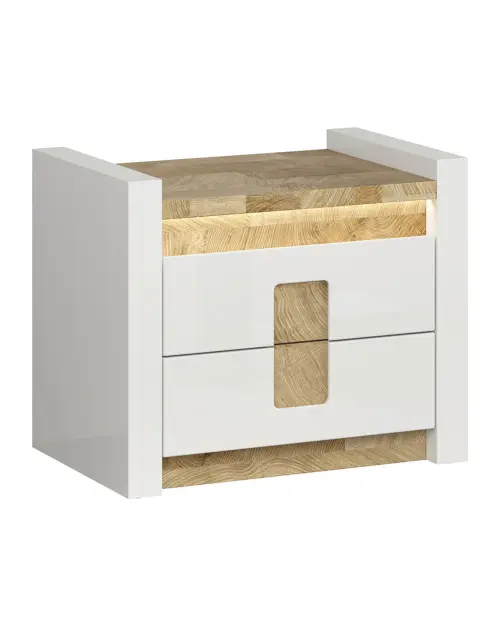
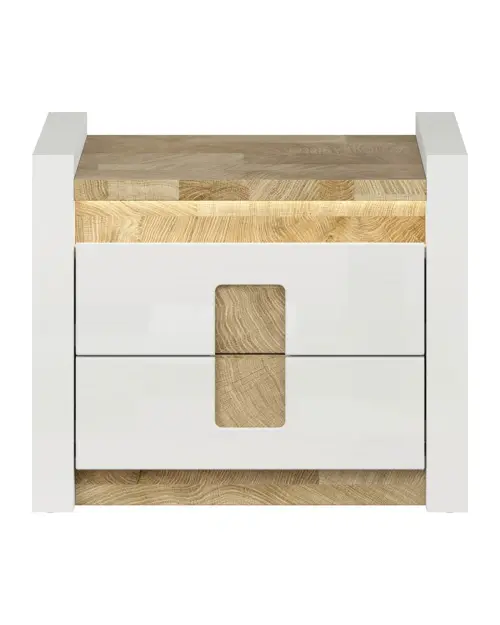
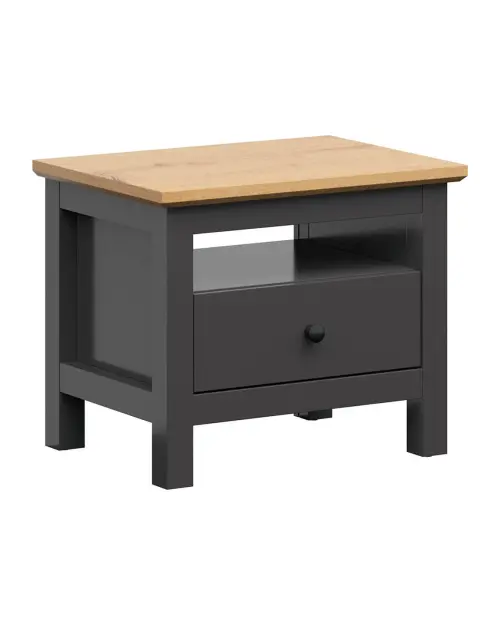
The most common format is a single top drawer that keeps out of sight what you want hidden — medication, chargers, loose books; models such as Forn 50, Holten 54, Nuis 50 or Anga 54 follow this logic and include soft-close drawers. Two-drawer formats (Yamael 45, Stockholm 48, Ostia 54, Alameda 62) double vertical organisation and let you separate small accessories above from bulkier items below. Three-drawer versions, such as Saturn 45, almost replace a small chest of drawers in rooms where nothing else fits. The open shelf, seen on Neno 40, exposes the contents but leaves space for a large book or speaker in plain view, with nothing to open at night.
Widths: narrow, standard and wide formats
Narrow bedside tables, between 33 and 40 cm wide (Kaspian 51 at 33.5 cm, Neno 40 at 35.5 cm, Kent 56 at 38.5 cm, Matos 45 at 39 cm), are designed for tight gaps between bed and wall or for bedrooms where the bed frame leaves little lateral margin. The standard range, between 41 and 47 cm, is the most common and fits most double bedrooms, with models such as Forn 50, Tetrix 45, Nuis 50, Anga 54 or Yamael 45. Wider versions go beyond 50 cm and reach almost a metre in models like Kassel 50 (95.5 cm) or Glamour 50 (98 cm): they work as both bedside table and sideboard, and are recommended for larger bedrooms or when the bedside table takes on some of the storage normally covered by a chest of drawers.
Height: how tall a bedside table should be next to the bed
The most useful rule for getting the height right is to align the top of the bedside table with the top of the mattress, or at most leave it five centimetres above or below. That way you can pick up a glass or your phone without lifting your arm off the pillow. If your bed has a tall base (35 cm or more) with a 25 cm mattress, you will need a bedside table between 55 and 65 cm tall such as Alameda 62, Hesen 60, Patras 58 or Frija 58. For lower beds or platform-style frames, 45–50 cm versions like Tetrix 45, Saturn 45, Forn 50 or Nepo Plus 49 sit at the right level. It is also worth leaving at least five to ten centimetres between the bedside table and the side of the bed so you do not bump into it when making the bed.
Finishes: oak, gloss white, pine and two-tone
The oak finishes cover the full tonal range of the catalogue: Sonoma and Wotan in warm honey tones, Artisan with strong grain, Monastery and Westminster in darker tones, Mauvella and April with a slightly cooler reading. Gloss white remains a popular choice in small bedrooms because it reflects light and visually expands the wall, while graphite and cashmere offer less saturated neutrals that pair well with upholstered headboards. Solid Andersen pine models, like Loksa 55, Stockholm 48 or Frija 58, bring natural texture and are typical of Scandinavian or rustic bedrooms. Two-tone combinations (white fronts on an oak body, or Mauvella oak with a cashmere drawer) visually soften the bedside table when the rest of the bedroom is already busy with colour.
Extras: USB, LED and left- or right-hand orientation
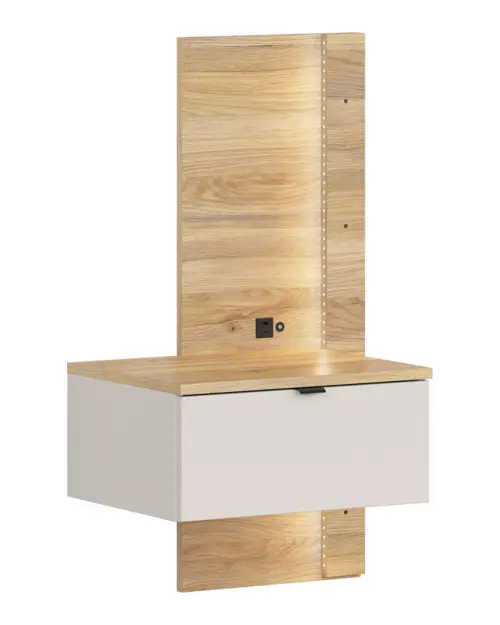
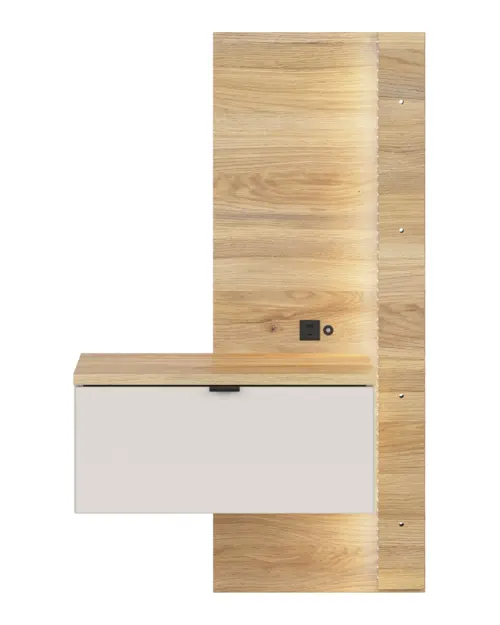
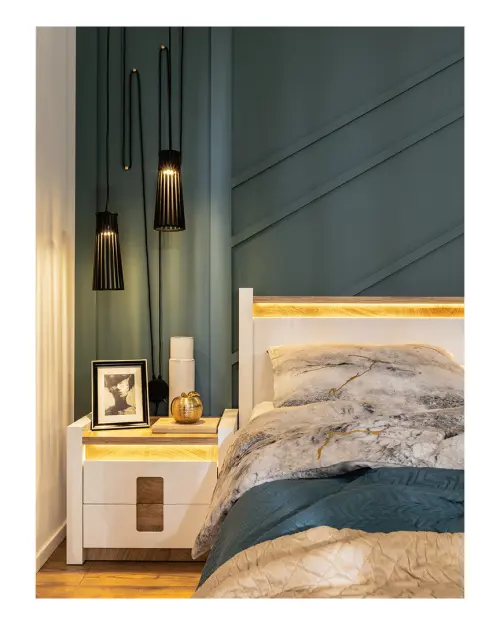
The Glamour 50 models include USB ports and an LED strip built into the base, designed to charge your phone without an extension cable and provide indirect light without needing an extra lamp. Some bedside tables, such as Kassel 50, Vabres 55 or the Glamour 50 itself, come in left- or right-hand versions depending on which side of the bed they are placed on; this matters when buying a symmetrical pair, because the drawer and opening positions should mirror each other from the point of view of whoever is lying down. Drawers run on metal runners with a safety stop so they cannot be pulled out completely, and most models include interchangeable handles, so you can swap the hardware finish if it does not match the rest of the bedroom.
How to choose for the room: pair, single and proportion
In double bedrooms the most balanced option is to buy two matching bedside tables and place them symmetrically on either side of the headboard; models like Forn 50, Holten 54, Tetrix 45 or Anga 54 work well as a pair thanks to their contained width. For single bedrooms or guest rooms, one bedside table is enough and frees up space for an armchair or coat rack alongside. Always measure the gap between bed and wall, and leave at least 40 cm of front clearance if the unit has a drawer: it needs that space to open fully. In very small bedrooms, consider a bedside table narrower than the bed base (the 33–40 cm options meet this criterion); they will not crowd the room and let more natural light reach the floor from the window.
Shipping across Spain and home assembly
Bedside tables are delivered flat-packed in boxes with screws, fittings and instructions included. Assembly typically takes thirty to sixty minutes with a screwdriver and a rubber mallet to seat the dowels; drawer models come with the runners pre-fitted to shorten the process. We ship across mainland Spain and the Balearic Islands, with free shipping from €300, and we answer pre-sale questions on measurements, finishes or pairing two units before purchase.